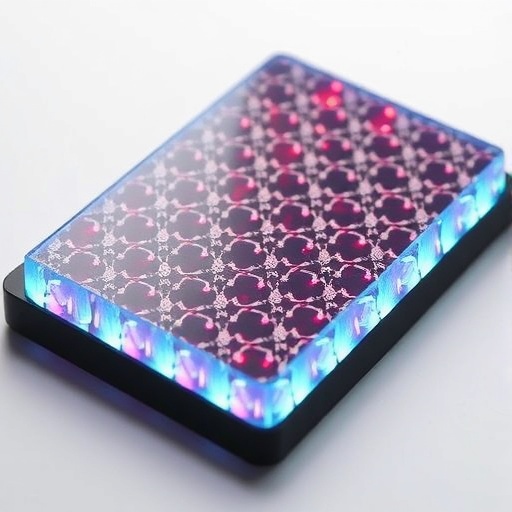
The race to build safer, more powerful batteries has brought a once-overlooked class of materials into the spotlight. Researchers from the University of Puerto Rico, led by Shivaraju Guddehalli Chandrappa, Gerardo Morell, and Ram S. Katiyar, have presented a comprehensive roadmap for halide-based solid electrolytes, materials that could help overcome some of the most persistent barriers facing all-solid-state batteries. Their review, published in Nano-Micro Letters, examines how these electrolytes are designed, synthesized, integrated with electrodes, and evaluated in advanced battery systems.
The appeal of halide-based solid electrolytes lies in their ability to combine properties that are rarely found together. Conventional oxide electrolytes are generally chemically robust, but they are often brittle and require high-temperature sintering to create dense, low-resistance interfaces. Sulfide electrolytes can offer excellent ionic conductivity and mechanical softness, yet they are sensitive to moisture and may release toxic hydrogen sulfide when exposed to air. Polymer electrolytes are easier to process, but their lithium-ion conductivity commonly falls at room temperature. Halide materials occupy an important middle ground, offering ionic conductivities ranging from approximately 10⁻⁴ to above 10⁻³ S cm⁻¹, broad electrochemical stability windows, and comparatively improved tolerance to air.
This combination is especially important for high-voltage cathodes. In a battery, the electrolyte must transport lithium ions while preventing electrons from passing through it. At the same time, it must remain stable against the chemical potential of both electrodes. Many solid electrolytes degrade when placed next to cathode materials charged to more than 4 volts, creating resistive interphases that slow ion transport and reduce battery life. Halide-based compositions, by contrast, can be engineered for improved oxidative stability, making them promising candidates for direct contact with high-voltage layered oxides such as nickel-rich NCM811 and lithium cobalt oxide.
The review organizes halide-based solid electrolytes into five broad families according to the chemical identity and oxidation state of their central metal: divalent, trivalent, tetravalent, pentavalent, and non-metal-centered frameworks. This classification is more than a cataloging exercise. The central metal influences the crystal structure, the distribution of lithium vacancies, the polarizability of the halide anions, and the energy barriers that lithium ions must overcome as they move through the solid. By adjusting these features, researchers can manipulate the balance between structural stability and rapid ion conduction.
Some of the strongest results have emerged from trivalent compounds, including Li₃InCl₆ and Li₃ScCl₆. These materials can reach ionic conductivities of roughly 1 to 3 mS cm⁻¹, a range that begins to approach the performance required for practical solid-state cells. Their behavior is linked to disordered lithium sublattices and carefully controlled vacancies. In a crystalline solid, lithium ions do not move through an empty space as they would in a liquid; instead, they hop between energetically favorable sites. Disorder and vacancies can create additional pathways, reducing the activation energy required for movement.
The researchers also highlight high-entropy halide electrolytes, which contain several different metal species distributed across similar crystallographic positions. One reported composition, Li₂.₂In₀.₂Sc₀.₂Zr₀.₂Hf₀.₂Ta₀.₂Cl₆, achieved an ionic conductivity of 4.69 mS cm⁻¹ and an oxidation stability limit approaching 5.5 volts. High-entropy design introduces chemical complexity that can disrupt unfavorable ordering and generate a broader network of lithium-ion pathways. The same complexity may also help stabilize the material against structural transformations during repeated charging and discharging.
Another striking direction involves oxyhalides, which incorporate oxygen into halide frameworks. The compound Li₃Ta₃O₄Cl₁₀ has been reported to deliver ionic conductivity as high as 9 mS cm⁻¹ at 30°C. Such performance is significant because conductivity at or near room temperature is crucial for electric vehicles and stationary storage systems. Higher conductivity allows a thinner electrolyte layer or lower internal resistance, both of which can improve power capability and reduce energy lost as heat during fast charging and discharging.
Performance depends not only on chemical composition but also on how the electrolyte is made. The review compares mechanochemical processing, co-melting, and wet-chemical synthesis, showing how each route affects particle size, crystallinity, defects, impurities, and contact with electrode materials. Mechanochemical milling can produce intimate mixtures and enable reactions at relatively low temperatures, while wet-chemical approaches may offer better control over composition and morphology. Co-melting can promote uniformity in some systems, although it may require careful control of volatility and thermal stability. These processing choices directly influence critical current density, area-specific resistance, and long-term cycling behavior.
Interface engineering is emerging as one of the most decisive tools in the field. Even a highly conductive electrolyte can perform poorly if it forms a chemically unstable or mechanically fragile boundary with an electrode. Bilayer and dual-electrolyte designs address this challenge by assigning different materials to different sides of the battery. A halide electrolyte can serve as a catholyte, where it faces the oxidizing environment of a high-voltage cathode, while a sulfide electrolyte provides a softer, more conductive interface near the anode. Fluoride-doped halide compositions have also shown promise in improving compatibility with lithium metal, with some configurations maintaining stable lithium stripping and plating for more than 1,000 hours.
According to the review, halide-based cells paired with high-voltage NCM811 and LiCoO₂ cathodes have demonstrated capacity retention of about 70% over 1,600 cycles at a 4C rate, operation at voltages up to 5.5 volts, and projected energy densities approaching 400–500 Wh kg⁻¹. The materials are also being explored beyond conventional lithium-ion chemistry. Halide electrolytes may help stabilize sulfur cathodes in lithium–sulfur batteries, modify reactive air electrodes in lithium–oxygen systems, and support high-voltage sodium-ion solid-state batteries, where reported cells have retained about 90% of their capacity over 300 cycles. The researchers argue that continued progress will depend on scalable synthesis, standardized testing, improved mechanical contact, and a deeper understanding of interfacial reactions. If those challenges can be resolved, halide electrolytes could become a key component of batteries that combine the safety of solid-state architecture with fast charging, high voltage, and substantially greater energy density.
Subject of Research: Halide-based solid electrolytes for advanced all-solid-state batteries
Article Title: Halide-Based Solid Electrolytes for Advanced All-Solid-State Batteries: Design, Interfaces, and Electrochemical Performance
News Publication Date: 22-Jul-2026
Web References: https://doi.org/10.1007/s40820-026-02251-3
References: Nano-Micro Letters, DOI: 10.1007/s40820-026-02251-3
Image Credits: Shivaraju Guddehalli Chandrappa, Gerardo Morell, and Ram S. Katiyar
Keywords
Halide solid electrolytes, all-solid-state batteries, lithium-ion batteries, high-voltage cathodes, lithium metal batteries, sodium-ion batteries, lithium–sulfur batteries, lithium–oxygen batteries, ionic conductivity, interface engineering, high-entropy materials, electrochemistry