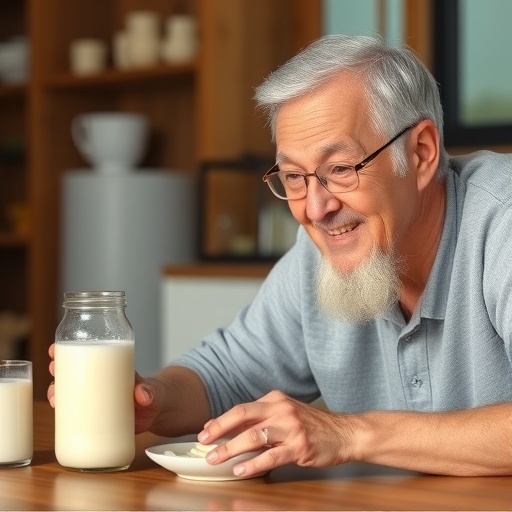
A new randomized controlled trial from Japan is putting two everyday habits—eating dairy products and performing resistance exercises at home—under the scientific microscope in an effort to answer a pressing question: can simple, realistic routines help older adults preserve physical function as they age? The study, led by R. Miyazaki, N. Sakane, H. Ando and colleagues, examines how these accessible interventions perform outside the tightly controlled environment of a laboratory or specialized fitness center.
Published in BMC Geriatrics, the research focuses on community-dwelling older adults in Japan. This population is particularly important because most older people live independently rather than in hospitals or residential care facilities. Their ability to walk, rise from a chair, maintain balance and carry out daily activities can determine whether they remain self-sufficient or require increasing levels of support. By studying participants in their everyday surroundings, the researchers aimed to capture the practical impact of lifestyle changes under real-world conditions.
The trial combines two strategies that target different biological foundations of mobility. Resistance exercise places mechanical stress on skeletal muscle, stimulating pathways involved in muscle-protein synthesis, neuromuscular coordination and strength development. Even low-tech movements performed at home—such as repeated chair stands, controlled leg extensions or body-weight exercises—can challenge the muscles responsible for walking, climbing stairs and maintaining posture. For older adults, preserving these capabilities is often more important than achieving athletic performance.
Dairy products, meanwhile, can provide high-quality protein as well as nutrients such as calcium and vitamin D, depending on the food and its fortification. Protein supplies amino acids required for muscle repair and remodeling, while calcium is essential for bone mineralization and normal nerve and muscle function. Vitamin D contributes to calcium regulation and muscle physiology. The potential significance of dairy intake therefore extends beyond nutrition alone: it may complement resistance exercise by supplying some of the raw materials needed for adaptation.
Aging is associated with anabolic resistance, a physiological condition in which muscles respond less strongly to a given amount of dietary protein or physical activity than they do in younger people. This does not mean that older muscles cannot adapt; rather, they may require more carefully structured stimuli, sufficient protein, regular repetition and adequate recovery. The Japanese trial is scientifically relevant because it explores whether a nutrition-and-exercise combination can produce meaningful changes under conditions that resemble ordinary life, where adherence, convenience and motivation strongly influence outcomes.
The “real-world” design also addresses a major weakness in many exercise studies. Research participants in conventional trials may receive frequent supervision, specialized equipment and intensive reminders that are difficult to reproduce after a study ends. Home-based programs remove many logistical barriers, including transportation, cost and limited access to gyms. At the same time, they introduce challenges for researchers, who must determine whether participants perform the exercises consistently and correctly without continuous professional monitoring.
Randomization strengthens the trial’s ability to evaluate cause and effect. In a randomized controlled study, participants are assigned to intervention or comparison groups according to a predefined process rather than personal preference. This reduces the risk that differences in motivation, baseline fitness or health status will determine the result. Researchers can then compare changes in physical function between groups and assess whether the observed effects are plausibly linked to dairy intake, home resistance exercise or their combination.
Physical function is a broad scientific concept that can include lower-body strength, walking performance, balance, mobility and the ability to complete daily tasks. These measures are closely connected to frailty, falls and independence. A small improvement in the time required to stand from a chair or walk a short distance may appear modest, but such changes can have major consequences in daily life. They can influence whether an older person can shop independently, use public transportation or safely move around the home.
The study’s implications reach beyond Japan. Populations around the world are aging, and health systems are seeking interventions that are affordable, scalable and acceptable to older adults. A program based on familiar foods and exercises that can be performed at home could be easier to implement than one requiring expensive equipment or frequent clinic visits. However, the effectiveness of such an approach depends on details including the amount and type of dairy consumed, the intensity and progression of exercise, baseline nutritional status and the participants’ ability to maintain the routine over time.
The findings will help clarify whether these two everyday behaviors can measurably influence physical function in independently living older adults. They may also contribute to a broader shift in geriatric research: away from treating exercise and nutrition as separate prescriptions and toward testing combined, behaviorally realistic strategies. The most powerful anti-aging intervention may not be a dramatic breakthrough, but a carefully designed routine that people can repeat at home, week after week, long enough for biology to respond.
Subject of Research: Effects of dairy product intake and home-based resistance exercise on physical function in Japanese community-dwelling older adults.
Article Title: Effects of dairy product intake and home-based resistance exercise on the physical function in Japanese community-dwelling older adults: results of a real-world randomized controlled trial.
Article References: Miyazaki, R., Sakane, N., Ando, H. et al. “Effects of dairy product intake and home-based resistance exercise on the physical function in Japanese community-dwelling older adults: results of a real-world randomized controlled trial.” BMC Geriatrics (2026). https://doi.org/10.1186/s12877-026-08061-x
Image Credits: AI Generated
DOI: 10.1186/s12877-026-08061-x
Keywords: aging, older adults, dairy products, resistance exercise, physical function, muscle health, nutrition, frailty prevention, randomized controlled trial, Japan
Tags: aging and muscle strength preservationaging-related mobility decline preventioncommunity-dwelling seniors physical functiondaily activity improvements through resistance trainingdairy consumption and resistance training for older adultseffects of dairy on muscle health in seniorshome-based resistance exercise interventionsmaintaining independence in older adultsnutritional and exercise strategies for healthy agingpractical exercise routines for elderlyrandomized controlled trial in Japanreal-world impact of lifestyle changes in elderly