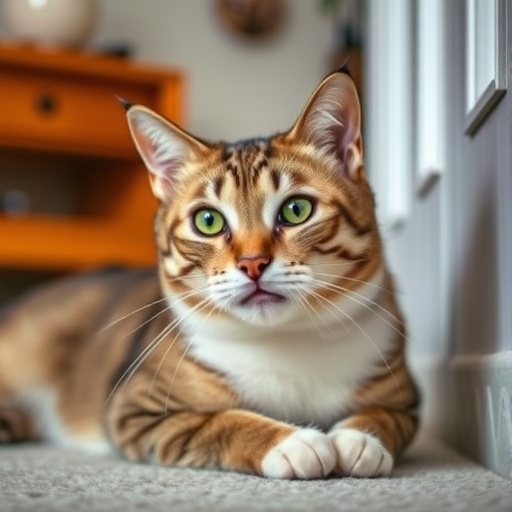
Moving an outdoor cat indoors may be far less disruptive than many owners fear, according to a new study from researchers in Australia and New Zealand. The survey-based research found that most owners ultimately considered the transition worthwhile, even when the first days or weeks involved vocalisation, scratching, frustration and uncertainty. The findings challenge the widespread belief that cats accustomed to roaming cannot adapt to a contained lifestyle, while also highlighting a practical route to improving feline safety and reducing harm to wildlife.
Researchers surveyed 87 cat owners about their experiences transitioning pets from outdoor access to permanent indoor living. Participants described their expectations before the change, the behaviours they observed during adjustment and the effects they noticed after their cats had settled. More than two-thirds said the transition was easier than they had anticipated. Although many initially worried that indoor confinement would make their cats unhappy or stressed, the reported long-term benefits generally outweighed the difficulties.
Safety was the most powerful reason owners decided to restrict outdoor access. Free-roaming cats can face vehicle collisions, attacks from other animals, infectious disease, parasites and accidental poisoning. They can also prey on native wildlife, particularly birds. After the transition, these same concerns were most often identified as the greatest benefits of indoor living. Owners described increased peace of mind because their cats were less exposed to unpredictable hazards and could be monitored more closely.
The researchers also found that indoor living changed the relationship between cats and their owners. People reported spending more quality time with their pets and, in some cases, developing closer bonds. Keeping cats inside made it easier to observe changes in appetite, movement, toileting and general behaviour—details that can provide early clues to illness. Owners also reported fewer injuries and health risks associated with roaming, which may help explain why veterinary costs declined over time for some households, despite increases in spending on food, litter and indoor modifications.
The speed of adjustment varied considerably between individual cats. Approximately half of the animals were reported to have adapted within a matter of weeks, while younger cats generally appeared to adjust more rapidly than older animals. Age may influence adaptability through differences in established routines, previous experience and tolerance of environmental change, although the survey cannot determine precisely why younger cats transitioned more easily. The researchers emphasise that adaptation is not instantaneous and that behaviour during the early phase should not necessarily be interpreted as evidence of long-term distress.
Common transitional behaviours included increased meowing, scratching at doors and windows and apparent attempts to regain outdoor access. These responses may reflect frustration, disrupted habits or a lack of appropriate outlets for normal feline activities. Cats are highly motivated to climb, scratch, explore, stalk and investigate their surroundings. When these behaviours cannot be expressed outdoors, they may be redirected toward household doors, furniture or other objects unless owners provide suitable alternatives.
Environmental enrichment was therefore central to successful indoor management. Climbing structures can increase the usable three-dimensional space available to a cat, while scratching posts provide an appropriate outlet for claw maintenance and scent-marking behaviour. Interactive toys and regular play can simulate elements of hunting, including chasing, pouncing and capturing. Strategic placement of resting areas, hiding spaces and elevated platforms may also help cats control their exposure to household activity. The goal is not simply to remove outdoor access, but to create an indoor environment that supports behavioural and sensory needs.
The study identified a psychological challenge for owners as well as a behavioural challenge for cats. Many participants felt guilty about restricting their pets’ freedom, even when they believed indoor living was the safest option. Others worried that their cats would become bored, unhappy or overweight. Reduced physical activity can contribute to weight gain, making portion control, play and opportunities for movement important components of indoor care. Litter-tray hygiene was another recurring concern, particularly because indoor cats rely entirely on owners to provide clean, accessible toileting facilities.
Not every transition was planned. Injuries, illness, relocation and sudden concerns about traffic or other dangers often forced owners to bring cats indoors with little warning. More than one-third of respondents said they had little or no time to prepare, and almost half reported making no preparations before the change. Despite this lack of planning, most still described the process as easier than expected. The result suggests that owners may benefit from clear, readily available guidance explaining what behaviours are normal during adjustment and how to respond without unintentionally reinforcing escape-seeking behaviour.
Dr Julia Henning of Adelaide University’s School of Animal and Veterinary Sciences, the study’s lead author, said owners often encountered temporary difficulties but found that the long-term advantages were greater. Senior author Dr Susan Hazel said successful transitions require support for people as much as for their animals. The researchers caution that the findings represent owner reports rather than direct clinical measurements of feline welfare, and the sample was relatively small. Nevertheless, the results provide evidence that many cats can adapt to indoor living when their behavioural needs are addressed. As communities seek to protect pets and native wildlife, the study suggests that keeping cats indoors may be a realistic welfare strategy—not an impossible lifestyle change.
Subject of Research: Cat welfare and owner experiences during the transition from outdoor to indoor living
Article Title: Owner-reported experiences of transitioning cats from outdoor to indoor living
News Publication Date: 4-Jul-2026
Web References:
https://www.sciencedirect.com/science/article/pii/S016815912600211X
https://researchers.adelaide.edu.au/profile/julia.henning
https://adelaide.edu.au/about/school/animal-and-veterinary-sciences/
https://researchers.adelaide.edu.au/profile/susan.hazel
References:
Applied Animal Behaviour Science. DOI: 10.1016/j.applanim.2026.107120
Keywords: cats, indoor cats, feline welfare, animal behaviour, pet ownership, environmental enrichment, wildlife protection, outdoor cats, cat health, veterinary science
Tags: animal welfare and safetybenefits of indoor catscat owner experienceschallenges of keeping cats indoorsfeline behavioral adaptationfeline health and well-beingimpact of indoor confinement on catsIndoor cat safetyoutdoor versus indoor cat lifestylereducing cat-related wildlife predationtransitioning outdoor cats to indoor livingwildlife conservation and cats