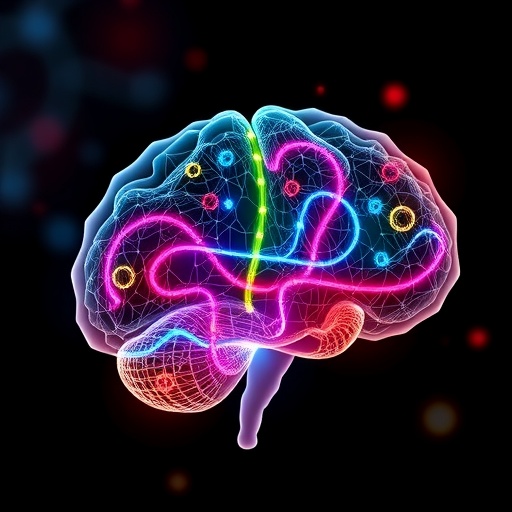
The gut and the brain are engaged in a continuous electrical and chemical dialogue that governs hunger, digestion, satiety, and the body’s response to stress. Now, researchers at Lehigh University have developed a mathematical “digital twin” of the neural circuitry connecting the two systems, creating a virtual platform that could transform how scientists investigate digestive disorders and design next-generation nerve stimulation therapies.
The model is among the first comprehensive quantitative representations of the gut-brain neural network involved in regulating stomach function. Described in a study published in Frontiers in Physiology, the system simulates how signals travel between the gastrointestinal tract and the brain, how those signals influence gastric activity, and how disruptions in the communication loop may contribute to disease. The researchers say the model could allow scientists to test therapeutic strategies computationally before moving to animal experiments or human trials.
“The gut-brain axis is a major area of interest in the medical community, but to date, there hasn’t been a clearly defined mathematical model that captures how this communication loop functions quantitatively,” said Mayuresh Kothare, R. L. McCann Professor of Chemical and Biomolecular Engineering and associate dean for research at Lehigh’s P.C. Rossin College of Engineering and Applied Science. “Our work represents one of the first systematic approaches to building a digital twin that allows researchers to simulate that behavior.”
The gut-brain axis is not a single pathway but a complex network of bidirectional communication channels. Signals generated in the digestive system provide the brain with information about stomach distension, nutrient availability, and the progress of digestion. In the opposite direction, the brain can alter digestive activity in response to emotion, stress, and changes in the body’s internal state. The vagus nerve is one of the principal routes in this exchange, carrying information between the gastrointestinal tract and regions of the brain involved in autonomic regulation.
The Lehigh model represents this communication system as a series of interconnected compartments and signaling processes. In mathematical terms, each compartment can describe a physiological component, such as neural activity, stomach behavior, or signal transmission, while equations define how activity changes over time and how one part of the system affects another. This structure gives researchers a way to examine the dynamics of the gut-brain loop rather than studying isolated organs or individual nerve signals.
That capability could be particularly important for disorders of gut-brain interaction, a group of conditions that includes irritable bowel syndrome, gastroparesis, and functional dyspepsia. These disorders can cause chronic nausea, bloating, abdominal pain, impaired gastric emptying, and uncomfortable changes in digestion. Although they affect a substantial portion of the global population, treatments often provide incomplete relief, partly because the biological mechanisms behind symptoms are difficult to measure and vary widely between patients.
The researchers describe the digital twin as a virtual stomach and neural control system in which different disruptions can be introduced and observed. Scientists could use it to explore what happens when nerve signals become too weak, too strong, mistimed, or improperly coordinated. They could also simulate electrical stimulation of the vagus nerve and study how different pulse patterns, intensities, and timing might influence gastric function. Such computational experiments may help identify promising treatment parameters while reducing the number of costly and time-consuming biological studies required.
“Our digital twin is like a virtual stomach that helps us understand what happens when signalling is disrupted and why,” said lead author Shannon Q. Fernandes, who completed the work at Lehigh and is now a research scientist developing controlled drug delivery systems at AbbVie. “Ultimately, it could help researchers develop more effective neural stimulation therapies.”
The research was funded through the National Institutes of Health’s Stimulating Peripheral Activity to Reduce Conditions, or SPARC, program, which supports technologies for mapping, modeling, and manipulating peripheral nerves. Bioelectronic medicine, the field behind this work, aims to treat disease with precisely targeted electrical signals instead of relying exclusively on drugs or surgery. A possible therapy could use implanted, battery-powered electrodes positioned near a nerve, allowing clinicians to deliver carefully controlled currents that modify abnormal neural activity.
Lehigh researchers are now working to extend the model and develop algorithms capable of identifying the amount of stimulation needed to restore healthier signaling. They are also investigating a noninvasive possibility involving a small device worn in the ear. Because pathways associated with the auditory system are connected to neural circuits involved in autonomic regulation, electrical stimulation delivered through the ear might eventually influence the gut-brain axis without implanted electrodes. If validated experimentally, such an approach could offer a more accessible treatment option for people living with chronic gastrointestinal disease. By turning a hidden biological conversation into a system that can be measured, simulated, and manipulated, the new model brings researchers closer to personalized therapies for conditions that have long been difficult to diagnose and treat.
Subject of Research: Mathematical modeling of the gut-brain axis, gastric function regulation, vagus nerve stimulation, and disorders of gut-brain interaction.
Article Title: A compartmental model for simulating the gut-brain axis in gastric function regulation
Web References: https://www.frontiersin.org/journals/physiology/articles/10.3389/fphys.2026.1727491/full
References: Frontiers in Physiology, DOI: 10.3389/fphys.2026.1727491; National Institutes of Health SPARC Program: https://commonfund.nih.gov/sparc
Image Credits: Courtesy of Lehigh University
Keywords
Gut-brain axis, digital twin, mathematical modeling, gastric function, vagus nerve stimulation, bioelectronic medicine, gastrointestinal disorders, neural modeling, Lehigh University, bioengineering
Tags: computational modeling of gut-brain communicationdigestive disorder researchdisease mechanism investigation in digestive healthgastrointestinal neural network simulationgastrointestinal signal transmissionGut-brain axis modelingneural circuitry digital twinneurostimulation therapy developmentnext-generation neurostimulation strategiespersonalized treatment planning for gastrointestinal disordersquantitative representation of gut-brain interactionsvirtual platform for nerve stimulation