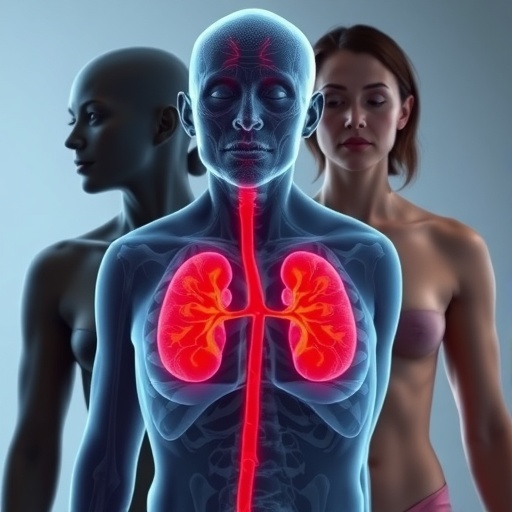
Parkinson’s disease research is moving beyond the brain. A new study in npj Parkinson’s Disease proposes a “kidney-inflammation-erythrocyte” framework designed to improve the prediction of Parkinson’s disease risk and the assessment of how the condition progresses. Led by Li, Song, Zhou and colleagues, the work reflects a growing scientific shift toward understanding neurodegeneration as a condition influenced by interconnected systems throughout the body, rather than as a disorder isolated within the nervous system.
Parkinson’s disease is traditionally associated with the gradual loss of dopamine-producing neurons in a region of the brain called the substantia nigra. As dopamine levels fall, people may develop tremor, slowness of movement, muscular rigidity and problems with balance. However, the disease is biologically complex and can begin years before the appearance of recognizable motor symptoms. During this early period, changes in metabolism, immune activity, blood composition and organ function may already be occurring. Detecting these signals could give clinicians a valuable opportunity to identify higher-risk individuals and monitor progression more accurately.
The framework described by the researchers focuses on three biological domains: kidney-related measures, inflammation and erythrocytes, the red blood cells responsible for transporting oxygen. This combination is notable because each domain may capture a different aspect of the biological stress associated with Parkinson’s disease. Kidney function reflects the body’s ability to regulate waste, fluid balance and metabolic products. Inflammatory indicators can signal persistent immune activation, while erythrocyte-related variables may provide information about oxygen delivery, blood-cell health and systemic physiological changes.
The scientific logic behind this approach is rooted in the close relationship between the brain and the rest of the body. Chronic inflammation can influence the blood-brain barrier, alter immune signaling and contribute to cellular stress. Impaired kidney function may affect the concentration of circulating molecules and inflammatory mediators, potentially changing the internal environment in which neurons operate. At the same time, abnormalities involving red blood cells could influence tissue oxygenation or reflect broader metabolic disturbances. None of these factors alone is likely to explain Parkinson’s disease, but their combined pattern may offer a more informative biological signature.
Rather than relying on a single laboratory measurement, a multi-domain framework can integrate several variables into a structured prediction model. In principle, such a model could use kidney-related indicators, inflammatory markers and erythrocyte characteristics to estimate an individual’s probability of developing Parkinson’s disease or to classify the likely stage and trajectory of an existing diagnosis. Statistical and machine-learning methods can identify relationships that may be difficult to detect when each measurement is examined separately. The result is not a diagnosis by itself, but a risk-assessment tool that could support clinical decision-making when combined with neurological examinations and patient history.
The distinction between risk prediction and progression assessment is especially important. A risk model attempts to identify people who may be more likely to develop Parkinson’s disease, while a progression model seeks to determine how rapidly symptoms or biological changes may advance after diagnosis. These are related but different challenges. A person with elevated inflammatory or kidney-related markers may not necessarily develop Parkinson’s disease, and a patient already living with the condition may show such changes for reasons unrelated to neurological decline. A useful framework must therefore be tested for accuracy, reproducibility and its ability to distinguish Parkinson’s-specific signals from general illness.
The study’s title also highlights an emerging concept in neurodegeneration: systemic biomarkers may complement established neurological indicators. Brain imaging, genetic information and specialized clinical assessments can provide powerful insights, but they may be expensive, difficult to access or unsuitable for repeated testing in large populations. Blood-based and routine clinical measurements, if validated, could offer a more practical way to monitor changes over time. Because kidney and blood-related tests are already common in medical care, a framework built around them could potentially be easier to incorporate into broader health screening systems.
However, the promise of a composite biomarker framework must be matched by careful validation. Researchers will need to determine whether the model performs consistently across different populations, age groups, disease stages and healthcare settings. Kidney function, blood counts and inflammatory markers can be affected by infection, medication, cardiovascular disease, diabetes, aging and many other conditions. These confounding factors could create misleading associations if they are not properly controlled. Long-term studies will also be needed to establish whether the framework can predict future disease before symptoms emerge, rather than simply reflecting changes that occur after Parkinson’s disease has already developed.
If supported by independent research, the kidney-inflammation-erythrocyte framework could help broaden the search for Parkinson’s biomarkers beyond the traditional focus on the brain. It may also encourage scientists to investigate how immune activity, circulation, organ function and neuronal vulnerability interact over the course of disease. Such an approach could ultimately contribute to earlier detection, more individualized monitoring and better selection of participants for clinical trials testing treatments intended to slow neurodegeneration.
For now, the significance of the work lies in its integrative direction. Parkinson’s disease remains a highly heterogeneous condition, and no single marker is expected to capture every patient’s biology. By linking kidney-related physiology, inflammation and red blood cell characteristics, Li, Song, Zhou and their colleagues present a framework that reflects the complexity of the disease and points toward more accessible, system-wide forms of assessment. The next stage will be determining whether this biological connection can translate into reliable predictions that make a measurable difference in patient care.
Subject of Research: Kidney-, inflammation- and erythrocyte-related biomarkers for Parkinson’s disease risk prediction and progression assessment
Article Title: Kidney-inflammation-erythrocyte framework for Parkinson disease risk prediction and progression assessment
Article References: Li, S., Song, Q., Zhou, S. et al. “Kidney-inflammation-erythrocyte framework for Parkinson disease risk prediction and progression assessment.” npj Parkinson’s Disease (2026). https://doi.org/10.1038/s41531-026-01494-6
Image Credits: AI Generated
DOI: 10.1038/s41531-026-01494-6
Keywords: Parkinson’s disease, risk prediction, disease progression, kidney function, inflammation, erythrocytes, biomarkers, neurodegeneration, precision medicine
Tags: blood-based biomarkers for neurodegenerationbody-wide approach to Parkinson’s diseaseearly detection of Parkinson’s riskerythrocyte biomarkers for Parkinson’sinflammation and Parkinson’s progressioninnovative frameworks for Parkinson’s prognosiskidney inflammation in Parkinson’smetabolic and immune indicators in neurodegenerative diseasesmulti-system disease modelingneurodegeneration systemic approachorgan system interactions in Parkinson’sParkinson’s disease prediction