• HOME
  • NEWS
  • EXPLORE
    • CAREER
      • Companies
      • Jobs
    • EVENTS
    • iGEM
      • News
      • Team
    • PHOTOS
    • VIDEO
    • WIKI
  • BLOG
  • COMMUNITY
    • FACEBOOK
    • INSTAGRAM
    • TWITTER
Thursday, July 30, 2026
BIOENGINEER.ORG
No Result
View All Result
  • Login
  • HOME
  • NEWS
  • EXPLORE
    • CAREER
      • Companies
      • Jobs
        • Lecturer
        • PhD Studentship
        • Postdoc
        • Research Assistant
    • EVENTS
    • iGEM
      • News
      • Team
    • PHOTOS
    • VIDEO
    • WIKI
  • BLOG
  • COMMUNITY
    • FACEBOOK
    • INSTAGRAM
    • TWITTER
  • HOME
  • NEWS
  • EXPLORE
    • CAREER
      • Companies
      • Jobs
        • Lecturer
        • PhD Studentship
        • Postdoc
        • Research Assistant
    • EVENTS
    • iGEM
      • News
      • Team
    • PHOTOS
    • VIDEO
    • WIKI
  • BLOG
  • COMMUNITY
    • FACEBOOK
    • INSTAGRAM
    • TWITTER
No Result
View All Result
Bioengineer.org
No Result
View All Result
Home NEWS Science News Health

Expanding the repertoire of chemically induced covalent neoantigens

Bioengineer by Bioengineer
July 30, 2026
in Health
Reading Time: 1 min read
0
Share on FacebookShare on TwitterShare on LinkedinShare on RedditShare on Telegram

blank

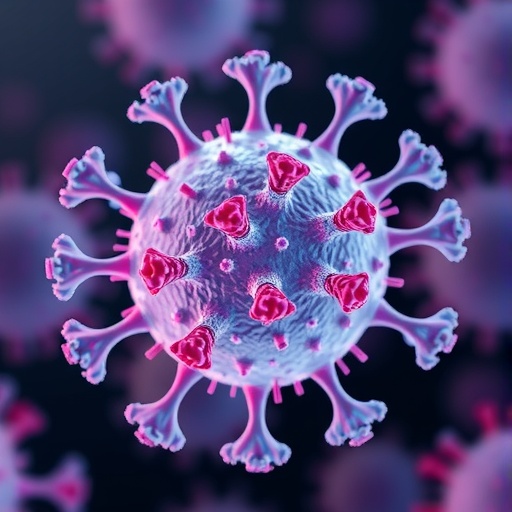
The ubiquitin–proteasome system generates peptide fragments that are displayed on class I major histocompatibility complex molecules. Hapten-modified peptides, or covalent neoantigens, arise from proteins covalently modified by small molecules and have long been proposed as components of a mechanism for immune recognition. Here we report a platform to investigate this mechanism and harness covalent neoantigens for immune cell recruitment and activation. Using cysteine-reactive probes, we demonstrated that covalently modified intracellular proteins could be processed and presented as covalent neoantigens in multiple cell lines. Immunopeptidomics confirmed the presence of probe-modified peptides within the class I major histocompatibility complex immunopeptidome. We further developed a bioorthogonal strategy for immune cell engagement by combining covalent neoantigens bearing a bioorthogonal handle with complementary immune cell recruiters, leading to activation of CD32- and CD3-expressing reporter immune cells. These findings expand the scope of covalent neoantigen formation and provide a generalizable strategy for immune targeting of covalent neoantigens.

Zhou, C., Jin, X., Huang, W. et al. Expanding the repertoire of chemically induced covalent neoantigens.
Nat Chem Biol (2026). https://doi.org/10.1038/s41589-026-02280-4

https://doi.org/10.1038/s41589-026-02280-4

Share12Tweet7Share2ShareShareShare1

Related Posts

Representations of the intrinsic value of information in mouse orbitofrontal cortex

July 30, 2026

Ferroptotic propagation: from single-cell execution to tissue-scale death programs

July 30, 2026

Residential proximity to major roadways and prevalent diabetes in older adults: a cross-sectional study based on CLHLS

July 30, 2026

Regulation of RNA transcript elongation in metazoans and its relevance to disease

July 30, 2026

POPULAR NEWS

  • Cemiplimab and fianlimab with neoadjuvant chemotherapy in early-stage high-risk -negative breast cancer

    29 shares
    Share 12 Tweet 7
  • Combined phage therapy and faecal microbiota transplantation to treat recurrent urinary tract infection: a case series

    29 shares
    Share 12 Tweet 7
  • Representations of the intrinsic value of information in mouse orbitofrontal cortex

    29 shares
    Share 12 Tweet 7
  • Pilot study to validate endothelium collection from pulmonary artery balloon catheter in children

    29 shares
    Share 12 Tweet 7

About

We bring you the latest biotechnology news from best research centers and universities around the world. Check our website.

Follow us

Recent News

Cemiplimab and fianlimab with neoadjuvant chemotherapy in early-stage high-risk -negative breast cancer

Combined phage therapy and faecal microbiota transplantation to treat recurrent urinary tract infection: a case series

Representations of the intrinsic value of information in mouse orbitofrontal cortex

Subscribe to Blog via Email

Enter your email address to subscribe to this blog and receive notifications of new posts by email.

Join 85 other subscribers
  • Contact Us

Bioengineer.org © Copyright 2023 All Rights Reserved.

Welcome Back!

Login to your account below

Forgotten Password?

Retrieve your password

Please enter your username or email address to reset your password.

Log In
No Result
View All Result
  • Homepages
    • Home Page 1
    • Home Page 2
  • News
  • National
  • Business
  • Health
  • Lifestyle
  • Science

Bioengineer.org © Copyright 2023 All Rights Reserved.