

• HOME
  • NEWS
  • EXPLORE
    • CAREER
      • Companies
      • Jobs
    • EVENTS
    • iGEM
      • News
      • Team
    • PHOTOS
    • VIDEO
    • WIKI
  • BLOG
  • COMMUNITY
    • FACEBOOK
    • INSTAGRAM
    • TWITTER
Thursday, July 30, 2026
BIOENGINEER.ORG
No Result
View All Result
  • Login
  • HOME
  • NEWS
  • EXPLORE
    • CAREER
      • Companies
      • Jobs
        • Lecturer
        • PhD Studentship
        • Postdoc
        • Research Assistant
    • EVENTS
    • iGEM
      • News
      • Team
    • PHOTOS
    • VIDEO
    • WIKI
  • BLOG
  • COMMUNITY
    • FACEBOOK
    • INSTAGRAM
    • TWITTER
  • HOME
  • NEWS
  • EXPLORE
    • CAREER
      • Companies
      • Jobs
        • Lecturer
        • PhD Studentship
        • Postdoc
        • Research Assistant
    • EVENTS
    • iGEM
      • News
      • Team
    • PHOTOS
    • VIDEO
    • WIKI
  • BLOG
  • COMMUNITY
    • FACEBOOK
    • INSTAGRAM
    • TWITTER
No Result
View All Result
Bioengineer.org
No Result
View All Result
Home NEWS Science News Health

Alternating CO2 and bicycloalkane copolymerization to circular polyesters

Bioengineer by Bioengineer
July 30, 2026
in Health
Reading Time: 1 min read
0
Share on FacebookShare on TwitterShare on LinkedinShare on RedditShare on Telegram

blank

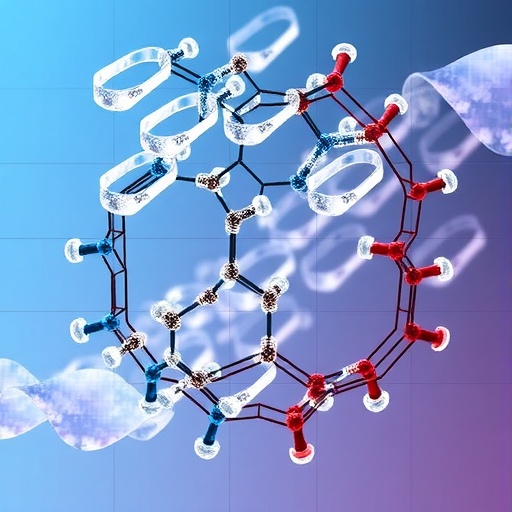
Transforming abundant but inert CO2 into useful polymers has been pursued since the 1960s (ref. 1) and has typically been achieved by copolymerization with a reactive comonomer, aided by a catalyst, which can address both thermodynamic constraints and high kinetic barriers associated with CO2 fixation and incorporation2,3,4,5. However, making polyesters remains a challenge as alternating copolymerization of CO2 with alkenes is thermodynamically infeasible6. Here we introduce a closed-loop CO2-based polyester platform for producing high-performance yet recyclable polyesters by direct alternating copolymerization of CO2 with bicycloalkanes, bicyclic butane (BCB) and pentane (BCP) monomers. This copolymerization is initiated by a simple organic catalyst and proceeds in a perfectly alternating fashion to high-molar-mass polyesters with maximum (50 mol%) CO2 incorporation and architecturally defined backbones, in which the in-chain ring structure enables tailorable thermal and mechanical properties. These polyesters exhibit desired orthogonal performance and end-of-life outcomes. Although the BCB-CO2 polyesters exhibit exceptional thermal and hydrolytic stability across the full pH range, they can be selectively depolymerized in bulk and base-catalysed conditions to regenerate pure BCB monomers in >90% isolated yield. The BCP-CO2 polyesters can also be selectively depolymerized but to bicyclolactones. Sequential depolymerization–repolymerization cycles establish circular lifecycles for BCB/BCP-CO2 high-performance polyesters.

Zhu, M., Westworth, X., Zhao, Y. et al. Alternating CO2 and bicycloalkane copolymerization to circular polyesters.
Nature (2026). https://doi.org/10.1038/s41586-026-10848-2

https://doi.org/10.1038/s41586-026-10848-2

Share12Tweet7Share2ShareShareShare1

Related Posts

RWJBarnabas Health and Rutgers researchers find AI tool helps detect patient deterioration earlier, reducing hospital deaths

July 30, 2026

The increase in fat-free mass during weight loss does not prevent greater than predicted reductions in resting energy expenditure in recreational athletes

July 30, 2026

A multimodal consensus parcellation of the human brainstem and its applications in Parkinson’s disease

July 30, 2026

Older adults’ engagement with social prescribing to active ageing centres in Singapore: a qualitative study from public primary care

July 30, 2026

POPULAR NEWS

  • Chicken kidney sponge could be ‘outstanding’ at cleaning up polluted ports

    29 shares
    Share 12 Tweet 7
  • Sensing-storage monolithically integrated system for wearable physiological sensing

    29 shares
    Share 12 Tweet 7
  • Low-cost, rare-earth-free material for carbon recycling

    29 shares
    Share 12 Tweet 7
  • RWJBarnabas Health and Rutgers researchers find AI tool helps detect patient deterioration earlier, reducing hospital deaths

    29 shares
    Share 12 Tweet 7

About

We bring you the latest biotechnology news from best research centers and universities around the world. Check our website.

Follow us

Recent News

Chicken kidney sponge could be ‘outstanding’ at cleaning up polluted ports

Sensing-storage monolithically integrated system for wearable physiological sensing

Low-cost, rare-earth-free material for carbon recycling

Subscribe to Blog via Email

Enter your email address to subscribe to this blog and receive notifications of new posts by email.

Join 85 other subscribers
  • Contact Us

Bioengineer.org © Copyright 2023 All Rights Reserved.

Welcome Back!

Login to your account below

Forgotten Password?

Retrieve your password

Please enter your username or email address to reset your password.

Log In
No Result
View All Result
  • Homepages
    • Home Page 1
    • Home Page 2
  • News
  • National
  • Business
  • Health
  • Lifestyle
  • Science

Bioengineer.org © Copyright 2023 All Rights Reserved.
