


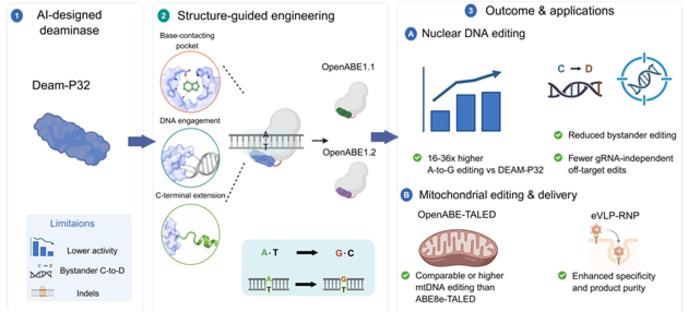

 image: 3-Step Evolutionary Map of Base Editors as ‘Therapeutic Tools’
view more
Credit: Hye-Yeon Hwang, Nabukenya Mariam, Jiyeon Kweon, Hwalin Yi, Gayoung Jang, Jiyoo Roh, Kayeong Lim, Jae-Hyun Park, Yongsub Kim, Daesik Kim, Structure-guided engineering of AI-derived adenine base editors for nuclear and mitochondrial DNA editing, Nucleic Acids Research, Volume 54, Issue 14, 12 August 2026, gkag737,
A joint research team led by Professor Daesik Kim (Department of Medicine, Sungkyunkwan University), along with Professor Yong-Sub Kim (University of Ulsan College of Medicine) and Professor Jae-Hyun Park (Sungkyunkwan University School of Medicine), has announced the development of ‘OpenABE’ (Open Adenine Base Editor). By precisely engineering AI-derived next-generation base editors using structure-guided protein engineering, the team elevated gene editing efficiency by up to 36 times compared to conventional models. This research is evaluated as having laid a solid foundation for safely treating various previously intractable genetic diseases.
Adenine Base Editors (ABEs), a key gene-editing technology, represent cutting-edge biotechnology that locates incorrect letters (adenine) and corrects them into proper letters (guanine) within the DNA sequence—the blueprint of life. Recently, research utilizing artificial intelligence to rapidly design novel gene editors not found in nature has drawn significant attention in the scientific community. However, initial models created by AI suffered from low gene-editing efficiency and frequent off-target and bystander effects, where unintended genetic letters outside the target site were altered, limiting their safety for clinical applications in patients.
Through AlphaFold-based predictions, Professor Daesik Kim’s joint research team meticulously analyzed the three-dimensional structure of base editors as if examining a 3D map. Through this analysis, they identified critical regions that assist the editor in firmly grasping the target DNA without losing its hold. The team conducted precise structural engineering by introducing customized mutations to these key regions and appending a specialized tail structure derived from the top-performing conventional base editor.
The resulting next-generation gene editors, ‘OpenABE 1.1’ and ‘OpenABE 1.2’, demonstrated editing capabilities 16 to 36 times stronger than existing AI-designed gene editors. This performance puts them on par with ABE8e, currently considered the gold-standard gene editor used in laboratories worldwide. Furthermore, the team dramatically reduced the off-target effects surrounding target genes—a chronic issue in AI gene editors—achieving high precision that cleanly corrects only the intended genes.
Notably, this study proved that precise editing is achievable not only for DNA inside the nucleus—the center of the cell—but also for DNA within mitochondria, which produce cellular energy but have proven difficult to edit due to their unique structure. Additionally, by encapsulating these gene editors into engineered virus-like particles (eVLPs) for cellular delivery, the team secured high safety standards that allow the selective editing of only one or two target genes needing treatment.
Professor Daesik Kim of Sungkyunkwan University stated, “This study represents a landmark innovation where human scientists overcame the limitations of early AI-designed gene editors using structure-guided protein engineering. By opening a path to safely cure the causes of genetic diseases in both the nucleus and mitochondria, we expect this work to significantly accelerate the development of therapeutics for genetic disorders.” The findings were published in a world-renowned international journal in genetics and molecular biology, drawing widespread attention from the global scientific community.
The research team also recently revealed that ‘OpenCRISPR-1’, a next-generation gene editor designed by AI, maintains gene-editing efficiency comparable to conventional Cas9 while reducing off-target mutations by up to 553 times. Furthermore, by applying OpenCRISPR-1 to prime editing technology and engineered virus-like particle (eVLP) delivery systems, they demonstrated its potential for expansion into a highly efficient and precise next-generation gene therapy platform.
Nucleic Acids Research
DOI10.1093/nar/gkag737
Media ContactGoeun KIM
Sungkyunkwan University External Affairs Division (PR team)
Journal Nucleic Acids Research DOI 10.1093/nar/gkag737 JournalNucleic Acids Research
DOI10.1093/nar/gkag737
Tags/Health and medicine


