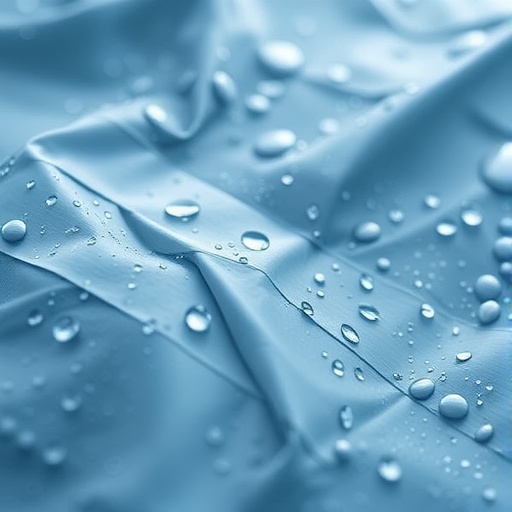
A new wave of materials science is targeting a long-standing contradiction in outdoor apparel: waterproofing without trapping moisture inside. Researchers have reported PFAS-free waterproof breathable membrane technologies designed to deliver the comfort benefits consumers expect, while avoiding the environmental and health concerns associated with per- and polyfluoroalkyl substances.
The study, published in npj Advanced Manufacturing in 2026, focuses on how membrane chemistry and microstructure can be engineered to manage vapor transport and liquid rejection at the same time. The central goal is to create a fabric “skin” that blocks water droplets yet allows water vapor generated by sweat to escape—reducing clamminess and improving thermal comfort.
Unlike conventional approaches that rely on fluorinated coatings to lower surface energy, the PFAS-free strategy emphasizes alternative surface treatments and membrane architectures. These routes aim to replicate the droplet-repellent behavior needed for rainy conditions while maintaining breathability under real-world humidity gradients.
Technically, the work draws on interfacial science: a membrane’s ability to repel liquid depends on how it interacts with water at its surface and within its pores. By tuning pore geometry and wetting behavior, the researchers increase the likelihood that rainwater forms droplets that roll off rather than penetrating. Meanwhile, the pathway for vapor diffusion is preserved so that gases can migrate through the same material system.
The authors also highlight manufacturing relevance, suggesting that scalable membrane fabrication is possible using design rules rather than relying on PFAS-specific formulations. This is critical because translating lab-scale membranes into mass-produced garments depends on both performance consistency and production practicality.
From a viral-science-news perspective, the headline is clear: waterproof breathable gear could become less reliant on highly persistent chemicals. As regulations tighten and public scrutiny grows, PFAS-free technologies may accelerate adoption in outdoor, industrial protective textiles, and sports wear.
The paper is identified by DOI: 10.1038/s44334-026-00106-8, and it serves as a timely signal that filtration, coating, and membrane design can be rethought for sustainability. If performance holds across laundering cycles and varied climates, these membranes may define a new baseline for what “safe waterproofing” should mean.
Subject of Research: PFAS-free waterproof breathable membrane technologies for outdoor/protective textiles
Article Title: PFAS-free waterproof breathable membrane technologies
Article References: Tasiman, B.H.A., Alfikro, M.I., Aflaha, R. et al. PFAS-free waterproof breathable membrane technologies. npj Adv. Manuf. (2026). https://doi.org/10.1038/s44334-026-00106-8
DOI: 10.1038/s44334-026-00106-8
Keywords: PFAS-free membranes; waterproof breathable textiles; vapor transport; surface/wetting engineering; sustainable materials
Tags: advanced materials for thermal comforteco-friendly rain-resistant clothing materialsemerging trends in outdoor textile technologyenvironmentally friendly outdoor apparelinterfacial science in textile membranesmembrane surface treatments for waterproofingmicrostructure engineering in textilesPFAS-free waterproof breathable membrane technologiespore geometry optimization for moisture controlsustainable waterproof fabric innovationstextile moisture managementvapor transport and liquid rejection in fabrics