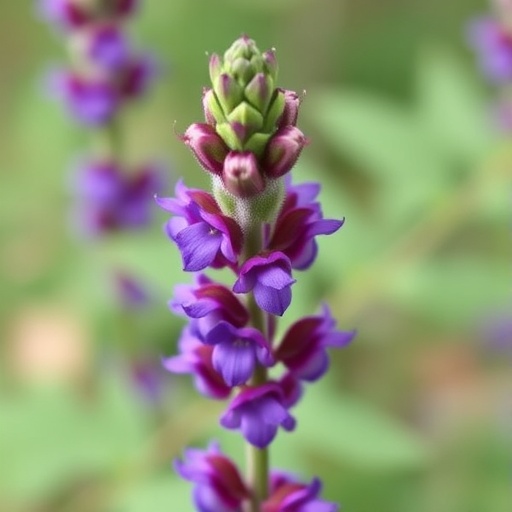
Salt stress is rapidly eroding crop productivity worldwide, and medicinal plants are not spared. For Salvia miltiorrhiza, salinization threatens both survival and the biochemical machinery that produces tanshinones—high-value molecules used in traditional and modern therapeutics.
Now, researchers report the identification of a single gene, SmGA2ox4, that helps the plant tolerate salty conditions while simultaneously enhancing tanshinone accumulation. The work reframes a long-standing stress-growth dilemma: under stress, plants must reallocate energy away from expansion toward protective and metabolic pathways.
The gene belongs to the GA2ox enzyme family, which inactivates gibberellins (GAs), growth-promoting hormones. By reducing active GA levels, SmGA2ox4 appears to shift hormonal balance toward stress defense. This hormonal rewiring also intersects with methyl jasmonate (MeJA), a signaling molecule known to coordinate stress responses.
In transgenic experiments, overexpressing SmGA2ox4 in Arabidopsis thaliana produced measurable salt-resistance improvements. Compared with wild-type plants, transgenics showed higher germination and longer primary roots under saline conditions. Physiological profiling indicated increased chlorophyll and proline (an osmoprotectant), alongside reduced malondialdehyde (MDA), a marker of oxidative damage.
The antioxidative system also changed. Activities of key enzymes—superoxide dismutase (SOD), peroxidase (POD), and catalase (CAT)—rose in the overexpressing lines, consistent with reduced reactive oxidative stress. Ion balance shifted as well, with a lower sodium-to-potassium ratio suggesting improved ionic homeostasis.
To confirm the gene’s behavior in its native host, the team engineered S. miltiorrhiza hairy roots. Again, SmGA2ox4 overexpression improved growth and reduced MDA while elevating proline and boosting antioxidant capacity under salt stress. The metabolic readout was even more striking.
High-performance liquid chromatography revealed that SmGA2ox4 overexpression promoted tanshinone accumulation, whereas it suppressed salvianolic acid biosynthesis. When the gene was silenced via RNA interference, the pattern inverted: salvianolic acids increased while tanshinones declined.
Mechanistically, the researchers link these opposite metabolite trends to differential regulation across the pathways. Genes associated with tanshinone production, including SmCYP76AH1 and SmKSL1, were upregulated, while salvianolic acid pathway components such as SmRAS1 and SmCYP98A14 were downregulated.
The study suggests that targeted manipulation of GA inactivation can tune both stress resilience and specialized metabolism. If scalable, such genetic strategies could support the cultivation of medicinal S. miltiorrhiza on marginal, salt-affected lands without sacrificing—potentially improving—pharmaceutical output.
Subject of Research:
Article Title: SmGA2ox4 plays a positive role in improving the salt tolerance and tanshinone accumulation of Salvia miltiorrhiza
News Publication Date: 26-Feb-2026
Web References: https://academic.oup.com/hr/article/13/6/uhag058/8498877?login=true ; http://dx.doi.org/10.1093/hr/uhag058
References: 10.1093/hr/uhag058
Image Credits: Horticulture Research
Keywords: Salvia miltiorrhiza, salt stress, gibberellin inactivation, GA2ox, SmGA2ox4, tanshinones, MeJA, transgenic plants, antioxidant enzymes
Tags: enzyme activity in plant stress defensegibberellin inactivation in stress responseion homeostasis in salt tolerancemethyl jasmonate signaling in plantsosmoprotectants in salt-stressed plantsoxidative stress mitigation in plantsplant hormonal balance under salt stressSalvia miltiorrhiza salt toleranceSmGA2ox4 gene functionstress-response genetanshinone biosynthesis enhancementtransgenic Arabidopsis salt resistance