


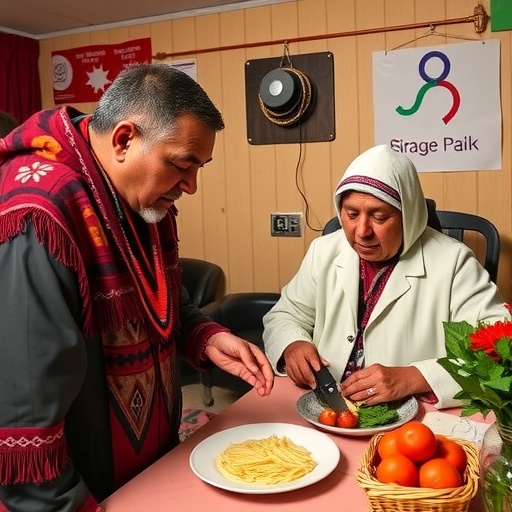
PHILADELPHIA—A randomized clinical trial published in JAMA Internal Medicine reports that a culturally tailored meal program based on traditional Diné (Navajo) foods can meaningfully reduce acute health events among rural heart failure patients. The study, called MUTTON-HF (Medically Utilized Tailored Traditional foods to Optimize Nutrition in Heart Failure), enrolled 206 adults receiving care at two Indian Health Service sites and assigned participants to either usual care or eight weeks of medically tailored meals. The intervention integrated locally sourced Indigenous ingredients and Diné recipes with evidence-aligned cardiovascular nutrition guidance.
Lead author Lauren Eberly, MD, MPH, of the University of Pennsylvania, emphasizes that the trial’s design was rooted in community partnership rather than top-down dietary instruction. Researchers framed the approach as “Food is Medicine,” aiming to address nutrition insecurity while strengthening cultural identity and continuity with traditional food systems. The study targeted a population shaped by structural barriers that often contribute to worse cardiovascular outcomes.
Participants in the intervention group received two meals daily during the eight-week program. Meal delivery was paired with practical support intended to reduce implementation barriers, including food distribution hubs and, when needed, appliances such as microwaves or propane-powered refrigeration. Meals were developed with Navajo dietitians and farmers, and in collaboration with Tocabe, a Native-run kitchen.
The primary results focused on hospitalizations and emergency department (ED) visits over 90 days. Patients assigned to medically tailored meals had a significantly lower combined rate: 40.6% compared with 57.0% in the usual care group. Hospitalizations were reduced by more than half (12.3% vs. 26.0%), and heart failure–specific hospitalizations were also sharply lower (3.8% vs. 13.0%).
Beyond acute utilization, secondary outcomes suggested broader clinical and psychosocial benefits. The intervention group reported improved quality of life using the Kansas City Cardiomyopathy Questionnaire, along with reduced food insecurity and financial strain. Clinically, participants experienced significant reductions in weight and blood pressure, while dietary patterns improved through higher fruit and vegetable intake.
Senior author Sonya Shin, MD, of Mass General Brigham, notes that culturally grounded nutrition interventions may be both respectful and therapeutically effective. The trial also highlights a scalable model for health systems: co-creating nutrition solutions that are clinically targeted, locally feasible, and culturally relevant.
Funding came from the American Heart Association’s Health Care by Food Initiative, and the work was conducted with Navajo Nation partners and Indian Health Service facilities.
Subject of Research: Culturally tailored nutrition intervention for heart failure patients; randomized clinical trial measuring hospitalizations/ED visits
Article Title: MUTTON-HF (Medically Utilized Tailored Traditional foods to Optimize Nutrition in Heart Failure)
News Publication Date: Not specified
Web References: https://www.muttonhf.com/ , https://www.tocabe.com/
References: JAMA Internal Medicine (article details not provided in the excerpt)
Image Credits: Not specified
Keywords: heart failure, culturally tailored meals, Diné (Navajo) foods, nutrition insecurity, randomized clinical trial, hospitalization, emergency department, Food is Medicine, Indigenous health disparities
Tags: community-based dietary healthculturally sensitive healthcareculturally tailored meal programdiet and cardiovascular healthfood insecurity in Navajo Nationheart failure hospitalization reductionIndigenous food sovereigntyIndigenous nutrition interventionmedically tailored meals for heart failureNative American food systemsrural health disparitiesTraditional Navajo foods


