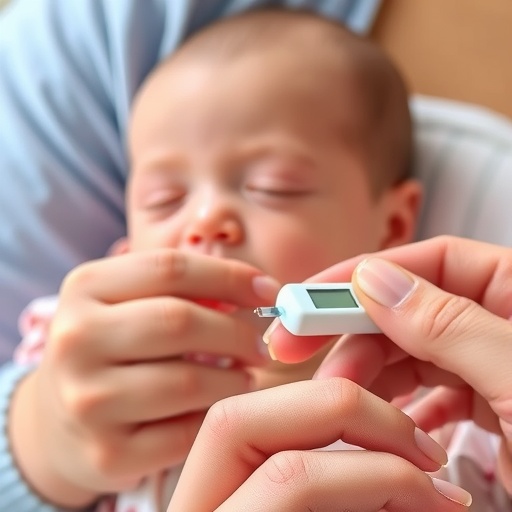
A new Pediatrics Research commentary asks a deceptively simple question: how accurate does “accurate enough” really need to be for point-of-care glucose testing in newborns? Authored by K. Beardsall and published in 2026, the piece argues that the usual focus on device precision misses a larger clinical challenge—how measurement errors interact with the biology and workflows of the earliest days of life.
At the center of the discussion is point-of-care (POC) glucose monitoring, widely used to quickly identify neonatal hypoglycemia. In principle, rapid results help clinicians intervene before prolonged low glucose harms the developing brain. But speed alone does not guarantee safety; a bedside number can be misleading if accuracy is compromised by the testing environment, sample characteristics, or instrument limitations.
Beardsall highlights that newborn glucose is not static, and values can change rapidly as feeding patterns evolve and metabolic adaptation unfolds. This means that even small analytic differences between a POC device and laboratory methods can translate into clinically meaningful misclassification—labeling an infant as hypoglycemic when glucose is borderline, or failing to flag a true risk when readings are falsely reassuring.
The commentary also stresses that accuracy is only one ingredient of a reliable diagnostic system. Pre-analytical factors—such as timing after birth, blood sampling technique, hematocrit effects, and how fresh the specimen is—can skew readings. Post-analytic factors matter too: how clinicians act on a threshold number, how frequently tests are repeated, and whether confirmatory laboratory testing is available.
Instead of treating POC glucose measurement as a standalone test, the author frames it as part of a decision pathway. When thresholds trigger interventions like feeds, glucose gels, or intravenous therapy, the “error tolerance” must match both the stakes of overtreatment and the dangers of missing cases.
Beardsall’s central warning is that the consequences of inaccuracy are amplified in the newborn period, where clinicians must balance urgency with uncertainty. A device that performs adequately on average may still generate problematic results at the extremes or in specific subgroups.
The piece ultimately calls for a broader evaluation of POC systems—testing not just analytic accuracy but clinical performance across real-world conditions. Only by integrating measurement behavior with decision-making can “accurate enough” become truly actionable for neonatal care.
Finally, the article situates the debate within ongoing efforts to standardize neonatal glucose management. It suggests that future improvements should target both instrument reliability and the health-system pathways that convert a number into treatment—because in the NICU, the measurement is never the whole story.
Subject of Research: Point-of-care glucose measurement accuracy in newborns; clinical decision-making beyond analytic precision.
Article Title: How accurate is accurate enough? Point-of-care glucose measurement in the newborn—and why accuracy is only part of the problem.
Article References: Beardsall, K. How accurate is accurate enough? Point-of-care glucose measurement in the newborn—and why accuracy is only part of the problem. Pediatr Res (2026). https://doi.org/10.1038/s41390-026-05294-9
Image Credits: AI Generated
DOI: https://doi.org/10.1038/s41390-026-05294-9
Keywords:
Tags: bedside glucose testing limitationsbiological variability in neonatal glucose levelsclinical implications of measurement errorsearly detection of neonatal hypoglycemiaensuring safe glucose management in newbornsimpact of testing environment on accuracylaboratory vs. point-of-care glucose measurementneonatal glucose monitoring challengesneonatal hypoglycemia diagnosispoint-of-care glucose testing accuracyrapid glucose fluctuations in newbornsworkflow considerations in neonatal glucose testing