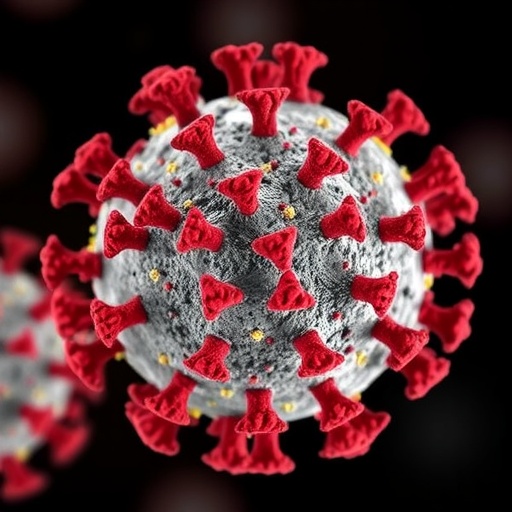
Crimean–Congo haemorrhagic fever virus (CCHFV), a tick-borne pathogen, continues to threaten public health with severe and often fatal human disease. With no licensed vaccines or approved treatments, the World Health Organization has designated CCHFV a priority target for urgent development of medical countermeasures. A key obstacle has been the limited structural understanding of how its replication machinery works, particularly the viral RNA-dependent RNA polymerase complex.
In new work published in Nature, researchers focused on the CCHFV Large (L) protein, which serves as the polymerase responsible for copying the viral genome. The L protein is among the largest polymerases in the Bunyavirales order, making it both biologically intriguing and technically challenging to study. By reconstituting RNA synthesis in vitro and capturing elongating L–RNA complexes, the team gained a direct view of how the polymerase is arranged during active replication.
The study defines the essential cofactors required for CCHFV-L RNA synthesis outside the cell. Using these conditions, the authors isolated structures associated with RNA elongation and determined their conformations. This approach allowed them to move from inference to detailed structural visualization of a replication stage that is critical for antiviral target validation.
A striking finding is that CCHFV-L adopts a markedly enlarged architecture during RNA synthesis. Rather than being a static molecular machine, the polymerase appears to reorganize itself as it transitions into elongation-competent states. The enlarging architecture correlates with ordering of peripheral domains, suggesting that the polymerase’s “outer” regions become coordinated to support processive RNA copying.
These observations help explain how the large L protein accommodates RNA and catalysis within a dynamic assembly. They also clarify how peripheral domain positioning may regulate key steps such as nucleotide selection, translocation, and chain extension. For drug discovery, such mechanistic detail is valuable because it links inhibitor effects to specific conformational states of the polymerase.
The authors also mapped inhibition mechanisms of two CCHFV-L targeting compounds. One is WXSH0208, a baloxavir-derived experimental drug reported to act against the polymerase. Structural analyses and biochemical behavior indicate that WXSH0208 inhibits CCHFV-L through endonuclease interference, disrupting a catalytic function required during RNA synthesis.
In parallel, the nucleoside analogue 2′-deoxy-2′-fluorocytidine provides another orthogonal inhibition mode. The compound shows nanomolar cellular potency and, in this work, blocks RNA synthesis via post-translocation chain termination. Structurally supported, this suggests the analogue is incorporated and then prevents further elongation after the polymerase advances.
Together, the structures provide a platform for rational optimization of inhibitors aimed at CCHFV-L. By showing how both endonuclease inhibition and chain termination correspond to distinct polymerase conformations, the study offers guidance for designing molecules that are better tailored to the viral replication machinery.
This research therefore advances Viral science news by transforming CCHFV-L from a biochemical target into a mechanistically described, drug-interpretable system. With CCHFV continuing to demand new countermeasures, such structural frameworks may accelerate the path toward effective therapies against a virus with limited treatment options.
Subject of Research: Crimean–Congo haemorrhagic fever virus (CCHFV) polymerase (CCHFV-L)
Article Title: Structures and inhibition of the Crimean–Congo haemorrhagic fever virus polymerase
Article References: Xue, L., Gui, J., Pan, H. et al. Structures and inhibition of the Crimean–Congo haemorrhagic fever virus polymerase. Nature (2026). https://doi.org/10.1038/s41586-026-10701-6
Image Credits: AI Generated
DOI: https://doi.org/10.1038/s41586-026-10701-6
Keywords: CCHFV-L, RNA-dependent RNA polymerase, WXSH0208, 2′-deoxy-2′-fluorocytidine, endonuclease inhibition, chain termination, Bunyavirales, antiviral inhibitors
Tags: antiviral drug targetsBunyavirales virus polymerasesCCHFV L proteinCrimean-Congo hemorrhagic fever virusRNA synthesis processRNA-dependent RNA polymerasestructural virology of hemorrhagic fevertick-borne virus replicationviral replication machineryviral RNA polymerase structurevirus structural biologyvirus-inhibition mechanisms