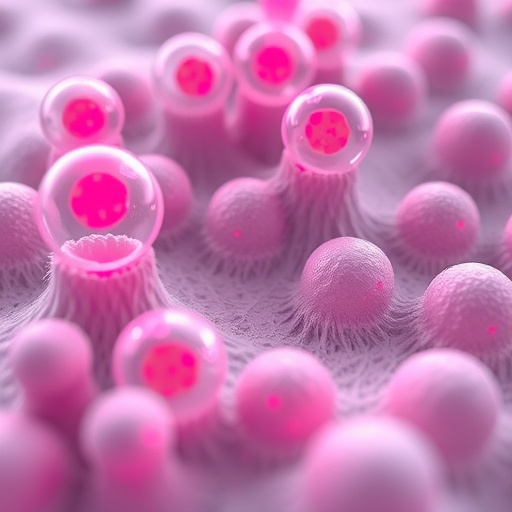
A new study reports a strategy to make extracellular vesicles (EVs) behave less like generic drug carriers and more like precision “mail services” that deliver cargo to their intended cellular neighborhood. Published in Nature Biomedical Engineering, the work describes how engineering the EV surface can dramatically improve what the authors call “super homotypic targeting,” enabling vesicles to preferentially interact with cells of the same origin.
Extracellular vesicles are nanoscale particles released by cells that can transfer proteins, lipids, and nucleic acids. Their natural role in intercellular communication has fueled intense interest in EV-based therapies, particularly because EVs can reduce some limitations of synthetic nanoparticles, such as immunogenicity and poor biodistribution. Yet a persistent challenge remains: directing EVs to the right target cells with high specificity.
The researchers focus on the concept of homotypic targeting, where EVs show a tendency to bind cells that are phenotypically similar to the producing cells. Building on this baseline behavior, they apply surface engineering to tune EV interactions. Instead of relying solely on native surface molecules, the modified vesicles are designed to enhance recognition at the cell membrane level, increasing both uptake efficiency and functional delivery.
Using a combination of physicochemical characterization and cellular assays, the study shows that engineered EVs exhibit stronger binding and internalization compared with unmodified controls. The improved performance appears to stem from enhanced molecular compatibility between the EV surface and target-cell receptors, shifting the targeting balance toward same-cell-type partners.
Importantly, the authors frame their approach as a scalable design principle rather than a one-off modification. By adjusting surface features, EVs can be tuned to exploit biological “matching rules” inherent to cell populations. This could help overcome variability between batches and between donor cell sources—issues that often complicate EV translation.
From a therapeutic perspective, enhanced homotypic targeting could raise the effective dose at the cellular level while potentially reducing off-target exposure. That matters for applications such as oncology, where precision delivery to tumor cells or tumor-associated cell types could improve potency and safety.
Overall, the study suggests that EV biology can be “programmed” through surface engineering to achieve a level of targeting beyond what native vesicles naturally provide. If validated across additional cell types and in vivo models, this concept may accelerate EV platforms toward more reliable, cell-selective therapies.
Wang, HS., Ding, T., Liu, Y. et al. Super homotypic targeting by surface engineering of extracellular vesicles. Nat. Biomed. Eng (2026). https://doi.org/10.1038/s41551-026-01743-2
Subject of Research: Extracellular vesicle (EV) targeting via surface engineering
Article Title: Super homotypic targeting by surface engineering of extracellular vesicles
Article References: Wang, HS., Ding, T., Liu, Y. et al. (2026) Nature Biomedical Engineering. https://doi.org/10.1038/s41551-026-01743-2
Image Credits: AI Generated
DOI: https://doi.org/10.1038/s41551-026-01743-2
Tags: cell-specific EV deliveryenhancing EV uptake efficiencyEV surface modification techniquesEV-based nanomedicineEV-based targeted therapyExtracellular vesicle surface engineeringhomotypic targeting of extracellular vesiclesimproving EV biodistributionintercellular communication via EVsnanoscale vesicle drug deliveryprecision EV “mail services”reducing immunogenicity of EVs