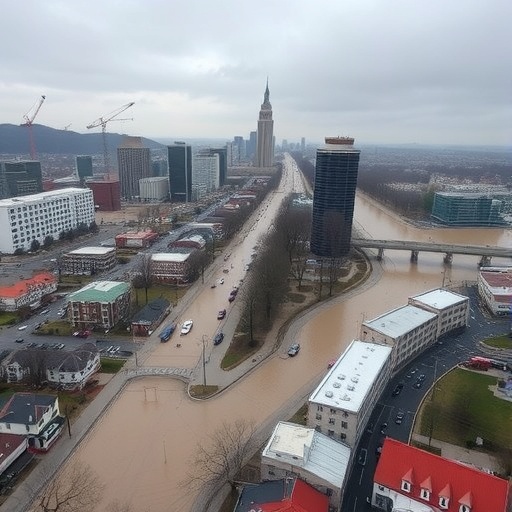
A new study published in Nature Communications reports that historically redlined communities in the United States face sharply higher exposure to extreme flooding than surrounding areas, even when overall flood hazard patterns appear similar. The findings add a quantitative layer to long-running concerns about how discriminatory housing policies can shape environmental risk over generations.
Researchers combined high-resolution flood modeling with historical lending and mapping records tied to redlining practices. By overlaying these datasets across U.S. regions, the team evaluated where the heaviest flood impacts concentrate and compared those patterns to neighborhoods’ past access to mortgages and investment.
The analysis focuses on events at the upper tail of flood severity—rare, high-consequence storms that typically drive disaster losses. Instead of relying only on average flood risk, the study measures disproportionate exposure, asking whether redlined areas encounter extreme outcomes more frequently or more intensely than would be expected under proportional risk sharing.
Technically, the work uses flood-risk projections to estimate how often different locations would experience “extreme flood” conditions, then contrasts modeled exposure levels across neighborhood groups. This approach helps isolate not only where water reaches, but which communities are most likely to be repeatedly affected.
Importantly, the study’s emphasis on historically redlined areas suggests a mechanism beyond simple geography. Redlining is linked to persistent structural disadvantages—limited infrastructure investment, older housing stock, and constrained adaptation capacity—that can translate hazard into lived risk. The team interprets the observed exposure gaps as evidence that social vulnerability can amplify the impacts of climate and weather extremes.
The researchers also examine how the relationship varies by region and flooding profile, indicating that disproportionate exposure is not uniform. In some areas, legacy patterns of underinvestment appear to compound modern flood threats, making extreme events more damaging and harder to recover from.
While the paper centers on exposure rather than direct health outcomes, it implies downstream consequences for insurance affordability, displacement risk, and long-term public health. Extreme flooding can disrupt employment, contaminate water supplies, and accelerate housing deterioration, all of which can worsen existing inequities.
The study arrives as climate-driven extremes intensify and as debates grow around resilience funding and equitable disaster planning. By quantifying who is most exposed to the worst flood events, the research frames redress as both a social justice imperative and a practical emergency-management strategy.
Subject of Research: Extreme flood exposure disparities in historically redlined U.S. communities.
Article Title: Disproportionate exposure to extreme floods in historically redlined U.S. communities.
Article References: Appel, E., Enderami, S.A., Sutley, E.J. et al. Disproportionate exposure to extreme floods in historically redlined U.S. communities. Nature Communications (2026). https://doi.org/10.1038/s41467-026-76024-2
Image Credits: AI Generated
Tags: disproportionate disaster impacts on marginalized neighborhoodsdisproportionate flood risk in redlined neighborhoodsenvironmental inequality in flood risk distributionenvironmental justice and housing discriminationextreme flood event analysis in vulnerable communitiesflood risk modeling and geographic analysishigh-resolution flood hazard mappinghistorical lending practices and environmental hazardsimpact of redlining on flood exposurelong-term consequences of discriminatory housing policiesrole of historical segregation in climate risk exposurespatial disparities in flood vulnerability