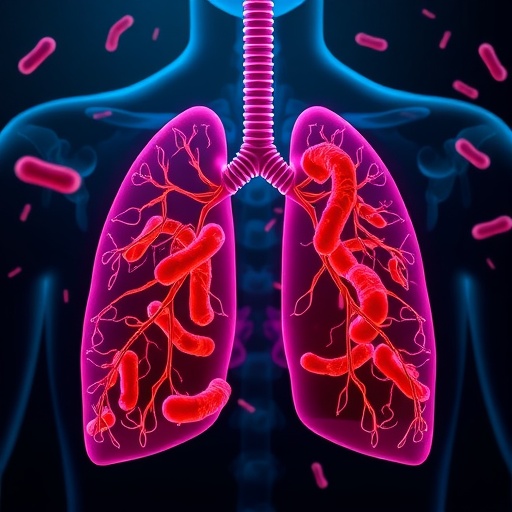
A new study published in Nature Microbiology reports that lung infections can become dramatically harder to treat when bacteria exchange genes within the same patient over time. The work shows that genetic material can move between bacterial populations that behave differently during infection—those that appear transient and those that persist chronically—creating resistance levels that standard antibiotic strategies fail to contain.
The researchers focused on the evolutionary bridge that forms inside a single host. Instead of assuming that antibiotic resistance emerges only through repeated exposure or independent evolution, the team investigated how gene transfer can connect distinct bacterial lineages occupying the same airway environment.
Using patient-relevant infection settings, the study traced how resistance traits spread when transiently infecting bacteria later overlap with chronically established strains. This within-patient exchange enables resistance determinants to “jump” from one population to another, effectively equipping persistent bacteria with the survival toolkit previously present in temporary colonizers.
The results indicate that the timing of infection matters. Early populations may carry resistance alleles that, once transferred, allow later-emerging or previously settled bacteria to withstand higher antibiotic pressures. The consequence is an extreme antibiotic resistance phenotype during ongoing lung disease, rather than a gradual, population-by-population shift.
Mechanistically, the team emphasizes that gene transfer can occur despite the competitive and spatial constraints of the lung. When bacteria share niches, mobile genetic elements can facilitate rapid genetic mixing, accelerating the pace of adaptation beyond what clinicians expect from routine treatment cycles.
This process also helps explain why antibiotic failure can occur even when initial isolates appear treatable. If resistant genes arrive through transfer after sampling, the clinical microbiology picture can lag behind the pathogen’s real-time evolution.
For clinicians, the findings suggest that monitoring should not only track antibiotic susceptibility at a single time point. Instead, it may need to capture the dynamic genetic landscape of airway bacteria across treatment and disease stages.
For the broader field, the study underscores that the “within-host” context is not a passive background, but an active laboratory for microbial evolution. Limiting antibiotic resistance may therefore require strategies that address gene flow as well as growth and survival.
Finally, the work provides a clear target for future interventions: disrupting the conditions that permit gene transfer between transient and chronic bacterial communities during lung infections.
Subject of Research: Within-patient bacterial gene transfer and antibiotic resistance during lung infections.
Article Title: Within-patient gene transfer between transiently and chronically infecting bacteria causes extreme antibiotic resistance during lung infections.
Article References: Karash, S., Betts, H.L., Radey, M.C. et al. (2026). Nature Microbiology. https://doi.org/10.1038/s41564-026-02414-3
Image Credits: AI Generated
DOI: https://doi.org/10.1038/s41564-026-02414-3
Tags: Antibiotic resistance gene transfer in lung bacterial infectionsantibiotic treatment failure in lung infectionsbacterial adaptation during respiratory infectionsbacterial gene transfer mechanismsevolution of antibiotic resistance in lungsgene flow between bacterial lineagesgenetic exchange driving extreme resistanceimpact of infection timing on resistance developmentimplications for antimicrobial therapy strategiestransient versus persistent bacterial strainswithin-host bacterial gene exchangewithin-host bacterial population dynamics