Chemists have long used single-electron transfer to activate tough molecules and link them into more complex structures. But a stubborn rule has limited what synthetic chemists can reliably achieve: when two reactants compete for an electron, the system tends to favor whichever partner is easiest to reduce. That “thermodynamic winner” often blocks selectivity and keeps many promising coupling reactions out of reach.
Now a team led at the University of Wisconsin–Madison, with collaborators at Colorado State University and the University of Colorado Boulder, reports a strategy that changes the usual design logic. Published in Nature (doi: 10.1038/s41586-026-10897-7), the work shows that selectivity can arise even when the initial electron transfer is indiscriminate—turning a supposed disadvantage into a feature.
At the center of the approach is a catalyst that ejects an electron directly into the solvent rather than trapping it on a specific substrate. As described by lead investigator Zachary Wickens, this produces a “strongest reductant” scenario: a free electron in solution prefers to attach to essentially any molecule it encounters, because it is energetically unfavorable for the electron to remain unbound.
That means the reaction no longer relies on choosing a single best electron acceptor upfront. Instead, the electron attaches to whichever species it meets first. According to the researchers, that shift undermines the classic selectivity expectation and opens the door to coupling outcomes that would otherwise be dominated by the most easily reduced partner.
The team’s mechanistic studies explain how the chemistry still converges toward the desired products. Computational work from Colorado State University indicates that after electron transfer occurs, the intended reactant can avoid reversal and proceed forward to form products. Meanwhile, the competing, easier-to-reduce partner does not get “consumed” in the productive pathway; it is effectively recycled back toward its starting material.
Spectroscopic investigation at the University of Colorado Boulder further supports a mechanistic narrative in which reaction selectivity emerges after the first electron event. In other words, the system is not selecting through initial reduction preference; it is steering outcomes through differential forward progression versus reversal.
Over the past five years, the Wickens group has been developing this family of photoreduction catalysts aimed at realizing an alternative redox design framework. Wickens emphasizes that the result is not just an incremental synthetic tool, but a new way to engineer electron-driven reactivity.
The author team includes Zachary Wickens, Joseph M. Edgecomb, Matthew D. Resmini, Alissia F. Meyer (UW–Madison), Niket Manoj and Robert S. Paton (Colorado State University), and Niels H. Damrauer and Arindam Sau (University of Colorado Boulder).
Subject of Research: Not applicable
Article Title: Selectivity Emerges from Indiscriminate Photoreduction
News Publication Date: 15-Jul-2026
Web References: https://www.nature.com/articles/s41586-026-10897-7
References: doi: 10.1038/s41586-026-10897-7
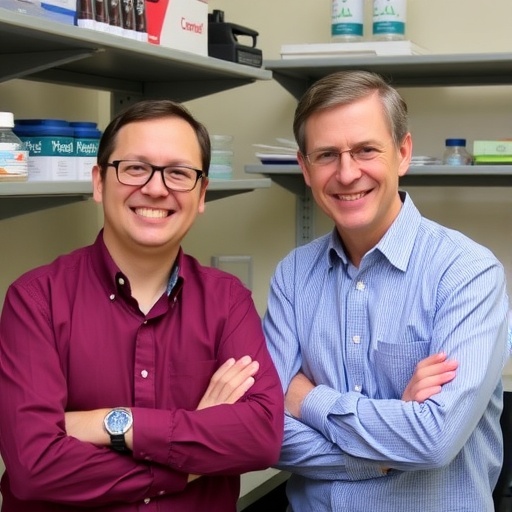
Image Credits: UW–Madison Department of Chemistry
Keywords
single-electron transfer, photoreduction, catalytic selectivity, mechanistic spectroscopy, computational chemistry, redox reactions, electron ejection in solvent, electron transfer selectivity, synthetic chemistry, Nature
Tags: catalytic electron transferchemoselectivity in synthesiselectron transfer in complex moleculeselectron transfer selectivityfree electron in solutionnew strategies in synthetic chemistryovercoming thermodynamic controlselectivity in coupling reactionssingle-electron transfersolvent-based electron deliverysolvent-mediated electron transferUniversity of Wisconsin Madison chemistry