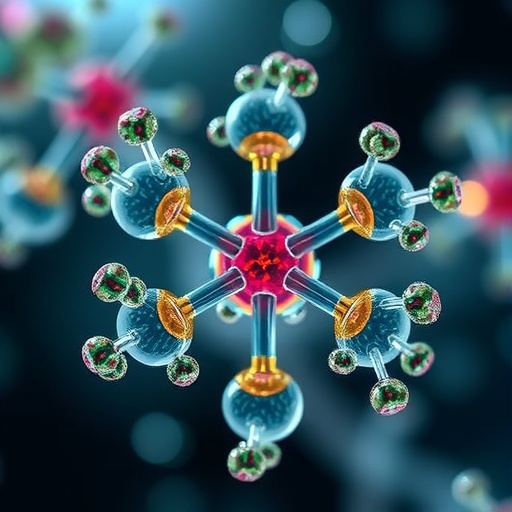
Membraneless biomolecular condensates—assemblies of DNA, RNA, and proteins—are emerging as active players in living cells rather than passive storage sites. These phase-separated “molecular communities” bring diverse molecules into close proximity, creating microenvironments where reactions can accelerate. For years, most work focused on the protein and nucleic acid components thought to drive condensate behavior. Now, new findings add an unexpected catalyst layer to condensate chemistry.
In research led by Yifan Dai and Rohit V. Pappu at Washington University in St. Louis, the team discovered “condenzymes”: condensates that catalyze reactions despite lacking the traditional catalytic machinery one would expect from enzymes. The central idea is that phase separation itself generates emergent catalytic function, turning otherwise noncatalytic mixtures into reactive interfaces.
The study shows that condensates formed from intrinsically disordered proteins can establish electric fields at their surfaces. These fields influence chemical reactivity, promoting reactions such as esterolysis (ester bond cleavage into an acid and alcohol) and hydrolysis (water-assisted bond breaking). Rather than relying on specific catalytic motifs, the condensate interface acts as the functional engine.
To connect physical chemistry to catalysis, the authors combined measurements and modeling with interdisciplinary collaboration across institutions including Columbia, Stanford, and Harvard. Their results link two key factors: the surface electric field created by the condensate and fundamental alterations in how water molecules behave at condensate interfaces. Together, these effects reshape the local reaction environment.
Beyond model reactions, the condensate behavior extends to broader substrates. The “condenzyme” effect enables hydrolysis across a variety of compounds. Importantly for cellular energetics, condensates can catalyze the breakdown of adenosine triphosphate (ATP), a central molecule for energy transfer in cells.
Dai reports that the findings hold relevance in bacterial cells, where condensed-phase catalysis could change how the biochemical landscape is established. In that context, condensates may help organize metabolism through spatially localized reaction acceleration, adding a new dimension to how cellular chemistry is regulated.
The work reframes a long-standing debate about whether condensates are merely bystanders. By demonstrating inherent catalytic activity, the study suggests cells either evolved mechanisms to exploit condenzyme function or developed strategies to suppress it when necessary.
Published in Molecular Cell on July 24, 2026, the research positions condenzymes as a new archetype for understanding biochemistry in phase-separated environments. The authors anticipate implications for physiology, disease, and synthetic biology, where designing reactive condensate systems could become a future tool.
Subject of Research: Membraneless biomolecular condensates as inherent catalysts (condenzymes)
Article Title: Condenzymes: Biomolecular condensates can function as inherent catalyts
News Publication Date: July 24, 2026
Web References: https://doi.org/10.1016/j.molcel.2026.07.008
References: Chen MW, Guo X, Farag M, Qian N, et al. Molecular Cell (July 24, 2026). DOI: 10.1016/j.molcel.2026.07.008
Image Credits:
Keywords: biomolecular condensates, phase separation, catalysis, electric fields, water interfacial effects, hydrolysis, ATP, intrinsically disordered proteins
Tags: biomolecular condensates as catalystscondensates facilitating biochemical reactionselectric fields at condensate surfaces influencing reactivityemergent catalytic activity in protein-RNA assembliesformation of “condenzymes” within cellular microenvironmentsimpact of phase separation on enzymatic processesimplications for understandinginterdisciplinary research in biomolecular condensatesmembraneless organelles in cell biologynovel mechanisms of cellular catalysisphase-separated cellular compartmentsrole of intrinsically disordered proteins in phase separation