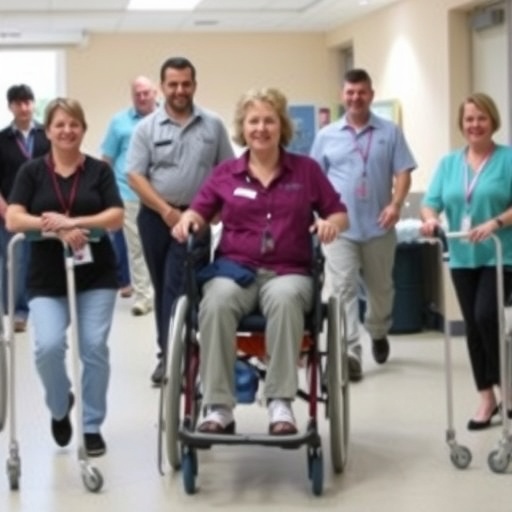
Healthcare wards are increasingly focused on preventing avoidable decline in older adults, but implementing mobility programs inside fast-paced acute care is a complex task. Now, a new mixed-methods study examines how frontline clinicians view the rollout of the H.O.M.E mobility intervention—an approach designed to help patients move more safely and consistently while they are hospitalized.
Researchers centered their inquiry on the perspectives of healthcare professionals responsible for day-to-day decisions: when mobility should occur, which staff can deliver it, and how risks such as falls or fatigue are managed. The work highlights how implementation success depends not only on the intervention itself, but also on local workflow, staffing patterns, and communication across disciplines.
A key technical theme in the study is the translation of an evidence-based mobility protocol into practical routines. Clinicians described the need for clear guidance on supervision levels, intensity parameters, and documentation practices, suggesting that standardized processes reduce variability in how mobility support is delivered across shifts.
The findings also point to barriers that often emerge in acute settings, including limited time windows for non-urgent activities and constraints in equipment availability. Several participants emphasized that mobility initiatives must fit within existing care plans rather than competing with medication rounds, diagnostic schedules, or discharge timelines.
On the facilitators side, professionals reported that structured training and straightforward workflow tools improve staff confidence. When roles are explicit—such as who initiates, who monitors, and who updates care records—teams can respond faster to patient changes.
The mixed-methods design strengthens the conclusions by pairing qualitative insights with implementation-focused observations, allowing the study to capture both perceived readiness and operational realities. This triangulation makes the results particularly useful for teams planning future scale-up.
In viral science news terms, the message is clear: mobility interventions can become more than a checklist item when healthcare systems redesign routines around clinicians’ real-world constraints. H.O.M.E may offer a blueprint for how hospitals align patient mobility goals with sustainable bedside delivery.
For acute care, the study underscores that cultural adoption—confidence, clarity, and coordination—can be as decisive as clinical effectiveness. If health services can address friction points early, mobility programs are more likely to persist beyond pilot phases and improve outcomes during hospitalization.
Subject of Research: Healthcare professionals’ perspectives on implementing the H.O.M.E mobility intervention in acute care.
Article Title: Healthcare professionals’ perspectives on implementing the H.O.M.E mobility intervention in acute care: a mixed-methods study.
Article References: Lau, L.K., Tou, N.X., Ding, Y.Y. et al. Healthcare professionals’ perspectives on implementing the H.O.M.E mobility intervention in acute care: a mixed-methods study. BMC Geriatr (2026). https://doi.org/10.1186/s12877-026-07955-0
Image Credits: AI Generated
DOI: 10.1186/s12877-026-07955-0
Tags: balancing mobility activities with hospital routinesbarriers and facilitators in acute care mobility implementationchallenges in mobility program rollout in hospitalsclinician perspectives on patient mobility in acute careequipment availability for mobility supportevidence-based practices for patient movement safetyfall prevention strategies in hospital mobilitygeriatrics mobility interventionsimplementation of hospital-based mobility programsmultidisciplinary communication in mobility initiativesstaff training for safe patient mobilizationworkflow integration of mobility protocols