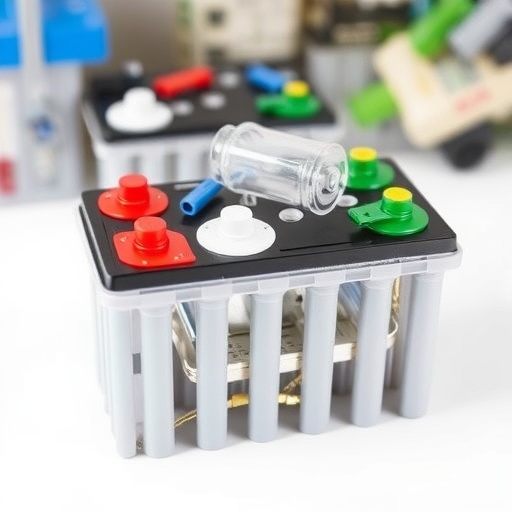
Electrification is rapidly expanding automotive battery production worldwide, but that boom creates a growing “back end” problem: huge volumes of waste from both manufacturing scrap and end-of-life cells. From 2026 onward, recycling capacity must scale quickly, yet recyclers must also meet tightening regulations and build reliable reverse-logistics networks. A major complication is that returns are becoming more diverse—driven by new system designs, a widening range of cell formats, and continuously evolving chemistries.
In a new analysis, Kronemeyer and colleagues provide a comprehensive overview of today’s battery recycling technologies and evaluate how well they match current and upcoming battery generations. The authors focus on two linked questions: what technical steps can handle real-world variability, and what economic constraints emerge when sorting, dismantling, and processing become more complex.
The paper finds that established lithium-ion recycling routes remain broadly suitable for today’s Li-ion chemistries. Core operations—such as pre-treatment to remove contaminants and separate components, followed by mechanical processing and downstream recovery—can be engineered to target common materials. However, the authors emphasize that performance and profitability depend on how consistently incoming waste can be characterized and how efficiently material flows can be controlled.
Looking ahead, the authors argue that sodium-ion and solid-state batteries will require process adaptation rather than simple scaling. Changes in active-material chemistry, binders, electrolytes, and cell architecture can alter reaction conditions, separation efficiencies, and product quality. For example, differences in thermal behavior and the presence of new interfaces and packaging layers can complicate metal recovery and increase losses of valuable constituents.
The study also highlights economic bottlenecks that go beyond chemistry. Recycling economics are constrained by collection rates, logistics costs, the need for robust sorting, and the uncertainty of feedstock composition. When return streams vary widely, facilities face higher downtimes, more rework, and tougher quality-control requirements.
To address these challenges, the authors identify seven trends aimed at improving recycling economics and supporting material circularity. These include strategies to optimize supply-chain design, improve characterization of waste streams, and develop flexible process modules that can be adjusted as chemistries shift.
Overall, the message is clear: scaling up recycling is not only an infrastructure challenge but also a technology and systems challenge. Without adaptive processing and smarter material-flow management, future batteries may outpace the industry’s ability to recover critical materials efficiently.
Still, the work suggests a path forward. By upgrading characterization, engineering process flexibility, and aligning economics with increasingly heterogeneous waste, recyclers can better support a truly circular battery industry—while meeting regulatory and quality expectations across battery generations.
DOI: https://doi.org/10.1038/s41560-026-02092-9
Tags: automotive battery chemistriesAutomotive battery recycling challengeseconomic constraints in battery material recoveryelectric vehicle battery waste managementend-of-life battery cell processingimpact of new battery system designs on recyclinglithium-ion battery recycling technologiesrecycling of diverse battery formatsrecycling of sodium-ion and solid-state batteriesregulatory requirements for battery waste processingreverse logistics for battery recyclingscaling recycling capacity for EV batteries