In May 2026, the World Health Organization declared an international public health emergency over an outbreak of Ebola virus disease (EVD) caused by Bundibugyo virus (BDBV) in the Democratic Republic of the Congo and Uganda. For clinicians and public-health teams working under acute constraints, fast confirmation of suspected cases—and equally fast isolation and contact tracing—can determine whether transmission is contained.
Osaka Metropolitan University (OMU) is therefore developing a portable, rapid diagnostic platform aimed specifically at BDBV. The project brings together OMU, K.K. DNAFORM, and the National Institute for Biomedical Research (INRB) in the Democratic Republic of the Congo, and was selected for funding by Japan’s Global Health Innovative Technology Fund (GHIT Fund). The work is designed to function near outbreak sites where laboratory infrastructure and reliable electricity may be limited.
A key development feature is the project’s alignment with the “100-Day Mission,” an international goal to enable diagnostic tools, therapeutics, and vaccines to be available within 100 days of identifying a new infectious threat. Following the PHEIC declaration, the research team moved rapidly, using DNAFORM’s existing portable nucleic-acid platform technology and established field collaboration capacity at INRB.
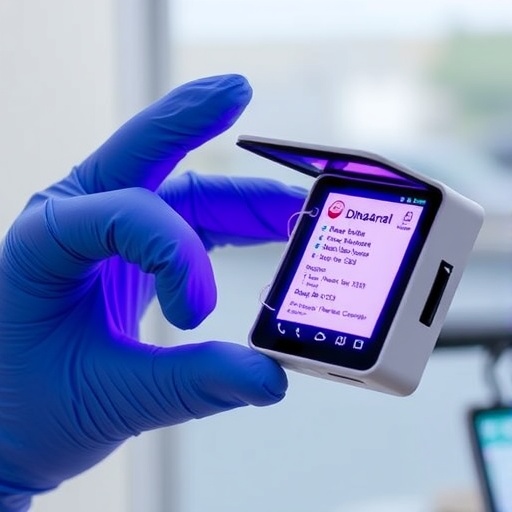
The prototype system, called the GenPad Smart BDBV portable rapid diagnostic system, is based on a GenPad point-of-care testing platform that uses SmartAmp isothermal PCR chemistry with Eprobe detection. Rather than requiring full thermal cycling or extensive lab equipment, the system is intended for battery-powered operation and supports cartridge-based sample processing designed to simplify handling and reduce exposure risk after appropriate training.
Initial laboratory evaluation reports a limit of detection (LOD) of ≤200 copies per cartridge, consistent with WHO emergency-use-related performance targets. The prototype also showed no cross-reactivity against a panel of 86 microbial species, supporting the specificity needed to distinguish BDBV in settings where other pathogens may be present.
Operationally, the device weighs about 460 g and runs on a 7.2 VDC battery (21.6 Wh), enabling up to eight tests on a single charge. Results are projected in roughly 30 minutes from blood collection, with multiple devices clusterable for parallel testing during surges.
Development is continuing in phases, beginning with performance validation using non-replicating “armored RNA” virus mimics, followed by clinical validation with real samples in the Democratic Republic of the Congo in collaboration with INRB. A multiplex direction is also underway to differentiate BDBV, Ebola virus (EBOV), and Sudan virus (SUDV), though BDBV-specific performance remains the immediate priority.
The platform development strategy is positioned as a practical template for rapid outbreak R&D that leverages a network across industry, academia, and international partners. By coordinating with WHO-linked emergency pathways, the program aims to generate the evidence needed for potential emergency use listing while maintaining a focus on immediate field readiness.
Keywords
Ebola virus disease, Bundibugyo virus, point-of-care diagnostics, isothermal PCR, SmartAmp, Eprobe, GenPad, 100-Day Mission, WHO PHEIC, GHIT Fund
Subject of Research: Portable rapid diagnostic system for Ebola virus disease caused by Bundibugyo virus (BDBV)
Article Title: GenPad Smart BDBV: A Portable Rapid Diagnostic Platform for BDBV EVD
News Publication Date: 16 May 2026 (Geneva time) / 17 May 2026 (Japan time)
Web References:
(Veri yok—haber metninde boş bağlantı bırakılmış)
References:
(Veri yok—haber metninde sadece genel atıflar var, spesifik kaynak verilmemiş)
Image Credits: Osaka Metropolitan University
Tags: 100-Day Mission Ebola diagnosticsBundibugyo virus detectionDNAFORM portable nucleic acid technologyEbola virus rapid diagnostic systemfield diagnostic platform for Ebolainnovative Ebola diagnostic developmentINRB Ebola diagnostic collaborationlimited infrastructure Ebola testingoutbreak site testing solutionsportable Ebola testing devicerapid contact tracing EbolaWHO Ebola outbreak response tools