

• HOME
  • NEWS
  • EXPLORE
    • CAREER
      • Companies
      • Jobs
    • EVENTS
    • iGEM
      • News
      • Team
    • PHOTOS
    • VIDEO
    • WIKI
  • BLOG
  • COMMUNITY
    • FACEBOOK
    • INSTAGRAM
    • TWITTER
Tuesday, September 1, 2026
BIOENGINEER.ORG
No Result
View All Result
  • Login
  • HOME
  • NEWS
  • EXPLORE
    • CAREER
      • Companies
      • Jobs
        • Lecturer
        • PhD Studentship
        • Postdoc
        • Research Assistant
    • EVENTS
    • iGEM
      • News
      • Team
    • PHOTOS
    • VIDEO
    • WIKI
  • BLOG
  • COMMUNITY
    • FACEBOOK
    • INSTAGRAM
    • TWITTER
  • HOME
  • NEWS
  • EXPLORE
    • CAREER
      • Companies
      • Jobs
        • Lecturer
        • PhD Studentship
        • Postdoc
        • Research Assistant
    • EVENTS
    • iGEM
      • News
      • Team
    • PHOTOS
    • VIDEO
    • WIKI
  • BLOG
  • COMMUNITY
    • FACEBOOK
    • INSTAGRAM
    • TWITTER
No Result
View All Result
Bioengineer.org
No Result
View All Result
Home NEWS Science News Health

Perioperative D-dimer to albumin ratio predicts serious complications, mortality after hip fracture

Bioengineer by Bioengineer
July 16, 2026
in Health
Reading Time: 2 mins read
0
Share on FacebookShare on TwitterShare on LinkedinShare on RedditShare on Telegram

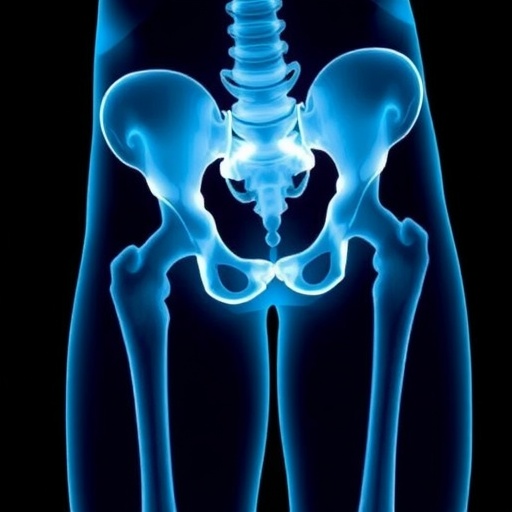
A new retrospective study out of the hip-fracture literature suggests that a simple perioperative blood marker ratio could sharpen predictions for elderly patients at high risk after surgery. Researchers focused on the perioperative D-dimer-to-albumin ratio, a composite indicator that links two clinically familiar signals: D-dimer reflects fibrin turnover and systemic coagulation activation, while albumin serves as a surrogate for nutritional and inflammatory status.

The team analyzed outcomes in older adults undergoing hip-fracture management, evaluating whether measurements taken around the time of surgery could forecast serious postoperative medical complications. They also tested the ratio’s ability to predict mortality at one year, aiming to translate laboratory data into clinically actionable risk stratification.

Technically, the study leverages the rationale that elevated D-dimer may correspond to thrombo-inflammatory processes triggered by trauma and operative stress, whereas reduced albumin may indicate impaired physiologic reserve. By computing their ratio, investigators hypothesized a stronger signal than either component alone, capturing both coagulation-driven risk and diminished recovery capacity.

The analysis framework compared patients across differing ratio levels and assessed how closely these groupings tracked adverse events. Statistical modeling was used to quantify associations between the perioperative ratio and subsequent serious complications, and to evaluate survival differences over a one-year follow-up.

Results indicate that the perioperative D-dimer-to-albumin ratio holds predictive value for postoperative serious medical complications in elderly hip-fracture patients. It also appears linked with longer-term survival, suggesting the ratio may function as an early warning tool when clinical deterioration is still preventable.

From a practical standpoint, the test is attractive because D-dimer and albumin are routinely measured in hospital laboratories. The ratio can therefore be calculated without additional assays, potentially supporting earlier identification of patients who may benefit from intensified monitoring or targeted interventions.

While retrospective designs cannot prove causality and may be influenced by unmeasured confounders, the findings align with the broader trend toward biomarker-based prognostication. If validated prospectively, the D-dimer-to-albumin ratio could become a viral “lab-to-bedside” metric for post-surgical risk alerts in geriatric orthopedics.

Subject of Research: Elderly patients with hip fracture undergoing surgery (perioperative risk prediction)

Article Title: Predictive value of perioperative D-dimer to albumin ratio for postoperative serious medical complications and one-year mortality in elderly patients with hip fracture: a retrospective study.

Article References: Liu, Y., Wang, C., Xiang, R. et al. Predictive value of perioperative D-dimer to albumin ratio for postoperative serious medical complications and one-year mortality in elderly patients with hip fracture: a retrospective study. BMC Geriatr (2026). https://doi.org/10.1186/s12877-026-07989-4

Image Credits: AI Generated

DOI: 10.1186/s12877-026-07989-4

Tags: coagulation activationelderly patient risk assessmenthip fracture surgerylaboratory markers for surgical outcomesmortality prediction in hip fracturenutritional status and inflammationPerioperative D-dimer to albumin ratiopostoperative complication predictionretrospective clinical studyrisk stratification toolssystemic coagulation and recovery capacitythrombo-inflammatory biomarkers


Share12Tweet7Share2ShareShareShare1

Related Posts

Wearable monitor improves diagnosis of heart rhythm disorders after fainting

August 31, 2026

Visualisation of magnetic field-induced nanoparticle clusters and mechanical property changes in a breast phantom for inductive moderate hyperthermia

August 31, 2026

Multidisciplinary intervention in frail elderly patients with cardiovascular diseases: a multicentre, single-blinded, randomised controlled trial

August 31, 2026

Machine Learning Model Development and Evaluation for Non-contact Lower Limb Injury Risk Prediction in Elite Male Rugby Union: A Multi-team, Multi-season Analysis

August 31, 2026

POPULAR NEWS

  • β-Sitosterol from Ipomoea carnea Jacq. As a promising anti-inflammatory agent: Evidence from in silico modeling and in vitro validation

    29 shares
    Share 12 Tweet 7
  • Design, fabrication and characterization of a wearable Fiber Bragg grating sensor for cardiorespiratory monitoring using finger plethysmography

    29 shares
    Share 12 Tweet 7
  • KAIST opens the era of industrial-scale microbial foods, proposing growth strategies for the next-generation protein market

    29 shares
    Share 12 Tweet 7
  • Virologist awarded $2 million NIH grant to investigate how virus-infected cells live and die

    29 shares
    Share 12 Tweet 7

About

We bring you the latest biotechnology news from best research centers and universities around the world. Check our website.

Follow us

Recent News

β-Sitosterol from Ipomoea carnea Jacq. As a promising anti-inflammatory agent: Evidence from in silico modeling and in vitro validation

Design, fabrication and characterization of a wearable Fiber Bragg grating sensor for cardiorespiratory monitoring using finger plethysmography

KAIST opens the era of industrial-scale microbial foods, proposing growth strategies for the next-generation protein market

Subscribe to Blog via Email

Enter your email address to subscribe to this blog and receive notifications of new posts by email.

Join 85 other subscribers
  • Contact Us

Bioengineer.org © Copyright 2023 All Rights Reserved.

Welcome Back!

Login to your account below

Forgotten Password?

Retrieve your password

Please enter your username or email address to reset your password.

Log In
No Result
View All Result
  • Homepages
    • Home Page 1
    • Home Page 2
  • News
  • National
  • Business
  • Health
  • Lifestyle
  • Science

Bioengineer.org © Copyright 2023 All Rights Reserved.