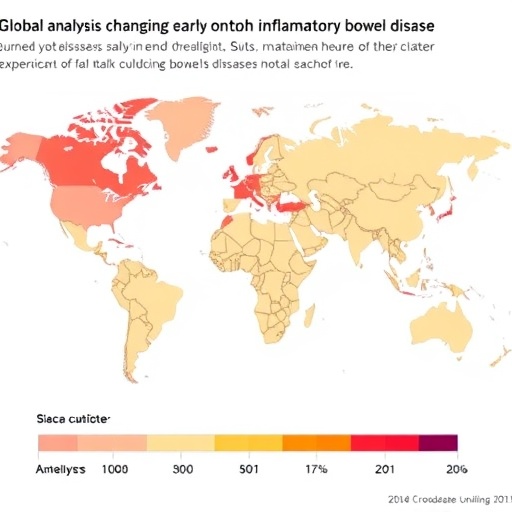
A new global analysis suggests that early-onset inflammatory bowel disease (IBD)—diagnosed in childhood—may be undergoing a geographic and demographic shift, with implications for pediatric gastroenterology worldwide. The study, reported in Pediatric Research, examines how the disease burden is changing over time across populations, highlighting that what clinicians once expected to be regionally concentrated can now appear more widespread and unevenly distributed.
Researchers focus on IBD’s early forms, which include Crohn’s disease and ulcerative colitis. These conditions often begin with chronic gastrointestinal inflammation that can affect growth, nutrition, and long-term health. Because childhood onset typically implies a longer lifetime exposure to disease activity, even modest changes in incidence or severity can translate into substantial public-health consequences.
Using a large, international data framework, the team quantified patterns in early-onset IBD across regions and examined trends that indicate a “shifting burden.” Rather than remaining fixed, the frequency and impact of early diagnoses appear to evolve as healthcare access, environmental exposures, and diagnostic practices change. In some settings, rising detection may partially reflect improved screening, while in others it may signal true increases in disease occurrence.
The analysis also underscores differences in how the burden is distributed by age at diagnosis and over time. Such heterogeneity is critical: it suggests that prevention strategies tailored to early childhood risk windows may need adjustment as patterns change. It also emphasizes that pediatric inflammatory disease is not static; it responds to social and biomedical transitions.
Beyond descriptive trends, the study’s implications extend to clinical planning. Health systems may need to anticipate demand for pediatric endoscopy, specialized nutrition support, and long-term medication monitoring, including therapies that alter immune pathways. For families, earlier recognition can improve outcomes, but it also raises the need for standardized referral pathways and consistent diagnostic criteria.
Importantly, the findings point to the possibility that environmental factors—such as diet composition, microbiome-altering exposures, sanitation, and early-life infections—could be interacting with genetic susceptibility in complex ways. While the study is primarily population-based, these biological considerations help frame why regional shifts might occur.
The authors argue that understanding where and how childhood IBD is changing can guide resource allocation and help prioritize research into modifiable risk factors. In a world where epidemiology is moving, clinicians and policymakers may need to keep revising assumptions about which regions face the greatest pediatric burden.
For pediatric patients and clinicians, the message is clear: early-onset IBD is changing on a global scale. Continued surveillance, harmonized data collection, and mechanistic studies are likely required to separate improved detection from true increases—and to identify targets for prevention and earlier intervention.
If you’d like, I can also condense this into a shorter “viral-style” news brief while keeping the same word and paragraph constraints.
Subject of Research: Early-onset inflammatory bowel disease (pediatric Crohn’s disease and ulcerative colitis) and global burden trends.
Article Title: The shifting burden of early-onset inflammatory bowel disease: a global analysis.
Article References: Yue, C., Zhou, Z., Fang, L. et al. The shifting burden of early-onset inflammatory bowel disease: a global analysis. Pediatr Res (2026). https://doi.org/10.1038/s41390-026-05226-7
Image Credits: AI Generated
DOI: 10.1038/s41390-026-05226-7
Keywords:
Tags: advances in pediatric gastroenterology diagnosticschanging epidemiology of pediatric IBDchildhood gastrointestinal inflammationearly-onset inflammatory bowel diseasegeographic distribution of IBDglobal burden of pediatric inflammatory bowel diseaseglobal trends in Crohn’s disease and ulcerative colitisimpact of environmental factors on early IBDlong-term health effects of childhood IBDpediatric inflammatory bowel diseasepublic health implications of early-onset IBDregional variations in IBD diagnosis