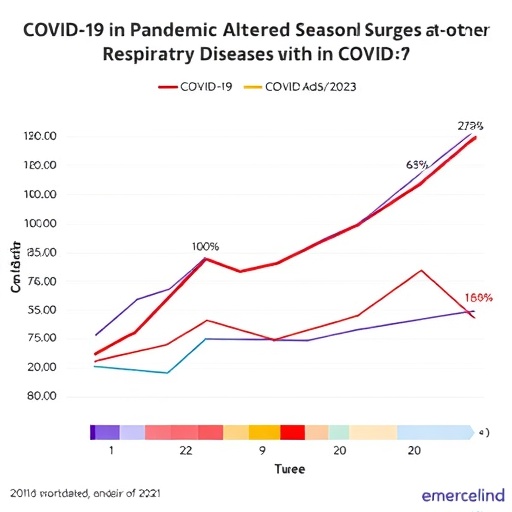
A new analysis from Germany investigates how the COVID-19 pandemic disrupted the usual seasonal rhythm of respiratory illnesses—and how those timing shifts echoed in deaths from heart and other causes. Michael Sieber and Arne Traulsen, of the Max Planck Institute for Evolutionary Biology, report their findings in the open-access journal PLOS Global Public Health (published July 15, 2026). Their work links changes in when infections surge to changes in who is susceptible when winter transmission opportunities arrive.
In typical years, respiratory diseases such as influenza and RSV rise during periods when transmission conditions improve. Deaths, even from causes beyond infection, often follow a similar seasonal pattern, yet the specific mechanisms that determine the exact week when surges begin have been poorly understood. The pandemic offered an unusually clear natural experiment: public health interventions reduced spread of multiple respiratory pathogens.
The researchers analyzed weekly data from Germany covering the previous 14 years, comparing pre-pandemic patterns with the post-pandemic period. Before COVID-19, respiratory infections reliably surged for a few weeks around February and March. During the pandemic, intervention-driven suppression eliminated one of these expected seasonal peaks. When infections returned, the timing of surges shifted toward December or even earlier, before gradually moving back toward the earlier seasonal window.
To explain the pattern, the authors used established epidemiological modeling. Their central result is that the “missing” seasonal wave reduced population-level immunity, leaving a larger pool of susceptible people entering the next period when transmission could accelerate. In this framework, seasonal timing becomes a question of both environmental transmission windows and the size of the susceptible reservoir available at the start of that window.
The study also found that all-cause mortality shifted earlier after the pandemic, with cardiovascular-related deaths showing the closest alignment. While causality at the individual level remains to be tested, the timing match suggests that respiratory infections may help set the tempo of cardiovascular mortality peaks. This is consistent with broader evidence that respiratory illness can worsen cardiovascular outcomes.
Overall, the work underscores the importance of tracking infection history and strengthening vaccination coverage, since population immunity dynamics can rapidly reshape seasonal expectations. The authors note that the most recent flu seasons indicate a return to normal timing within one or two years, likely reflecting rebound toward pre-pandemic immunity levels.
They conclude that respiratory pathogens may act as upstream drivers of seasonal cardiovascular stress. The results provide a new way to interpret how interventions and immunity gaps can reverberate through both disease incidence and mortality schedules.
Citation: Sieber M, Traulsen A (2026) Shifts in seasonal timing of respiratory diseases and causes of death following a natural pandemic event. PLOS Glob Public Health 6(7): e0006376. Web access: https://plos.io/4h5JUD2
DOI: 10.1371/journal.pgph.0006376
Subject of Research: People
Article Title: Shifts in seasonal timing of respiratory diseases and causes of death following a natural pandemic event.
News Publication Date: 15-Jul-2026
Web References: https://plos.io/4h5JUD2; https://doi.org/10.1371/journal.pgph.0006376
References: Sieber M, Traulsen A (2026) PLOS Glob Public Health 6(7): e0006376.
Image Credits: Not provided.
Keywords: respiratory infections; seasonal timing; COVID-19; immunity loss; epidemiological modeling; cardiovascular mortality; influenza; RSV
Tags: analysis of German respiratory disease data over 14 yearschanges in susceptibility to respiratory infections post-pandemiccorrelation between respiratory infection surges and non-infectious deathsCOVID-19 pandemic impact on respiratory disease seasonalitydisruption of influenza and RSV seasonal surgeseffects of COVID-19 mitigation strategies on seasonal disease cyclesinfluence of public health interventions on infectious disease timingnatural experiments in infectious disease spreadrespiratory illness seasonal patterns and transmission dynamicsshifts in respiratory disease peaks due to pandemic measures