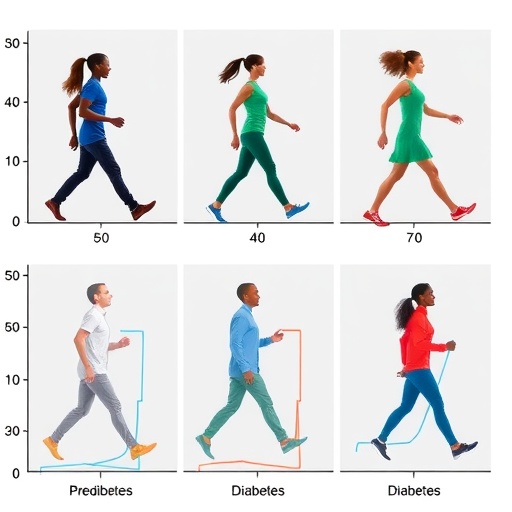
A new population-based analysis is sharpening the picture of how a full day’s mix of movement relates to abnormal blood sugar. Using continuous accelerometer monitoring, researchers examined four tightly linked behaviors—sleep, sedentary behavior (SB), light-intensity physical activity (LIPA), and moderate-to-vigorous physical activity (MVPA)—as parts of a single 24-hour composition.
Rather than treating each behavior independently, the study applied compositional data analysis (CoDA), a statistical framework designed for “mutually exclusive parts of a whole.” This matters because increasing time in one behavior inherently reduces time available for others, and traditional models can misrepresent these trade-offs.
The goal was to connect 24-hour movement patterns with distinct pre-diabetes phenotypes: isolated impaired fasting plasma glucose (i-IFG), isolated impaired glucose tolerance (i-IGT), and a combined IFG + IGT state, as well as diagnosed diabetes. By evaluating the relative balance across the whole day, the researchers aimed to identify activity substitutions that could be more informative than isolated averages.
Accelerometer-derived data provided objective estimates of how participants actually distributed their time. The analysis then translated CoDA outputs into associations with each glucose-related phenotype, highlighting that “more activity” is not a one-size-fits-all message.
The findings suggest that the movement profile linked to fasting impairment differs from that linked to tolerance impairment, implying that metabolic pathways may respond selectively to different combinations of sleep and activity intensity. In practical terms, shifting the composition—such as reallocating time away from sedentary periods toward specific activity intensity—could correspond to lower disease likelihood.
For diabetes, the study reinforces the importance of the daily activity structure. It also underscores how sleep length and quality, captured as part of the same composition, may interact with physical activity patterns when considered together.
Because the approach respects the closed nature of time-use data, CoDA may offer a clearer route for designing behavior targets. Instead of prescribing single behaviors in isolation, future guidelines could consider “what to replace,” optimizing the 24-hour balance.
Published in International Journal of Obesity, the work by Rong, Ho, and Chau (2026) demonstrates that accelerometer-based compositional modeling can reveal nuanced associations across normoglycemia, multiple pre-diabetes phenotypes, and diabetes.
Subject of Research: 24-hour movement behaviors and glucose regulation
Article Title: Compositional analyses of accelerometer-measured 24-h movement behaviors among adults with normoglycemia, pre-diabetes phenotypes, and diabetes: a population-based study.
Article References: Rong, J., Ho, M. & Chau, P.H. Int J Obes (2026). https://doi.org/10.1038/s41366-026-02162-8
Image Credits: AI Generated
DOI: https://doi.org/10.1038/s41366-026-02162-8
Keywords: sleep, sedentary behavior, light-intensity physical activity, moderate-to-vigorous physical activity, compositional data analysis, pre-diabetes phenotypes, diabetes
Tags: movement patterns and interventions should be tailored to specific prediabetes subtypes and diabetes.