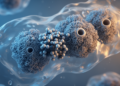
Double-Tracer “Diagnostic Twins” Could Improve Alpha-Targeted Prostate Cancer Dosing
When metastatic prostate cancer outpaces hormonal therapy, clinicians face a narrow set of options. Targeted alpha therapy with Actinium-225 offers a sharp promise: radiolabeled molecules home in on PSMA (prostate-specific membrane antigen), then destroy the tagged cells from within. But effective dosing depends on more than tumor presence—it requires knowing how much tracer reaches PSMA-rich lesions and how the agent moves through the body over time.
A common workaround, PET imaging for only a few hours using short-lived tracers such as Gallium-68 or Fluorine-18, may not capture the full pharmacokinetic picture needed for reliable dose planning. The HZDR team instead pursued a strategy that treats the diagnostic and therapeutic roles as closely related molecular “twins.”
Their approach, the radiohybrid concept, uses carriers that are chemically as identical as possible, while swapping in diagnostic radionuclides. The goal is to preserve the molecule’s behavior while enabling long-term, quantitative imaging. In this work, Lanthanum-133 supports high-resolution, three-dimensional PET imaging, while Iodine-123 enables SPECT (single-photon emission computed tomography).
A key practical advantage is timing. Thanks to the longer half-life of Iodine-123, imaging can be performed up to 44 hours after injection, aligning better with therapeutic schedules that may involve long-lived alpha emitters. Both radionuclides are produced at HZDR’s compact circular cyclotron; Iodine-123 is additionally prepared in collaboration with ROTOP Pharmaka GmbH.
The carrier is built from three functional units: a PSMA-binding targeting element, a cage-like chelator (Macropa) that securely holds the radiometal, and an albumin binder that temporarily anchors the molecule in the bloodstream to prolong its circulation. Variants can bind one or two PSMA molecules simultaneously, supporting strong tumor recognition.
Cell culture results with human prostate cancer cells show robust PSMA uptake: up to 97% of bound molecules enter cells within 60 minutes. In tumor-bearing mice, tumor uptake was essentially the same whether the carrier was labeled with Lanthanum-133 or Iodine-123—strong evidence that the imaging “twin” can faithfully report therapeutic distribution.
Surprisingly, the iodine-labeled analogs lingered slightly longer in blood. Extensive testing did not pinpoint the exact mechanism, but the finding underscores an important message for precision oncology: even minimal changes in radionuclide placement can shift pharmacological kinetics.
The team’s systematic evaluation—spanning tumor uptake and clearance pathways including kidney excretion—suggests the radiohybrid strategy can connect diagnostic imaging to personalized Actinium-225 dosing. With promising performance in preclinical models, the researchers now plan to advance the best candidates toward clinical studies.
Subject of Research: Animal tissue samples
Article Title: Diagnostic Twins: Exploring the Radiohybrid Concept with Iodine-123 and Lanthanum-133 for PSMA-Targeted SPECT and PET Imaging
News Publication Date: 16-Apr-2026
Web References: (Not provided)
References: 10.1021/acs.jmedchem.6c00161
Image Credits: HZDR / K. Zheynova
Keywords: PSMA; Actinium-225; radiohybrid concept; SPECT; PET; Iodine-123; Lanthanum-133; Macropa; personalized radiotherapy; pharmacokinetics; alpha therapy
Tags: dose planning for prostate cancer radiotherapydual-tracer diagnostic strategy in oncologyGallium-68 and Fluorine-18 PET imagingimproving targeting accuracy in metastatic prostate cancerIodine-123 SPECT imagingLanthanum-133 PET imaginglong-term quantitative imaging in cancerpharmacokinetics of alpha emittersProstate cancer targeted alpha therapyPSMA imaging in prostate cancerradiohybrid diagnostic and therapeutic approachradiolabeled molecules for cancer treatment