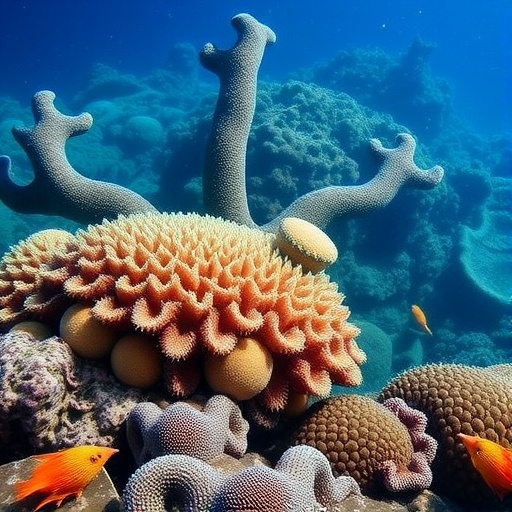
On Caribbean coral reefs, researchers have uncovered a surprising ecological phenomenon: small reef fishes are regularly found nestled within the delicate, feathery structures of Christmas tree worms, a type of tube-dwelling serpulid polychaete. This remarkable behavioral association, documented for the first time in scientific literature, challenges previous assumptions about the worms’ sensitivity to disturbance, as these usually skittish worms exhibit an unexpected tolerance toward their tiny piscine companions.
The groundbreaking study, published in the journal Symbiosis, was led by Morgan Bennett-Smith, a PhD candidate at Boston University’s Marine Evolutionary Ecology Laboratory. The research confirms earlier observations made in Papua New Guinea and extends these findings to Caribbean marine ecosystems, suggesting that such fish-worm interactions might represent a widespread but previously overlooked form of symbiosis on coral reefs.
Employing an observational methodology, undergraduate researchers conducted underwater surveys along coral reefs in Belize and Bonaire, watching neon gobies as they sought refuge among the spiral, radiolarian crowns of Christmas tree worms. The fish’s consistent presence within the worm structures points to a non-random association, though the exact nature of this relationship—whether mutualistic, commensal, or even parasitic—remains unresolved.
The Christmas tree worms typically respond to stimuli by rapidly retracting into their calcareous tubes, yet their tolerance of these fish raises intriguing questions about interspecies communication and ecological compatibility. Understanding these micro-interactions is critical for unraveling the complexity of reef ecosystems, known for their rich biodiversity and vulnerability to environmental stressors such as climate change and ocean acidification.
Bennett-Smith emphasizes that this discovery originated from attentive naturalistic observations—a reminder that despite advances in genomics and computational biology, fundamental fieldwork remains indispensable. The involvement of student scientists in conducting these surveys through the Boston University Marine Program (BUMP) highlights the value of hands-on, experiential learning in advancing marine biological research.
The study’s implications extend beyond behavioral ecology, potentially informing conservation strategies. If these interactions provide benefits like enhanced protection or feeding opportunities, acknowledging their presence could influence coral reef management and restoration efforts. However, laboratory experiments under controlled conditions will be necessary to elucidate physiological or ecological benefits exchanged between the worms and fishes.
Ultimately, this discovery exemplifies the often-hidden complexity of coral reef symbioses and underscores the necessity of continued exploration of seemingly inconspicuous species interactions. As coral reefs face unprecedented changes, appreciating and documenting such relationships enriches our understanding of ecosystem resilience and function.
Subject of Research: Animals
Article Title: Novel symbioses between reef fishes and serpulid polychaetes in the Caribbean Sea
News Publication Date: 16-Apr-2026
Web References: https://link.springer.com/article/10.1007/s13199-026-01143-9
Image Credits: Morgan F. Bennett-Smith
Keywords: Marine life, Ecology, Marine biology
Tags: Caribbean coral reef ecologyChristmas tree worm mutualismcoral reef biodiversity and relationshipscoral reef conservation and researchcoral reef symbiosismarine organism tolerance to disturbancemarine symbiotic partnershipsneon gobies and Christmas tree wormsreef fish and tube worm interactionsreef fish refuge behaviorssymbiosis in marine ecosystemsunderwater ecological surveys