Scientists Uncover How Anesthetic Sevoflurane Locks Sodium Channels to Silence Neurons
Despite inhaled anesthetics being a cornerstone of surgical practice for nearly two centuries, the precise molecular mechanisms underlying their effects have remained elusive. Now, a collaborative effort between Weill Cornell Medicine and Birkbeck, University of London, has illuminated how the widely used anesthetic sevoflurane interacts with voltage-gated sodium channels, critical proteins that enable neurons to communicate through electrical signaling.
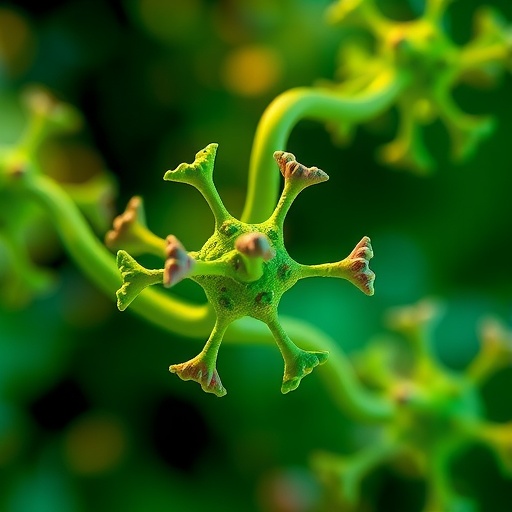
Voltage-gated sodium channels function as gatekeepers, regulating the influx of sodium ions necessary for the initiation and propagation of neuronal action potentials. By modulating these channels, anesthetics reduce neuronal excitability, producing the unconsciousness and immobility essential for surgical procedures. However, detailing this interaction at an atomic level was previously limited by the complexity and size of mammalian sodium channels.
The research team circumvented this obstacle by investigating a bacterial counterpart from the marine bacterium Magnetococcus marinus. These bacterial sodium channels share structural and functional similarities with their mammalian peers but are simpler and amenable to high-resolution X-ray crystallography. Using this approach, the scientists captured vivid snapshots of sevoflurane nestled within a distinct binding pocket at the periphery of the channel’s pore-forming region.
Intriguingly, the anesthetic’s binding site lies apart from the sodium ion conduction pathway. By fitting into this pocket, sevoflurane stabilizes the channel in an inactive conformation, preventing it from opening and thereby dampening the flow of sodium ions. This effectively silences neuronal firing. The team demonstrated the significance of this interaction by showing that a single amino acid modification within the pocket abolishes sevoflurane binding and negates its ability to maintain the channel in an inactive state.
These atomic-level insights mark a substantial advance in the understanding of how volatile anesthetics work. “Our findings provide a blueprint for designing next-generation anesthetics that are more selective and potentially exhibit fewer side effects,” explained Dr. Karl Herold, co-first author of the study. The work also sets the foundation for translating these mechanistic insights to mammalian systems, which could illuminate why individual patients exhibit varying responses to anesthesia.
Further exploration into naturally occurring human mutations affecting anesthetic binding could reveal new dimensions of brain function and consciousness. As Dr. Hugh Hemmings, senior co-leader of the study, noted, “Understanding the molecular targets of anesthesia is critical not only for improving patient safety but also for unraveling the biological underpinnings of unconsciousness.”
This impactful research bridges a longstanding gap in anesthetic pharmacology, moving from empirical observations toward precise molecular explanations. The use of a simpler bacterial system as a model underscores the power of structural biology in decoding complex physiological phenomena, paving the way for innovative therapeutic advancements.
Subject of Research: Molecular interactions between anesthetics and sodium ion channels
Article Title: Demystifying the Molecular Mechanisms of General Anesthesia
News Publication Date: 19-Jun-2026
Web References: https://www.nature.com/articles/s41467-026-74518-7
Image Credits: Karl Herald
Keywords: Anesthesiology, Anesthesia, Sodium Channels, Sevoflurane, Ion Channels, Structural Biology
Tags: anesthesia-induced neuronal silencinganesthetic binding sites on sodium channelsatomic-level drug-channel bindingbacterial sodium channels as models for mammalian channelshigh-resolution X-ray crystallography of ion channelsmarine bacterial sodium channels in biomedical researchmechanism of neuronal excitability modulationmolecular basis of anesthesiamolecular mechanism of general anesthesiarole of sodium channels in neuronal signalingsevoflurane sodium channel interactionvoltage-gated sodium channels structure and function