


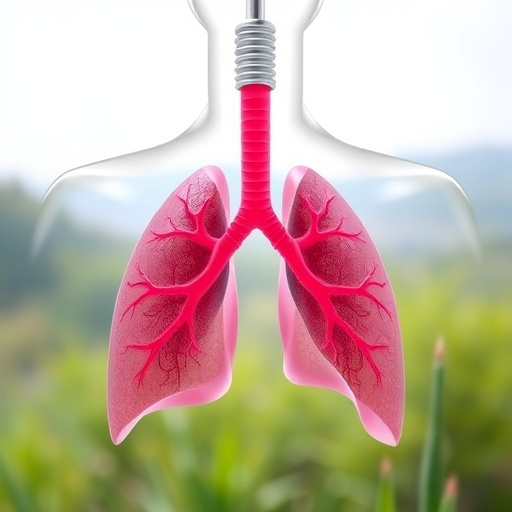
A groundbreaking global study has unveiled that hemolysis-associated disorders play a far more significant role in the escalating incidence of pulmonary arterial hypertension (PAH) than previously recognized. This comprehensive ecological analysis, spanning 204 countries and territories, challenges longstanding assumptions by demonstrating that genetic and nutritional factors linked to hemolysis are driving the rising global burden of this progressive cardiovascular disease.
Using data from the Global Burden of Disease 2021, researchers applied advanced statistical techniques, including Joinpoint regression and random forest modeling, to dissect the intricate relationships between PAH incidence and the prevalence of various hemolytic disorders. The findings were striking: while PAH age-standardized incidence rates (ASIR) modestly increased worldwide from 0.50 to 0.52 per 100,000 people between 1990 and 2021, the strongest predictor of this rise was not socio-demographic factors but hemolysis-associated conditions.
Specifically, variants of glucose-6-phosphate dehydrogenase (G6PD) deficiency, a common genetic trait affecting red blood cell stability, emerged as the top contributor to PAH incidence. Other hemoglobinopathies and hemolytic anemias of uncertain origin also displayed robust positive correlations with PAH rates. Intriguingly, vitamin A deficiency—known to impact red blood cell health—was another critical and previously underappreciated driver identified in this model, surpassing the influence of the socio-demographic index and sex differences.
The employment of random forest regression explained an impressive 73% of the variance in PAH incidence globally, underscoring the potency of hemolytic disorder prevalence as a predictive factor. Temporal trends further reinforced these conclusions, revealing parallel increases in hemolytic disorder prevalence and PAH incidence, with a high correlation coefficient of 0.76.
In addition to genetic and nutritional contributors, the study’s exploratory investigations hinted that environmental exposures to natural products could be an underrecognized influence on the hemolytic burden, potentially exacerbating PAH risks in exposed populations. This novel insight opens new avenues for research into environmental triggers of hemolysis-mediated cardiovascular pathology.
Looking ahead, sophisticated Bayesian age-period-cohort models project a continued rise in both PAH burden and hemolytic disease prevalence through 2050. These projections predict that PAH incidence will climb to 0.57 per 100,000 people, while hemolytic disorder prevalence is expected to escalate from approximately 27,760 to over 31,800 cases per 100,000 globally. Such trends highlight the urgent need for public health strategies that prioritize the identification, prevention, and management of hemolysis-associated conditions.
This landmark study fundamentally reorients the understanding of PAH epidemiology by establishing hemolytic disorders—not just traditional socio-demographic factors—as key and modifiable drivers of disease burden. It advocates for a paradigm shift in global health policy to incorporate hemolytic disorder screening and treatment into pulmonary hypertension prevention programs, potentially mitigating a significant and growing cause of cardiovascular morbidity worldwide.
Published in the peer-reviewed journal Future Integrative Medicine, these findings promise to catalyze further translational and clinical research, illuminating the path toward innovative therapies personalized to hemolytic disease profiles. As the global healthcare community grapples with the rising tide of PAH, this work underscores the critical intersection of genetics, nutrition, environmental factors, and cardiovascular health.
Subject of Research: Hemolysis-associated disorders and their contribution to pulmonary arterial hypertension incidence
Article Title: Hemolysis-associated Disorder and Natural Product Exposures: Underrecognized Drivers of an Escalating Global Pulmonary Arterial Hypertension Burden—An Ecological Study of 204 Countries and Territories
News Publication Date: June 18, 2026
Web References: http://dx.doi.org/10.14218/FIM.2026.00004
Keywords: Pulmonary arterial hypertension, hemolysis, G6PD deficiency, hemoglobinopathies, vitamin A deficiency, global health, epidemiology
Tags: advanced statistical modelingcardiovascular disease risk factorsecological analysisG6PD deficiencygenetic predispositionglobal disease burdenhemoglobinopathieshemolytic anemiahemolytic disordersnutritional factorspulmonary hypertensionvitamin A deficiency


