In a groundbreaking advance at the intersection of artificial intelligence and oncology, researchers have unveiled a unified vision-language model designed to revolutionize precision medicine for neuroblastoma, a pediatric cancer notorious for its heterogeneity and treatment challenges. This novel approach leverages the synergy between imaging data and molecular biomarkers, promising unprecedented accuracy in diagnosis and therapeutic targeting.
Neuroblastoma presents a complex clinical picture, with tumors exhibiting diverse genetic and histopathological profiles that have historically impeded effective treatment stratification. Traditional diagnostic methods rely heavily on isolated data types, such as genomic sequencing or imaging, analyzed in silos. The newly developed model integrates these modalities into a single artificial intelligence framework that processes both visual and textual clinical data coherently.
At its core, the model combines deep convolutional neural networks, which excel at interpreting medical images such as MRI and histopathology slides, with transformer-based language models that comprehend and generate meaningful representations of clinical reports and biomarker information. This dual capability enables the system to dissect the subtle interplay between tumor morphology and molecular signatures.
The research team trained the model on a large dataset comprising annotated neuroblastoma images alongside corresponding biomarker panels and clinical outcomes. By employing supervised learning techniques augmented with contrastive learning paradigms, the model learned to associate visual features with specific biomarker expressions, thereby facilitating biomarker prediction directly from imaging data. This approach mitigates the need for invasive biopsies solely for molecular profiling.
Results demonstrate that the unified vision-language model significantly outperforms existing methods in predicting clinically relevant biomarkers such as MYCN amplification and ALK mutations, which are critical drivers in neuroblastoma pathogenesis and determinants of patient prognosis. The model’s ability to predict these markers non-invasively heralds a potential shift in clinical workflows, enabling early and more precise personalization of treatment regimens.
Beyond biomarker prediction, the system offers enhanced interpretability, allowing clinicians to visualize which image regions and text segments contribute most to the model’s decisions. This transparency fosters trust and facilitates integration into clinical decision-making. Moreover, the adaptable architecture is poised to be generalized to other cancer types, marking a scalable advancement in precision oncology.
Overall, this innovation exemplifies how fusion of multimodal data through cutting-edge AI architectures can unlock new diagnostic and predictive capabilities. As neuroblastoma remains a leading cause of cancer-related mortality in children, implementing such technology stands to improve survival rates and quality of life by tailoring therapies more effectively to the individual patient’s tumor biology.
The study, published in Nature Communications, represents a significant step toward harmonizing visual and linguistic data streams in medical AI, laying the foundation for future breakthroughs that seamlessly incorporate vast and varied clinical information. With further validation and clinical trials, this unified model holds promise to become an indispensable tool in the fight against neuroblastoma and beyond.
Subject of Research: A unified vision-language model for precision oncology and biomarker prediction in neuroblastoma
Article Title: A unified vision-language model for precision oncology and biomarker prediction in neuroblastoma
Article References:
Zhu, J., Hu, R., Yang, S. et al. A unified vision-language model for precision oncology and biomarker prediction in neuroblastoma.
Nat Commun (2026). https://doi.org/10.1038/s41467-026-74865-5
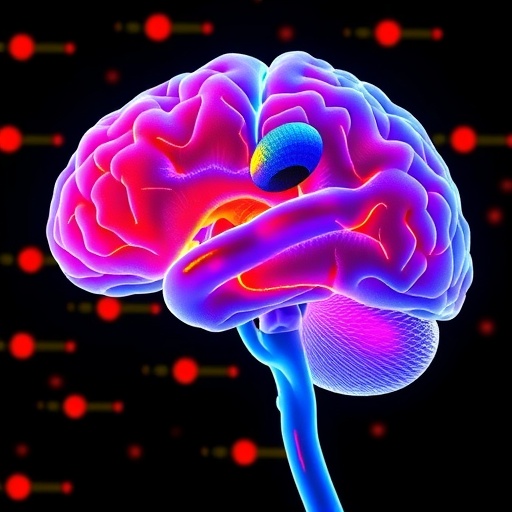
Image Credits: AI Generated
Tags: AI-driven tumor characterizationbiomarker prediction in neuroblastomadeep learning for medical imagingintegrated clinical data analysismolecular and imaging data fusionmultimodal AI in oncologyneuroblastoma diagnosisneuroblastoma treatment stratificationpersonalized cancer therapy toolsprecision medicine in pediatric cancertransformer-based models in healthcarevision-language models for cancer diagnosis