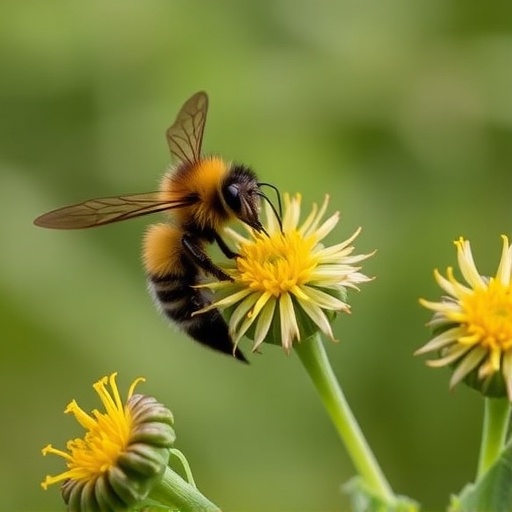
Europe faces a potential ecological and agricultural crisis as wild pollinators continue to decline at alarming rates, according to a comprehensive white paper authored by 135 researchers from eight EU-funded consortia. This interdisciplinary study underscores the pivotal role that wild pollinators—including bees, butterflies, and hoverflies—play not only in food production but also across multiple societal sectors such as medicine, textiles, tourism, and cultural heritage.
The report highlights a critical barrier to effective pollinator conservation: the fragmented policy landscape within the European Union. Currently, responsibilities for pollinator protection are dispersed among various sectors including agriculture, environment, chemical regulation, trade, and finance. This fragmentation results in disjointed efforts and hampers the implementation of coherent and measurable conservation strategies across member states. The authors advocate for pollinator stewardship to be recognized as a strategic priority integrated comprehensively into all relevant policy domains.
Beyond policy issues, the white paper delves into deeper systemic challenges rooted in society’s relationship with nature. The progressive decline of pollinators is attributed to the cumulative, multifaceted impacts of human activities on ecosystems, demonstrating the urgency of aligning land management and agricultural practices with contemporary ecological science. Resilience in pollinator populations depends on supporting whole ecosystems rather than isolated interventions.
The report cautions that many current conservation measures, such as the widespread establishment of flower strips, are insufficient when implemented without adequate ecological understanding. For instance, some moth species surpass honeybees in pollination effectiveness, a fact often overlooked by practitioners. Additionally, the focus on adult-foraging resources neglects the essential need for host plants critical to larval development, which are frequently missing from seed mixes used in restoration projects.
A significant obstacle to reversing pollinator declines is the lack of knowledge among farmers and stakeholders who directly influence habitat conditions. The authors emphasize the importance of integrating pollination ecology and ecosystem science into educational curricula across various disciplines, fostering a well-informed community of land stewards.
To confront these challenges, the report offers a roadmap built on the latest scientific data, proposing 15 concrete recommendations. These span improved policy coordination, enhanced regulatory frameworks, refined agricultural methods, and expanded education initiatives, aiming to halt and eventually reverse pollinator losses.
This urgent call to action serves not only ecological but also economic and cultural imperatives, as the health of wild pollinators is inextricably linked to the sustainability of Europe’s biodiversity and food systems. Without decisive, science-based policy and practice reforms, the continent risks severe consequences for ecosystems and human well-being.
Subject of Research: Pollinator decline and ecosystem restoration
Article Title: Towards pollinator stewardship in all policies: Policy incoherence in the EU is a major barrier to pollinator restoration
News Publication Date: 16-Jun-2026
Web References: https://zenodo.org/records/20715670
Image Credits: Claus Rasmussen
Keywords: Biodiversity, Biodiversity conservation, Biodiversity loss, Habitat diversity, Pollinator protection, Ecosystem resilience
Tags: agricultural crisis due to pollinator lossbutterfliesecological impact of wild pollinatorsEU policy fragmentation on pollinator conservationhoverflies in ecosystemsimportance of integrated conservation strategiesinterdisciplinary research on pollinator declineland management and ecological sciencePollinator decline in Europerole of beessocietal dependence on pollinatorssystemic challenges in pollinator protectionurgent need for cohesive policy frameworks