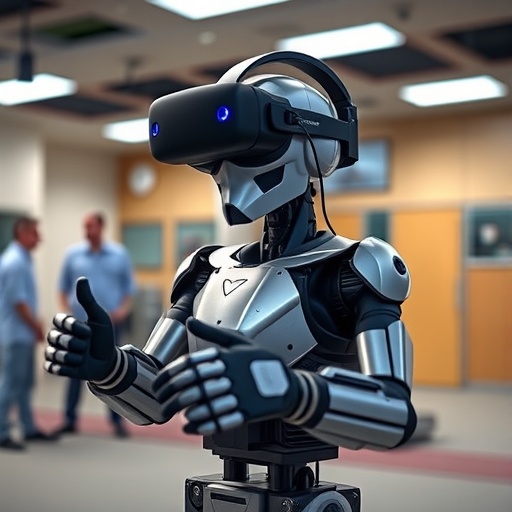
The second Open Call under the MASTER project has ushered in a new era for the validation and advancement of extended reality (XR) technologies within industrial learning environments. This initiative attracted innovators spanning researchers, educators, and technology developers, each selected to receive both financial backing and expert technical support. Their mission: to develop, test, and showcase groundbreaking XR applications designed to confront and solve challenges tied to industrial training. The scope of their innovation spans an impressive spectrum of use cases that meld XR with artificial intelligence and robotics, aiming to deliver immersive, accessible, and highly effective learning experiences tailored to industry needs.
These pioneering projects have targeted critical areas of industrial training by leveraging the synergy of XR technology and AI-powered tools. Significant emphasis has been placed on enhancing human-robot collaboration, programming of robots, and maintenance procedures. Safety protocols, ergonomic practices, and precision-demanding processes such as welding inspection and agricultural robotics training have also been focal points. By embedding these technologies into controlled virtual environments, trainees are empowered with immersive practice opportunities that minimize risks and optimize skill acquisition in realistic, industrially relevant contexts.
A hallmark of these projects is their dedication to democratizing robotics education, previously steeped in complexity, by introducing intuitive XR interfaces combined with gamification techniques. This not only makes learning more engaging but also significantly lowers the barriers for non-experts entering robotics fields. Concurrently, artificial intelligence has been harnessed to automate content generation, enabling a more personalized training ecosystem. Intelligent virtual instructors, capable of natural interaction, were developed to simulate real-life mentorship and improve learner engagement and retention metrics.
Among the standout solutions are immersive platforms enabling collaborative operation programming for robots, virtual factories that simulate manufacturing workflows, and advanced AI-augmented robotics simulators. These tools provide learners with comprehensive industrial training scenarios that integrate real-world challenges and processes. The use of digital twins, which are exact virtual replicas of physical industrial systems, has allowed for sophisticated simulations that prepare workers for real-life demands without exposure to hazardous or costly errors.
Building upon the foundations laid by MASTER’s inaugural Open Call, this second cohort of innovators has propelled the project’s ecosystem forward, contributing new methodologies and scenarios. Their contributions support a vision where XR-enabled robotics training becomes an open, adaptable resource accessible to education providers, training centers, and industrial organizations alike. This fosters a collaborative environment in which continuous advancement in worker preparedness and factory readiness for Industry 4.0 are harmonized.
The successful completion of this phase signifies more than the conclusion of a development cycle; it marks the threshold of a transformative potential impact beyond the project’s immediate framework. The infusion of these novel XR and AI applications into practical settings heralds a future where workforce upskilling is more responsive, engaging, and technologically sophisticated than ever before. The benefits stemming from these advancements promise to resonate throughout Europe’s industrial sectors for years to come.
Panagiotis Karagiannis, the MASTER project coordinator from LMS at the University of Patras, reiterated the consortium’s ambition to foster an innovation ecosystem extending far beyond its initial team. He emphasized that the 24 projects selected in this round epitomize Europe’s XR and robotics communities’ collective creativity and technological adeptness. Their work ensures that the MASTER ecosystem will thrive through new training approaches and technology implementations, securing long-term contributions to the field of immersive industrial training.
The impact of the second Open Call underscores the transformative potential of immersive technologies in bridging significant skills gaps and enhancing training efficacy across diverse industrial contexts. Robotics and automation, cornerstones of modern manufacturing, can be more widely adopted when supported by accessible XR-based training solutions. This ensures that the industry’s workforce does not merely keep pace with technological evolution but actively drives it forward with competence and confidence.
XR platforms such as those developed under MASTER offer high degrees of flexibility and safety, transforming traditional training paradigms that often carry substantial physical, financial, and logistical risks. Through realistic virtual factories and intelligent scenario simulations, trainees acquire hands-on experience within controlled environments, accelerating the learning curve while reducing operational disruptions. These advances strongly align with the objectives of Industry 4.0, where digital transformation and intelligent manufacturing systems converge.
The diversity of use cases explored within these projects is truly wide-ranging. From ergonomically optimized VR modules targeting workplace safety to robotics simulators enhanced with AI tutors, the solutions crafted address multi-dimensional industrial challenges. Each platform carries the promise to serve as a scalable model for broader adoption, reinforcing Europe’s competitive edge in advanced manufacturing and digital training technologies.
Among the supported projects are AIR-XR, AIXRIG, AI-XRobo, and a host of others each contributing to specific industrial niches. Whether focusing on robot programming, welding inspection training, or agricultural robotics operation, these initiatives help cultivate a workforce adept at operating next-generation robotics systems. The resulting accumulation of knowledge and tools builds a foundation for lifelong learning and adaptive skill development, essential in rapidly evolving industrial landscapes.
As the execution phase closes, attention now shifts to mainstreaming these innovations into educational and industrial applications. The transfer of technology from research to practice often poses challenges, but the maturity and robustness of the solutions developed within MASTER set a promising precedent. They mirror the broader shift towards immersive, AI-enabled training that promises to redefine workforce preparedness for the digital factories of the future.
MASTER’s innovative XR platform integrates advanced interaction mechanisms within safe and flexible robotic training environments. This integration capitalizes on the intersection of virtual reality, robotics control, and AI to create holistic training solutions. The platform is further enriched by its open-call approach, inviting third-party contributors to expand and diversify the available training content, fostering an inclusive and continuously evolving training ecosystem.
The trajectory established by the MASTER project epitomizes the profound potential immersive and intelligent technologies hold to revolutionize industrial education. In an era marked by rapid automation and digital integration, developing effective and accessible training solutions is not merely desirable but imperative. The successes borne from the second Open Call illuminate a future where XR-enabled robotics training becomes a cornerstone of workforce development across Europe and beyond.
Subject of Research: Extended Reality (XR) Technologies in Industrial Training Environments and Robotics Education
Article Title: Unlocking the Future of Industrial Training: MASTER Project’s Second Open Call Revolutionizes XR-Enabled Robotics Learning
News Publication Date: Information not provided
Web References: https://www.master-xr.eu/
Keywords: Robotics, Industrial Engineering, Industrial Robots, Virtual Reality, Extended Reality, Artificial Intelligence, Digital Twins, Human-Robot Collaboration, Immersive Training, Industry 4.0, Workforce Upskilling, XR Platforms
Tags: agricultural robotics trainingAI-powered industrial learningdemocratizing robotics educationergonomic practices in XR trainingextended reality industrial traininghuman-robot collaboration trainingimmersive training solutionsindustrial skill acquisition through XRrobotic programming educationvirtual reality for safety protocolswelding inspection XR trainingXR and robotics education