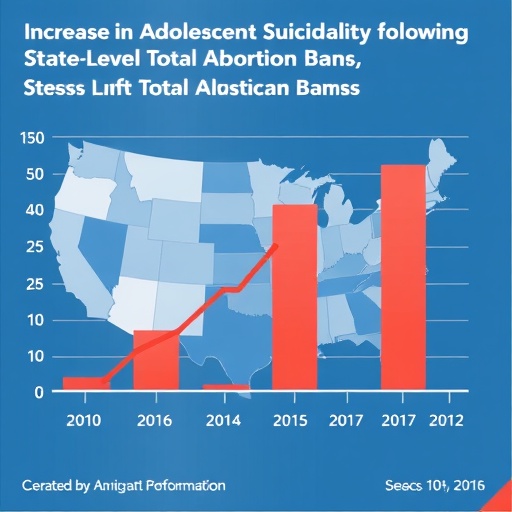
In a striking new cross-sectional study published in JAMA Network Open, researchers have unveiled a concerning correlation between the implementation of total abortion bans and an increase in suicidal ideation among female high school students. This study penetrates the multilayered psychological landscape affected by restrictive reproductive laws, shedding light on the broader implications such policies have on adolescent mental health. The data suggest that these legislative measures are not merely political statements but carry tangible, detrimental effects on the wellbeing of vulnerable populations, especially young women grappling with their mental health during critical developmental stages.
The research meticulously analyzed data from various states with strict abortion bans, comparing mental health outcomes among high school female students. The findings revealed a statistically significant uptick in suicidal thoughts directly associated with the presence of total abortion prohibitions. While analogous trends were noted in suicide attempt rates, these estimates were less precise, warranting further exploration. What remains unequivocal, however, is the heightened psychological distress permeating these young populations, signaling a profound and urgent public health concern.
Underlying the study is a comprehensive investigation into the social determinants of mental health, emphasizing how policy-level decisions infiltrate personal and community domains. Adolescents, particularly females in these restrictive states, encounter increased stressors, including reduced autonomy over reproductive rights and the compounded stigma attached to abortion. Such environmental pressures catalyze psychological vulnerabilities, manifesting in elevated ideation about suicide—a phenomenon that demands immediate attention from healthcare providers and policymakers alike.
The methodological rigor of the study stands out, employing a robust cross-sectional design to capture a snapshot of adolescent mental health amid shifting legislative landscapes. By utilizing large-scale survey data, the researchers effectively controlled for confounding variables such as socioeconomic status, ethnicity, and pre-existing mental health conditions. This approach enhances the reliability of the associations drawn between abortion bans and new or exacerbated mental health issues, providing a compelling case for the mental health ramifications of these laws.
Mental health practitioners are urged to recognize the unique challenges faced by adolescents living in states with stringent abortion restrictions. The findings underscore the necessity of accessible, culturally sensitive mental health resources and suicide prevention programs tailored to the needs of young females who are disproportionately affected. Furthermore, this climate of restricted reproductive rights may deter young women from seeking help, exacerbating isolation and psychological distress, thus complicating clinical interventions.
The study’s implications extend beyond individual mental health, touching upon broader societal dynamics. The increase in suicidal ideation among female adolescents highlights a ripple effect—where legal frameworks shape social environments, peer relationships, and even family dynamics. In places where abortion bans are enforced, young women might experience heightened surveillance, social ostracism, and internalized guilt, all contributing to deteriorating mental health and increased risk behaviors.
From a physiological standpoint, adolescence is a critical period marked by neurodevelopmental sensitivity to stress. The intersection of hormonal changes, cognitive maturation, and socio-environmental stressors such as total abortion prohibitions can create a perfect storm for mental health disturbances. Chronic stress activates the hypothalamic-pituitary-adrenal axis, potentially leading to mood dysregulation and increased vulnerability to suicidal ideation. This psychobiological framework helps elucidate why these policies could have profound effects on adolescent female mental health.
In light of these findings, public health officials and legislators are called to reevaluate the psychological impact of abortion legislation on the younger population. Policymaking that ignores the mental health consequences risks perpetuating a cycle of unseen harm. The study reinforces the critical need for integrated strategies that protect reproductive autonomy while simultaneously bolstering psychiatric and psychological support infrastructures.
Societal stigma around abortion, especially in regions with bans, further complicates these mental health challenges. Adolescents may internalize societal judgment and misinformation, exacerbating feelings of shame and hopelessness. This stigmatizing environment acts as a barrier to open discussion and mental health care seeking, thereby magnifying the severity of suicidal ideation and attempts. Addressing stigma must be a parallel goal alongside policy reform to mitigate these mental health risks.
Moreover, the study highlights a gendered dimension to the crisis, revealing that the adverse mental health outcomes predominantly impact female students. This gender disparity underscores how reproductive policies are intertwined with systemic gender inequalities, shaping adolescent girls’ experiences in distinct ways. Recognizing this nuance is vital for designing interventions that target gender-specific vulnerabilities within public health frameworks.
This research invites a multidisciplinary dialogue involving healthcare, education, social work, and legislative bodies to confront these intersecting challenges cohesively. Schools, as primary environments for adolescent development, play a central role in early identification of mental health issues, particularly in restrictive policy contexts. Enhancing school-based mental health services and training educators to recognize suicidal warning signs is paramount.
In conclusion, the link established between total abortion bans and increased suicidal ideation among female high school students adds a critical layer of urgency to the discourse on reproductive rights and adolescent mental health. This evidence demands an integrated response encompassing policy reconsideration, expanded mental health services, stigma reduction initiatives, and ongoing research. Ensuring that vulnerable adolescent populations receive the support needed to navigate these adversities is not just a medical imperative but a profound moral obligation.
Subject of Research: The association between total abortion bans and suicidal ideation among female high school students.
Article Title: Not provided in the source text.
News Publication Date: Not provided in the source text.
Web References: Not provided in the source text.
References: (doi:10.1001/jamanetworkopen.2026.21632)
Image Credits: Not provided in the source text.
Keywords: Abortion, Suicide, Adolescents, Mental Health, Suicidal Ideation, Reproductive Rights, Public Health, Adolescent Psychology, Policy Impact
Tags: adolescent mental health and reproductive lawsadolescent suicidality and abortion banseffects of abortion laws on vulnerable populationsimpact of total abortion bans on mental healthmental health crisis in adolescent femalesmental health outcomes of abortion prohibitionpublic health effects of abortion legislationrestrictive reproductive policies and youth wellbeingsocial determinants of adolescent mental healthstate-level abortion restrictions and psychological distresssuicidal ideation in female high school studentssuicide attempt trends after abortion bans