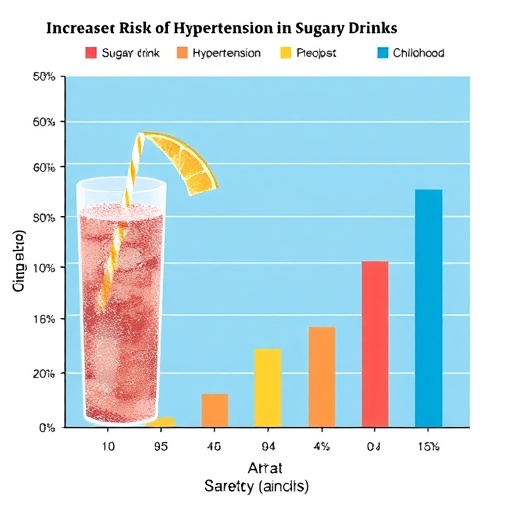
A groundbreaking longitudinal study conducted collaboratively by researchers from the University of Toronto and Harvard University has shed new light on the long-term cardiovascular risks associated with the consumption of fructose-containing beverages during childhood. The extensive research, published in the prestigious journal Circulation, identifies a clear link between the intake of sugar-sweetened beverages and fruit juices in early life and an increased propensity for developing hypertension as adults. This evidence significantly enhances our understanding of early dietary influences on chronic disease risk and underscores the importance of refining nutritional guidelines with a focus on the source and form of dietary sugars.
Hypertension, a clinical condition characterized by persistently elevated arterial blood pressure, remains a primary contributor to global cardiovascular morbidity and mortality. Alarmingly, rates of hypertension have been escalating worldwide, and epidemiological data suggests an earlier onset of the condition in contemporary populations. Despite the critical role of hypertension in the pathogenesis of heart disease and stroke, preventive strategies centered on lifestyle modifications are effective and remain underutilized. This study adds to the growing body of evidence highlighting the importance of dietary factors during formative years in cardiovascular disease prevention.
Prior research has implicated excessive fructose consumption—particularly from added sugars—as a determinant of cardiometabolic disorders, yet differentiation between types of fructose-containing foods and beverages has been challenging. This new study addresses this gap through robust analysis using the longitudinal data from the Growing Up Today Study (GUTS), an ongoing cohort comprising over 25,000 participants. By meticulously tracking dietary intake and health outcomes from childhood into adulthood, the researchers could delineate differential impacts of sugars sourced from sugar-sweetened beverages (SSBs), fruit juices, and whole fruits on hypertension risk.
The GUTS cohort, which started enrolling participants aged between nine and sixteen years and has maintained follow-up for nearly 25 years, provided a rare opportunity to analyze life-course associations. This extensive data set includes detailed dietary logs, lifestyle information, and medical diagnoses, facilitating a comprehensive assessment of the nuances in dietary sugar consumption. Crucially, the study observed that although total fructose intake did not correlate directly with hypertension risk, the form in which fructose was consumed profoundly influenced outcomes. The findings emphasize that sugar-sweetened beverages markedly increase hypertension risk in a dose-dependent manner, reaffirming these beverages as a critical target for public health intervention.
A particularly intriguing dimension of the study concerns fruit juice consumption, which exhibited a non-linear relationship with hypertension risk. Moderate consumption of fruit juice was sometimes associated with protective cardiovascular effects, potentially attributable to beneficial phytochemicals and vitamins. However, when consumed in higher quantities, fruit juice intake was linked with an elevated risk of developing hypertension, suggesting a threshold beyond which fructose’s metabolic detriments overshadow any beneficial bioactive compounds present in juice.
In examining sports drinks, a subset of sugar-sweetened beverages often perceived as healthful due to their marketing and association with athleticism, the study reports a noteworthy increase in hypertension risk. The ‘health halo’ around these beverages may contribute to their unchecked consumption among youth, necessitating clearer public health messages and explicit inclusion in dietary guidelines aiming to reduce sugar intake and subsequent cardiometabolic risk.
Strikingly, the analyses revealed that whole fruit consumption bore no association with an increased risk of hypertension, despite their intrinsic fructose content. The protective effect of whole fruit likely arises from their complex matrix of dietary fiber, micronutrients, and polyphenols, which modulate carbohydrate absorption and metabolism. Substituting sugar-sweetened beverages or fruit juice with whole fruits, milk, or water was consistently associated with lower hypertension risk, highlighting the importance of food form and nutrient synergy in metabolic health.
In discussing these findings, Dr. Vasanti Malik, the study’s principal investigator and associate professor at the University of Toronto’s Temerty Faculty of Medicine, stresses the necessity of focusing on whole food sources rather than isolated nutrients when considering dietary recommendations. The metabolic implications of fructose ingestion are intricately tied to the food matrix, and policies targeting sugar reduction should prioritize limiting liquid sources of fructose over blanket restrictions that ignore the diverse metabolic responses elicited by different fructose-containing foods.
The study also reinforces the critical window of childhood and adolescence for the establishment of dietary patterns that have enduring health repercussions. Early-life nutrition education and intervention could therefore play a pivotal role in curbing the burgeoning epidemic of hypertension and related cardiovascular diseases. Dr. Malik advocates for integrated strategies that promote the consumption of whole fruits while reducing sugar-sweetened beverage intake from a young age to foster healthier trajectories into adulthood.
Moreover, the research extends implications beyond individual behavioral change, signaling a need for systemic public health initiatives. These include regulatory measures targeting marketing practices for sugar-laden beverages aimed at children and adolescents and revising nutritional guidelines to explicitly address the risks associated with sugar-sweetened and fruit juice beverages. By deepening our understanding of the nuanced impacts of different fructose sources, this study offers a strong scientific foundation for such policy reform.
The investigators acknowledge that while this study elucidates important associations, sugar consumption represents just one facet of a multifactorial framework influencing hypertension risk. Broader dietary patterns, physical activity levels, genetic predispositions, and socio-environmental factors interplay to shape cardiovascular health trajectories. Nevertheless, by isolating the effects of fructose-containing beverage forms on hypertension risk, the research offers actionable insights that can be harnessed alongside holistic lifestyle interventions.
In conclusion, this landmark prospective cohort study convincingly demonstrates that the form and source of dietary fructose consumed during childhood and early adulthood significantly modulate the risk of developing hypertension. Encouragingly, replacing sugar-sweetened beverages and high fruit juice intake with whole fruits, milk, or water emerges as an effective strategy to reduce long-term hypertension risk. These findings underscore the urgent need to rethink current dietary guidance and public health messaging to focus not only on nutrient quantity but also on the quality and matrix of foods and beverages consumed in early life.
Subject of Research: People
Article Title: Consumption of Fructose-Containing Food and Beverage Sources in Childhood Through to Adulthood and Risk of Hypertension: A Prospective Cohort Study
News Publication Date: 22-Jun-2026
Web References: https://www.ahajournals.org/doi/10.1161/CIRCULATIONAHA.125.077666
References: 10.1161/CIRCULATIONAHA.125.077666 (DOI)
Image Credits: University of Toronto
Keywords: Hypertension, Fructose, Sugar-Sweetened Beverages, Fruit Juice, Whole Fruit, Cardiovascular Risk, Childhood Nutrition, Metabolic Health, Prospective Cohort Study, Dietary Guidelines, Public Health, Longitudinal Study
Tags: childhood nutrition and heart disease preventionchildhood sugary drink consumption and adult hypertensionearly dietary sugars and adult cardiovascular healthearly life diet impact on chronic diseaseepidemiology of hypertension and sugary drinksfructose intake and blood pressure elevationlong-term cardiovascular risks of fructose beverageslongitudinal study on sugary drinks and hypertensionnutritional guidelines for reducing childhood sugar intakeprevention of hypertension through childhood dietsugar-sweetened beverages and hypertension linksugar-sweetened fruit juices and hypertension risk