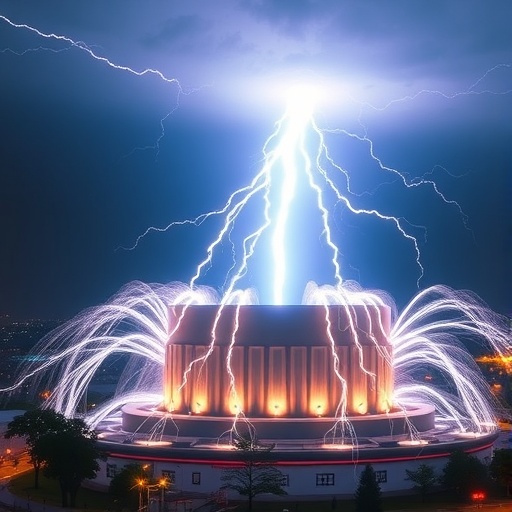
As the global demand for clean and sustainable energy sources intensifies, nuclear fusion has re-emerged as a beacon of hope in the scientific community. Fusion, the process that powers the sun and stars, promises a nearly inexhaustible supply of energy, free from the long-lived radioactive waste associated with nuclear fission. Governments and private investors alike are funneling billions of dollars into fusion research to bring this stellar power source down to Earth. However, replicating the intense conditions of the sun’s core within a terrestrial reactor is no trivial feat. The challenges at the frontier of fusion technology are as formidable as the physics underpinning the phenomenon itself.
At the heart of a fusion reaction lies plasma—a superheated, electrically charged state of matter where atomic nuclei collide and fuse, releasing extraordinary amounts of energy. The sun’s core sustains plasma at an estimated temperature around 27 million degrees Fahrenheit, under gravitational pressures billions of times that on Earth. In stark contrast, terrestrial fusion reactors must compensate for the absence of such immense gravitational confinement by heating plasma to temperatures exceeding 180 million degrees Fahrenheit—over six times hotter than the sun’s core. This extreme thermal environment pushes existing materials and engineering concepts to their operational limits, demanding novel approaches to containment and control.
Direct physical containment of plasma at such blistering temperatures is impossible with any known earthly material—everything would instantly vaporize. Instead, fusion researchers utilize powerful magnetic fields to confine plasma without contact with reactor walls. This magnetic confinement method, reminiscent of the fictional Magneto’s ability to manipulate metals, leverages electromagnetic forces to suspend the charged particles, preventing them from touching solid surfaces and dissipating heat. Devices like tokamaks and stellarators, complex doughnut-shaped chambers embedded with magnetic coils, exemplify this approach, yet controlling the turbulent plasma within remains an imposing obstacle.
Turbulence within plasma is itself a dynamic, multi-scale problem that undermines the maintenance of fusion conditions. Minute fluctuations create erratic eddies that cause heat and particles to escape confinement, disrupting the delicate balance required for sustained fusion reactions. This turbulence is not only a physical barrier but also a computational nightmare. The nonlinear interactions within plasma evolve rapidly across scales, making real-time control extraordinarily challenging. Hence, the design and operational stability of fusion reactors demand unprecedented precision in monitoring and managing this instability.
To tackle these multifaceted issues, researchers like Virginia Tech mathematician Ionut Farcas are pioneering advanced computational models that simulate plasma behavior under fusion conditions. Such simulations are vital for understanding how plasma dynamics respond to variations in temperature, magnetic confinement, and material interfaces. However, traditional numerical simulations of plasma turbulence are computationally intensive, often necessitating supercomputers running for days or weeks to resolve only fractions of a second of reactor operation. This time scale mismatch renders conventional simulations impractical for real-time control strategies within operational fusion reactors.
Recognizing this bottleneck, Farcas has developed an innovative reduced modeling technique. Reduced models distill complex plasma physics into computationally efficient frameworks that preserve essential dynamics while omitting less critical details. This balance enables simulations that run orders of magnitude faster than full-scale models, compressing days of computation into mere seconds. By enabling near-instantaneous plasma state predictions, these models unlock possibilities for controlling fusion reactions in real time—adjusting magnetic fields and reactor parameters on the fly to counteract turbulence and maintain optimal fusion rates.
The efficacy of reduced models extends beyond fusion research. Farcas and his collaborators demonstrated their applicability to simulating next-generation rocket engines, where turbulent combustion processes similarly resist quick computational resolution. Their work published in Nature Chemical Engineering shows that reduced models can decrease simulation time from several days to a single second for millisecond-scale combustion events. This cross-disciplinary utility underscores the versatility and transformative potential of reduced modeling in managing complex, nonlinear physical systems demanding real-time computational support.
Material sciences, too, play a pivotal role in the fusion quest. The intense heat flux and neutron bombardment inside reactors degrade materials over time, necessitating the development of ultra-resilient alloys and composites that can endure these punishing environments. Despite the sophistication of magnetic confinement, some degree of plasma-wall interaction is inevitable, especially during transient disruptions. Hence, understanding and mitigating material fatigue and failure modes is critical for the longevity and economic viability of fusion power plants.
The integration of machine learning into plasma turbulence modeling is another frontier explored in recent research. Leveraging vast datasets from experimental devices like the W7-X stellarator and high-fidelity simulations, machine learning algorithms can identify patterns and instabilities that traditional physics models may overlook. This synergy promises improved turbulence prediction accuracy and enhanced adaptive control systems, thereby pushing fusion reactors closer to achieving sustained net energy gain.
Nevertheless, the path forward is profoundly interdisciplinary. Fusion research amalgamates physics, computational mathematics, materials science, and systems engineering. Progress depends not on solving isolated problems but on synergistically addressing interconnected challenges—from molecular-scale plasma interactions to macroscopic reactor engineering and sophisticated control algorithms. The nuanced balance of these elements, alongside innovative computational tools like reduced models, forms the backbone of the burgeoning effort to tame the stars within laboratory confines.
Ultimately, the dream of practical fusion energy has long captivated scientists and policymakers alike: a clean, abundant energy source that could revolutionize humanity’s energy paradigm. While landmark experimental achievements—such as recent advances demonstrating net positive energy output—signal growing feasibility, the intricate engineering and control challenges remain vast. Cutting-edge research, exemplified by the developments in reduced modeling and control strategies spearheaded by Farcas and others, is not only accelerating our timeline but redefining the state of the art in plasma physics and fusion technology.
This momentum, coupled with escalating investment and collaboration across sectors, paints an optimistic picture for the future of fusion energy. The transition from laboratory curiosities to commercial power plants hinges on precisely the kinds of breakthroughs that harness computational power in novel ways, enabling real-time, reliable control over the ephemeral and extreme plasma environments. With ongoing advances, the prospect of clean, limitless energy from fusion is poised to transform the global energy landscape in the coming decades.
Subject of Research: Nuclear fusion and plasma turbulence modeling
Article Title: Machine learning for electron-scale turbulence modeling in W7-X
News Publication Date: 18 June 2026
Web References:
https://doi.org/10.1063/5.0311057
https://www.sciencedirect.com/science/article/abs/pii/S0021999126000689
https://www.nature.com/articles/s44286-026-00377-0
References:
Ionut Farcas et al., “Machine learning for electron-scale turbulence modeling in W7-X,” Physics of Plasmas, 18 June 2026.
Ionut Farcas et al., “Reduced modeling approaches for fusion plasma and rocket engine simulations,” Journal of Computational Physics.
Ionut Farcas et al., “Application of reduced models in combustion and fusion systems,” Nature Chemical Engineering.
Keywords: Nuclear fusion, plasma physics, magnetic confinement, turbulence modeling, reduced computational models, machine learning, fusion reactors, high-temperature plasma, computational physics, interdisciplinary research.
Tags: advanced nuclear fusion simulationsfusion energy research fundingfusion energy sustainabilityfusion plasma modelingfusion power developmentfusion reactor challengesfusion reactor material sciencehigh-temperature plasma physicsnuclear fusion energyplasma confinement techniquessustainable clean energy technologyterrestrial fusion reactors