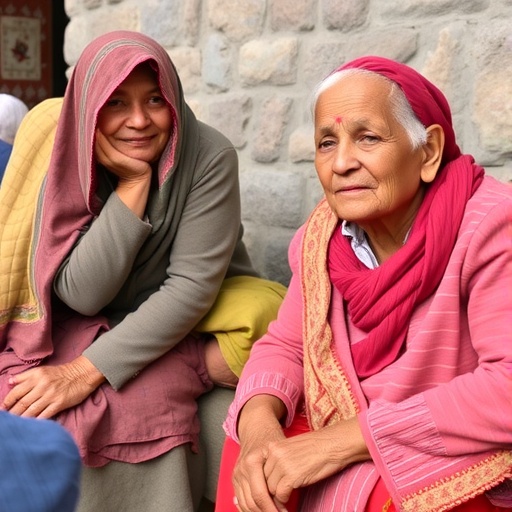
In the remote and scenic Hilly Municipality of Dhankuta, Nepal, a groundbreaking new study sheds light on the pressing health challenges and lifestyle behaviors of older adults. This research, conducted by Kalikotay, Rajeswari, Uprety, and colleagues, presents a comprehensive analysis of the aging population in this unique geographical and cultural setting. With the global demographic shift towards an aging populace, understanding the nuanced health dynamics in less urbanized and often overlooked regions like Dhankuta is crucial for shaping effective public health strategies.
The study meticulously documents the current health status of older adults residing in Dhankuta, emphasizing a multifaceted approach that considers both physical and mental well-being. The research team deployed extensive fieldwork, incorporating surveys, biometric measurements, and in-depth interviews structured to capture a holistic picture of elder health. This methodologically rigorous approach allowed an unprecedented insight into the interplay between environmental factors, lifestyle choices, and health outcomes in a high-altitude, mountainous locale characterized by limited healthcare access.
One of the most striking findings of the research is the predominance of chronic non-communicable diseases (NCDs) such as hypertension, diabetes, and respiratory issues among the elderly population. The prevalence rate far exceeds national averages reported in urban centers, a phenomenon likely linked to the challenging environmental conditions and constrained medical infrastructure. Moreover, the study highlights that untreated or poorly managed NCDs significantly contribute to disability and impaired quality of life in this cohort.
Beyond chronic illnesses, the research delves into the psychological health landscape of the older demographic. Depression and anxiety symptoms were reported with alarming frequency, suggesting the urgent need to address mental health concerns amidst these communities. The isolation inherent in hilly terrains, combined with socioeconomic hardships, seems to exacerbate mental health vulnerabilities, complicating traditional health intervention models designed primarily for flat, urban settings.
Crucially, the study examines the lifestyle behaviors that underpin the health profiles observed. The older residents of Dhankuta engage in a variety of physical activities intrinsic to their rural lifestyle, including agricultural labor and walking long distances for daily errands. While these activities promote cardiovascular health, they do not wholly mitigate risks posed by nutritional deficiencies and lifestyle-related risk factors like tobacco use. The researchers also noted a dietary pattern influenced by geographical constraints—characterized by limited protein intake and high reliance on carbohydrate-heavy staples—further impacting morbidity risks among older adults.
The research articulates the substantial impact of social determinants on health in this context. Economic insecurity, limited literacy, and inadequate social support converge to affect health outcomes negatively. The elderly in Dhankuta not only face physical health challenges but also navigate a complex web of sociocultural barriers that impede access to health services and adherence to recommended health behaviors.
Importantly, the study discusses the accessibility and utilization of healthcare resources in this municipality. Although some primary health centers exist, they are often understaffed and ill-equipped to manage the comprehensive needs of aging individuals with chronic conditions. This gap underscores a critical need for health system strengthening tailored to the unique epidemiological and environmental realities of Nepal’s hilly regions.
One innovative element of the study is its emphasis on integrating traditional health practices with modern medicine. It explores how many older adults rely on indigenous remedies and community healers, which coexist with formal health systems but sometimes conflict with evidence-based medical care. Understanding this dynamic is essential for designing culturally congruent interventions that garner community trust and adherence.
The researchers advocate for targeted public health interventions that recognize the intersection of environmental, social, and behavioral factors affecting older adults. They suggest community-based health promotion programs that blend education, screening, and support services to enhance both prevention and management of chronic diseases. Such programs would ideally leverage local health workers trained in geriatric care and incorporate telemedicine modalities to mitigate geographic isolation.
The paper also emphasizes the role of lifestyle modification as a cornerstone of healthy aging. Interventions promoting balanced nutrition, cessation of tobacco use, mental health support, and sustained physical activity could substantially delay health deterioration. This approach aligns with global health frameworks yet requires adaptation to the specific needs and limitations identified in Dhankuta.
In addition, the study highlights the importance of policy reforms to support aging populations in rural Nepali settings. Increasing governmental and non-governmental investment in healthcare infrastructure, social security schemes, and elder-friendly urban planning are vital steps. The research calls for an intersectoral approach where health, social welfare, and local governance collaborate closely.
From a broader perspective, the findings carry implications beyond Nepal, resonating with global efforts to address health disparities among marginalized elderly populations. The intricate environmental, social, and behavioral factors identified present a compelling case for tailored, inclusive healthcare strategies that transcend traditional urban-centric paradigms.
Furthermore, the research team envisions future studies that monitor the longitudinal health trajectories of this cohort and evaluate the effectiveness of implemented interventions. They also suggest integrating advanced analytic tools like geospatial mapping and artificial intelligence to better predict health risks and allocate resources in these challenging terrains.
This pioneering work by Kalikotay and colleagues stands as a beacon for geriatric health research in mountainous rural regions, offering critical insights that policymakers, healthcare providers, and researchers can harness. It paves the way for a more equitable health landscape where older adults, irrespective of geography, have the opportunity to age with dignity and optimal health.
As populations around the world continue to age, the Dhankuta study emerges as a timely and important contribution to our understanding of aging in diverse contexts. Its meticulous documentation of health status and lifestyle behaviors, coupled with actionable recommendations, holds the promise of transforming elder care in many similar low-resource, high-altitude environments. This research not only spotlights the urgent challenges but also inspires hope for solutions that honor cultural integrity and scientific rigor.
With increasing awareness and targeted action stimulated by findings such as these, the goal of healthy aging becomes more attainable. The integration of traditional knowledge, community engagement, and innovative healthcare models presented in this study captures the essence of what future geriatric public health must embrace to be truly effective.
Subject of Research: Health status and lifestyle behaviors of older adults in a hilly municipality of Dhankuta, Nepal.
Article Title: Health status and lifestyle behaviours of older adults in a Hilly Municipality of Dhankuta, Nepal.
Article References: Kalikotay, B., Rajeswari, D., Uprety, K. et al. Health status and lifestyle behaviours of older adults in a Hilly Municipality of Dhankuta, Nepal. BMC Geriatr (2026). https://doi.org/10.1186/s12877-026-07885-x
Image Credits: AI Generated
Tags: aging population health in remote areaschronic non-communicable diseases in mountainous regionscultural factors affecting elderly lifestyle Nepaldemographic shift and agingepidemiology of hypertension and diabetes in elderlyfieldwork methods in geriatric health researchhealth challenges of older adults in Dhankutahealthcare access in hilly municipalitiesimpact of high-altitude living on elder healthlifestyle behaviors of elderly in rural Nepalphysical and mental well-being of older adultspublic health strategies for aging in Nepal