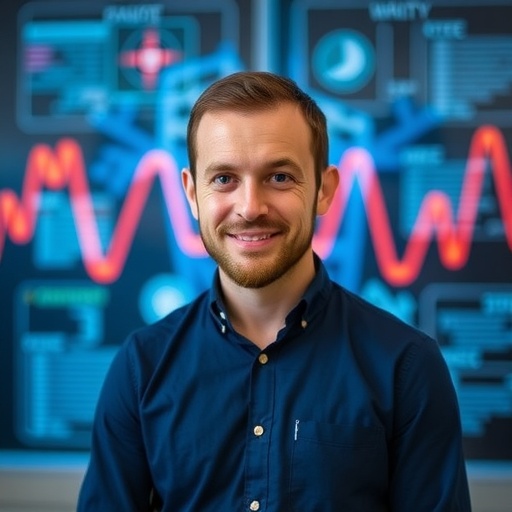
The European Research Council (ERC) has recently awarded one of its most prestigious accolades, the Advanced Grant, to Dr. Florian Weinberger of the Centro Nacional de Investigaciones Cardiovasculares Carlos III (CNIC). This significant grant, amounting to up to €2.5 million over a five-year period, will fund Dr. Weinberger’s ambitious project named CARDIOSWITCH. This initiative is set to revolutionize our understanding of how the mechanical activity within heart muscle cells—cardiomyocytes—influences cardiac biology and aims to pioneer new regenerative strategies especially targeted at congenital heart disease.
At the core of CARDIOSWITCH lies the bold intention to decode the complex relationship between mechanical forces exerted by contracting cardiomyocytes and the subsequent biological responses within cardiac tissue. Cardiomyocytes, the cells responsible for rhythmic heart contractions, not only generate the mechanical energy essential for pumping blood but also sense and respond to biomechanical signals that regulate their growth, organization, and functional maturation. This mechanicobiological feedback loop has remained an elusive area in cardiac science, and CARDIOSWITCH is poised to shed unprecedented light on this critical aspect.
The research will leverage cutting-edge bioengineering technologies to develop innovative methods for the reversible control of cardiomyocyte activity with a precision never previously achieved. By integrating optogenetics—where light is used to modulate cellular activity—and chemogenetics, the project aims to manipulate cardiomyocytes dynamically in vitro and in vivo. These approaches will allow scientists to finely tune the contractile behavior of these cells, enabling detailed exploration of how varying mechanical workloads influence cell proliferation, alignment, and functional parameters such as electrical conduction and mechanical coupling.
The project’s multidisciplinary approach incorporates stem cell-derived cardiac models, engineered human cardiac tissues, and robust preclinical animal models. These complementary platforms will provide the essential biological context to investigate the mechanical cues important for cardiac development and regeneration. By mimicking congenital heart defects using these models, Dr. Weinberger’s team hopes to identify the thresholds of cardiomyocyte activity required to restore effective heart function—an insight that could transform regenerative therapy paradigms.
One of CARDIOSWITCH’s pioneering goals is to clarify the minimum population size of actively contracting cardiomyocytes necessary to achieve restoration of cardiac output in damaged or underdeveloped hearts. This question is pivotal to the optimization of regenerative cell therapies, where the quantity and quality of transplanted cells directly impact therapeutic outcomes. Current therapeutic options are limited, particularly for children born with congenital heart defects who face significant clinical challenges despite advances in surgery and supportive care.
Furthermore, the project will rigorously evaluate novel strategies aimed at improving the engraftment and functional integration of stem cell-derived cardiomyocytes following transplantation. One of the primary obstacles in clinical applications of stem cell therapies for heart disease is the risk of ventricular arrhythmias—life-threatening irregular heart rhythms induced by transplanted cells. CARDIOSWITCH will seek to mitigate these risks by controlling the contractile behavior of cardiomyocytes post-transplant, thereby promoting safer and more effective regenerative outcomes.
Dr. Weinberger emphasizes the unique focus of the project on congenital heart disease, a domain that has received comparatively little attention in cardiac regenerative research. While much of the regenerative medicine field has oriented its efforts toward adult patients suffering from ischemic heart conditions such as coronary artery disease, CARDIOSWITCH targets pediatric patients with congenital anomalies. This patient population could benefit immensely from therapies tailored to repair or replace malformed or underdeveloped cardiac tissue, potentially changing the future prognosis for children affected by these severe conditions.
Despite surgical advances that have undoubtedly extended the lives of many children with congenital heart defects, the inability to fully restore heart muscle function remains a pressing clinical limitation. CARDIOSWITCH aims to bridge this gap by unraveling how the rhythmic mechanical activity inherent in heart muscle biology orchestrates regenerative processes. The findings from this project are expected to lay a mechanistic foundation that could lead to groundbreaking, tailored therapies that promote cardiac repair precisely where and when it is needed.
At its essence, the CARDIOSWITCH project represents a convergence of bioengineering, developmental biology, and regenerative medicine. By dissecting the influence of biomechanical forces on cardiomyocyte behavior, the research strives to unlock entirely new therapeutic avenues. This potential is especially critical for pediatric cardiology, where current treatments are often invasive and limited in their ability to promote true myocardial regeneration.
Dr. Weinberger’s expertise spans cardiac tissue engineering, optogenetics, chemogenetics, and preclinical investigations of congenital heart defects, providing a uniquely qualified foundation for this project. The multidisciplinary approach capitalizes on sophisticated technologies to model, manipulate, and measure cardiac function at cellular and tissue levels. Such depth and precision are necessary to address the complexity of heart regeneration, particularly when aiming for translational outcomes relevant to human patients.
Ultimately, CARDIOSWITCH is poised not only to advance fundamental scientific knowledge but also to drive the development of regenerative therapies capable of restoring coordinated heart function. Success in this endeavor could transform the management of congenital heart disease in children, offering hope for durable, biologically based treatments that repair rather than merely replace heart tissue.
The ERC Advanced Grants are known for fostering bold, curiosity-driven research initiatives that aim for impactful scientific breakthroughs. In the 2025 cycle alone, the ERC dedicated €838 million to fund 319 leading researchers across Europe, underlining the importance and competitiveness of these awards. CARDIOSWITCH stands out as a pioneering project within this cohort, poised to push the boundaries of cardiac biology and regenerative medicine through innovative mechanobiological investigation.
Dr. Florian Weinberger conducts his research within the Regeneration Program at CNIC, where his team is committed to unraveling the biological mysteries of heart regeneration. The clinical implications of CARDIOSWITCH resonate far beyond the laboratory, offering a new paradigm for addressing some of the most intractable challenges in pediatric cardiology.
Subject of Research: Cardiac biology, cardiomyocyte mechanobiology, regenerative therapies for congenital heart disease
Article Title: ERC Advanced Grant Fuels Breakthrough Project Targeting Cardiac Regeneration in Congenital Heart Disease
News Publication Date: Not specified
Web References: European Research Council, Centro Nacional de Investigaciones Cardiovasculares Carlos III (CNIC)
Image Credits: CNIC, Photo by Florian Weinberger
Keywords: Cardiac regeneration, congenital heart disease, cardiomyocytes, mechanobiology, stem cell therapy, optogenetics, chemogenetics, cardiac tissue engineering, ventricular arrhythmia, pediatric cardiology, ERC Advanced Grant
Tags: bioengineering in heart researchcardiac biology regenerationcardiomyocyte mechanical activitycardiovascular disease innovationCNIC cardiovascular researchcongenital heart disease therapiesERC Advanced Grant cardiac researchFlorian Weinberger CARDIOSWITCH projectheart muscle cell biomechanicsmechanobiology in cardiologyoptogenetics in cardiac studiesreversible cardiomyocyte control