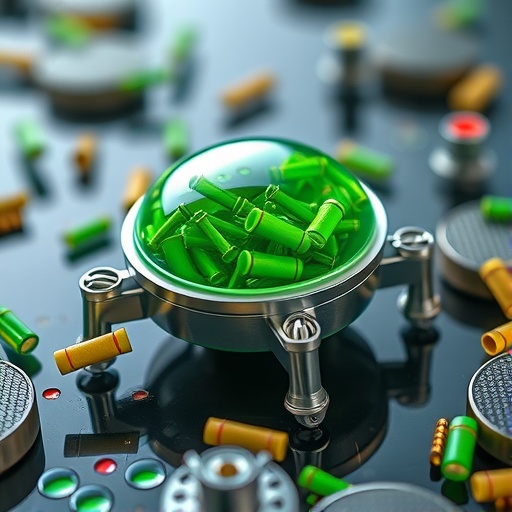
In a groundbreaking development poised to revolutionize bladder cancer therapy, researchers have engineered microscopic algae-based robots capable of delivering chemotherapy drugs directly into tumor masses with unprecedented precision and efficiency. Guided by magnetic fields and monitored through real-time imaging, these diminutive biohybrid machines markedly enhance drug penetration into cancerous tissues while sparing surrounding healthy cells from collateral damage.
Bladder cancer ranks among the most common malignancies globally, where standard treatment protocols often involve surgical tumor removal followed by intravesical chemotherapy—administering drugs directly into the bladder through catheters. Yet, a persistent challenge has been the limited ability of these chemotherapeutic agents to infiltrate deep into the dense tumor matrix, dramatically restricting their efficacy. Longer exposure times or escalated dosages are traditionally employed as workarounds, often escalating side-effects without notably improving therapeutic outcomes.
To address these limitations, scientists from the University of Edinburgh and Xiamen University collaborated to develop magnetically controlled microbots, ingeniously composed of single-celled microalgae. These natural microorganisms present an ideal vehicle for drug delivery due to their intrinsic biocompatibility and biodegradability, ensuring safety inside the human body. Their nanoporous structures deftly accommodate chemotherapy agents, allowing for a stable encapsulation and on-demand controlled release mechanism directly at the tumor site.
The microbots are loaded with doxorubicin, a potent chemotherapy compound widely used in cancer treatment. Upon administration into the bladder cavity, they are remotely directed toward tumor masses using dynamically programmed external magnetic fields. This strategy enables the microbots to maneuver within the complex bladder environment, translating into enhanced drug transport and release. The utilization of real-time ultrasound imaging forms a closed-loop feedback system, fine-tuning the collective movement of the microbot swarm, which can roll and rotate to switch seamlessly between drug transport and local release modes.
Analogous to how schools of fish or flocks of birds exhibit orchestrated motion through confined spaces, these microbots execute coordinated maneuvers that optimize penetration into the difficult terrain of tumor tissues. This bio-inspired collective behavior is instrumental in overcoming biological barriers that have hitherto limited drug efficacy. Lab experiments conducted on murine models with bladder tumors demonstrated that this microscale robotic fleet traversed tumor boundaries more than ten times more effectively than standard chemotherapy delivery methods.
Remarkably, the rats undergoing this novel treatment exhibited a significant reduction in tumor burden—after just one week of therapy, tumor mass was diminished to less than 3% of what was observed in control groups receiving conventional chemotherapy. Not only did this method enhance therapeutic outcomes, but it also curtailed exposure time drastically; treatments were completed within approximately 30 minutes, a significant improvement over conventional approaches necessitating prolonged drug retention periods to achieve comparable effects.
The researchers emphasize that this magnetic algebot technology could herald a paradigm shift toward more effective, localized chemotherapy protocols that minimize systemic drug exposure and its accompanying side effects. The intricate control over drug delivery precision holds promise for improving patient quality of life by enabling minimally invasive interventions and potentially reducing cumulative toxicity. Such advancements align tightly with ongoing efforts in biomedical engineering to integrate nanotechnology, robotics, and real-time imaging for smarter, personalized cancer treatments.
Further preclinical investigations and regulatory reviews are planned to extend this promising research toward human clinical trials. Translational studies, currently in discussion with medical centers, aim to validate scalability and safety aspects essential for future clinical application. The interdisciplinary research team underscores the cost-effectiveness and scalability advantages offered by the microalgae source material, noting that these robots can be produced abundantly and economically, an important consideration for widespread therapeutic deployment.
Dr. Qi Zhou from the University of Edinburgh, co-lead author of the study, highlighted the unique attributes of their approach, noting how the tablet-like algae microbots, empowered by machine intelligence and guided through advanced imaging, enable fast and targeted drug delivery within the bladder environment. Professor Xiaohui Yan of Xiamen University reinforced the significance of this non-invasive technique, particularly in surmounting physical and biological barriers that traditionally hinder drug diffusion into bladder tumors.
The research findings were published in the prestigious journal Nature Nanotechnology, marking an important milestone in the field of nanomedicine and robotics-assisted cancer therapies. Funded in part by the RS Macdonald Seedcorn Fund, the study reflects an exemplary international cooperation involving experts in nanotechnology, molecular biology, and biomedical engineering from China and the UK. This innovation not only opens new frontiers in bladder cancer treatment but also exemplifies the wider potential of biohybrid microbots in combating other solid tumors and complex medical conditions.
As the field moves forward, integrating machine intelligence, adaptive control systems, and biocompatible materials promises to further elevate the capabilities of these tiny therapeutic agents. The convergence of disciplines underscores a bold step into an era where precision medicine is materially enhanced by microscopic robotic tools that can navigate, sense, and interact dynamically within the human body to optimize outcomes and redefine cancer care.
Subject of Research: Animals
Article Title: Machine-intelligent multimodal algebot for intracavitary chemotherapy
News Publication Date: 22-Jun-2026
Web References:
https://www.nature.com/articles/s41565-026-02195-0
References:
DOI: 10.1038/s41565-026-02195-0
Keywords: Health and medicine, Medical technology, Cancer
Tags: biodegradable microbots in medicinebiohybrid drug delivery vehiclesbladder cancer targeted therapycancer treatment side-effect reductionchemotherapy drug delivery systemsenhanced drug penetration in tumorsintravesical chemotherapy improvementsmagnetic field guided microbotsmicroalgae-based microbotsnanoporous microalgae drug carriersprecision oncology microbot technologyreal-time imaging in cancer treatment