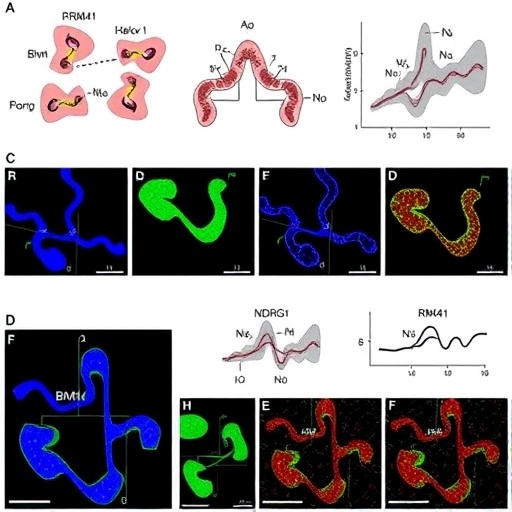
In a groundbreaking study set to redefine our understanding of colorectal cancer progression, researchers have uncovered a critical molecular mechanism involving the RNA binding motif protein 41 (RBM41). This protein, previously underappreciated in oncogenic pathways, has now been identified as a potent facilitator of colorectal tumorigenesis through its interference with the maturation process of the NDRG1 pre-mRNA. The revelation not only elaborates the intricate post-transcriptional regulatory networks at play in cancer biology but also opens promising avenues for targeted therapeutic interventions.
Colorectal cancer remains one of the leading causes of cancer-related mortality worldwide, with complex layers of genetic and epigenetic dysregulations contributing to its development. The recent findings surrounding RBM41 spotlight a novel post-transcriptional checkpoint that is hijacked during malignant transformation. Normally, the maturation of pre-mRNA transcripts into functional messenger RNA is meticulously controlled, ensuring precise expression of genes pivotal for cellular homeostasis. The disruption of this process, as mediated by RBM41’s aberrant binding activity, skews the expression landscape in favor of tumorigenesis.
At the molecular level, RBM41 executes its oncogenic role by binding selectively to the pre-mRNA transcript of NDRG1, a known tumor suppressor gene implicated in inhibiting metastasis and promoting cellular differentiation. By impeding NDRG1 pre-mRNA maturation, RBM41 effectively reduces the levels of functional NDRG1 protein within colorectal cancer cells. This protein depletion dismantles critical tumor-suppressive barriers, allowing unchecked cellular proliferation and enhanced invasive capabilities that are hallmark features of aggressive cancer phenotypes.
The study’s rigorous experimental design combined comprehensive transcriptomic analyses with in vitro and in vivo functional assays. Data revealed a pronounced elevation of RBM41 expression in colorectal tumor samples compared to normal adjacent tissues. This upregulation correlates strongly with poor patient prognosis, underscoring the clinical relevance of RBM41 as a potential prognostic biomarker. Furthermore, silencing RBM41 expression in cancer cell lines reinstated normal NDRG1 protein levels, resulting in marked reductions in cell proliferation and migration.
One of the most compelling aspects of this research lies in the detailed mechanistic dissection of RBM41’s interaction with NDRG1 pre-mRNA. Using cross-linking immunoprecipitation followed by high-throughput sequencing, the authors mapped the precise binding sites of RBM41 on NDRG1 transcripts. These sites reside within critical regulatory regions essential for splicing and transcript stabilization. RBM41 binding hinders the recruitment of the spliceosome components necessary for correct intron excision, ultimately stalling the maturation process and promoting the accumulation of aberrant RNA species subject to degradation.
This mechanistic insight brings to the fore a sophisticated layer of gene expression regulation, where an RNA binding protein can pivotally dictate tumor suppressor gene output through modulation of RNA processing. It challenges previous assumptions that primarily focused on transcriptional regulation and post-translational modifications in cancer biology, shining light on RNA metabolism as a fertile ground for oncogenic manipulation.
The therapeutic implications of targeting RBM41 in colorectal cancer are profound. By designing small molecules or antisense oligonucleotides capable of disrupting the RBM41-pre-mRNA interaction, there exists the potential to restore NDRG1 levels and revive its tumor-suppressive functions. Such approaches could complement existing therapeutic regimes that often falter due to resistance mechanisms. Importantly, selective inhibition of RBM41 may exert minimal off-target toxicity given its specific modus operandi within cancer cells, sparing normal tissue homeostasis.
Additionally, the research opens investigative pathways into whether RBM41 has analogous roles in other cancer types or disease contexts characterized by aberrant RNA processing. Understanding the broader physiological and pathological landscape of RBM41’s activity could reveal universal principles of RNA-mediated regulation and novel biomarkers for cancer diagnostics.
This study also prompts a reevaluation of the current RNA biology paradigms within oncology. It exemplifies how post-transcriptional processes, once relegated to supporting roles, are in fact pivotal determinants of cellular fate. It encourages the scientific community to adopt integrative multi-omic approaches that encompass RNA-protein interactions and splicing dynamics when deciphering cancer etiology.
Moreover, this discovery underscores the critical importance of pre-mRNA maturation as a vulnerable node susceptible to oncogenic exploitation. The interface between RNA processing machinery and RNA binding proteins like RBM41 may represent a hotspot for intervention, with the potential to simultaneously influence multiple signaling cascades through restoration of normal transcript landscapes.
The research team employed cutting-edge technologies, including RNA immunoprecipitation sequencing (RIP-seq) and CRISPR-mediated gene editing, to validate the functional consequences of RBM41 manipulation. These powerful tools facilitated a detailed interrogation of molecular events underpinning RBM41’s role, enabling precise mapping of biological outcomes ranging from RNA splicing defects to altered cellular phenotypes.
In summation, the identification of RBM41 as a key inhibitor of NDRG1 pre-mRNA maturation provides a novel molecular cog in the machinery of colorectal tumorigenesis. It substantially advances our comprehension of how RNA binding proteins can govern oncogenic pathways via RNA processing interference. This promising discovery paves the way for innovative therapeutic strategies aimed at restoring tumor suppressor gene functionality through modulation of RNA metabolism—a frontier that is rapidly emerging at the nexus of cancer research.
As colorectal cancer continues to pose formidable clinical challenges, this study offers renewed hope by illuminating an uncharted regulatory axis ripe for exploitation. Future research should prioritize the development of RBM41-specific inhibitors, elucidate the protein’s broader interactome, and assess the translational potential of these findings in diverse patient populations. Ultimately, these endeavors will be vital in transforming molecular insights into tangible clinical benefits for patients grappling with colorectal malignancies.
Subject of Research:
The role of RNA binding motif protein 41 (RBM41) in promoting colorectal cancer development by impeding the maturation of NDRG1 pre-mRNA.
Article Title:
RNA binding motif protein RBM41 promotes colorectal tumorigenesis by impeding the maturation of NDRG1 pre-mRNA.
Article References:
Liu, Y., Mu, J., Yu, J. et al. RNA binding motif protein RBM41 promotes colorectal tumorigenesis by impeding the maturation of NDRG1 pre-mRNA. Cell Death Discov. 12, 276 (2026). https://doi.org/10.1038/s41420-026-03197-6
Image Credits: AI Generated
DOI: 20 June 2026
Tags: colorectal cancer molecular mechanismscolorectal cancer therapeutic targetsgene expression dysregulation in cancermolecular pathways in colorectal tumorigenesisNDRG1 pre-mRNA maturationoncogenic RNA binding motif proteinspost-transcriptional regulation in cancerRBM41 in colorectal cancerRNA binding proteins in tumorigenesisRNA processing in cancer progressiontargeted therapy for colorectal cancertumor suppressor gene NDRG1