Okayama University of Science and Murakami City collaborate on pioneering land-based chum salmon aquaculture system
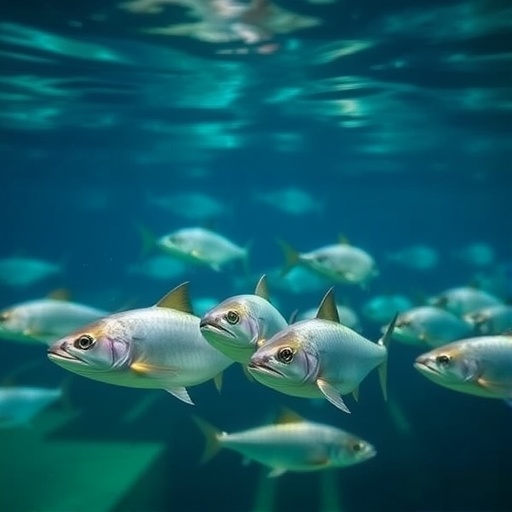
In an innovative breakthrough in aquaculture technology, researchers at Okayama University of Science, in partnership with Murakami City of Niigata Prefecture, Japan, have made significant strides in cultivating chum salmon (Oncorhynchus keta) within a land-based closed-loop system. This groundbreaking research centers on rearing juvenile chum salmon from early developmental stages in a controlled environment utilising “The Third Water,” a specialized water source at the university’s Next-Generation Aquaculture Center. The juvenile fish, initially sourced from Murakami’s coastal waters, have now reached an average weight of 23 grams and a length of 13 centimeters, thriving within a 35-ton tank that epitomizes the potential scale of this system.
Murakami, historically renowned for salmon production along the Sea of Japan coast dating back to the Heian period (794–1185), has faced escalating ecological challenges due to climate change. Warmer sea temperatures and shifting marine biodiversity have introduced new predators such as yellowtail and Spanish mackerel into Murakami’s waters, resulting in increased predation rates on released juvenile salmon. These environmental stressors have contributed to sharply declining numbers of mature salmon returning to their natal rivers, threatening the economic and ecological sustainability of the local salmon fisheries.
Recent statistics underscore the alarming decline in salmon return rates. Data from the Japan Fisheries Research and Education Agency reveals that the national average return rate for chum salmon in 2025 plummeted to 0.66%, marking the lowest level on record since 1989. More dramatically, in Niigata Prefecture, the return rate has dropped to a mere 0.06%, indicating that nearly all released salmon fail to survive or navigate their migratory path back to spawning grounds. This decline has galvanized the scientific community and local authorities to seek alternative, sustainable methods of salmon cultivation.
The collaborative project spearheaded by Associate Professor Toshimasa Yamamoto from the Department of Bioscience at Okayama University of Science represents a paradigm shift away from traditional ocean-based hatchery release programs. Instead, it embraces land-based aquaculture utilizing a closed recycling aquaculture system (c-RAS), which recirculates and filters water continuously, optimizing water quality and minimizing environmental impacts. The system harnesses “The Third Water,” an advanced water source characterized by its purity and mineral content, facilitating ideal rearing conditions for salmon at various growth stages.
The project’s methodology involved the transfer of juvenile salmon at an early stage from Murakami to the Next-Generation Aquaculture Center, initially raising them in smaller tanks under carefully controlled conditions. Once juveniles reached approximately 8–9 centimeters in length and 5 grams of body weight, they were transitioned into a larger 7-ton tank to accommodate their growth and activity levels. On May 4, after rigorous monitoring and care, the juvenile salmon, now averaging 13 centimeters, were moved into a spacious 35-ton tank, supporting a population of 2,080 actively swimming fish that serve as a model population for large-scale production.
Researchers anticipate that with continued management and optimal feeding protocols, these chum salmon will reach about 1 kilogram within one year and potentially grow between 1.5 to 3 kilograms over two years of cultivation. Such growth milestones are critical for commercial viability and align with industry benchmarks for high-quality salmon production. Achieving these targets under a land-based system would demonstrate the scalability and economic feasibility of closed-cycle salmon aquaculture outside marine or riverine environments.
The ultimate goal of this initiative is to establish the world’s first fully closed-cycle land-based aquaculture system for chum salmon. This closed-cycle system aims not only to rear salmon from juvenile stages to market size but also to close the reproductive loop completely within the controlled environment, eliminating reliance on wild populations and natural river inputs. If successful, this would signify a revolutionary advancement in aquaculture technology with the potential to drastically reduce the pressure on wild salmon stocks and marine ecosystems worldwide.
Associate Professor Yamamoto draws from his previous experience piloting small-scale chum salmon rearing efforts in 2015, where some individuals achieved the distinguished “Tokishirazu” quality—a premium class of chum salmon prized for its rich fat content and delicate flavor profile. Building on these successes, the current project integrates refined husbandry practices, advanced water filtration technologies, and precise environmental controls to optimize fish health, growth rates, and product quality.
The environmental and economic implications of this research are profound. By shifting salmon production from open ocean environments to land-based closed-loop systems, this technology offers a pathway to mitigate the impacts of climate change, habitat degradation, and predation pressures that currently threaten salmon populations globally. Moreover, it enhances biosecurity by reducing disease transmission risks associated with wild stock interactions and pollutants, thereby promoting sustainable fisheries and food security.
Looking forward, the research team plans to continue detailed physiological, behavioral, and genetic assessments of the cultured salmon to ensure robust health and reproductive viability within the closed system. Collaboration with Murakami City remains pivotal, facilitating knowledge exchange, resource sharing, and evaluating the socioeconomic impacts of transitioning to land-based aquaculture. Together, they aim to develop operational strategies that enable cost-effective production while preserving environmental integrity and community livelihoods.
This pioneering project serves as a beacon of innovation in the aquaculture sector, showcasing the potential for next-generation technologies to transform traditional fisheries and conserve endangered species. The successful implementation of a fully closed-cycle chum salmon aquaculture system could establish a new global standard in sustainable fish farming, reshaping supply chains and reducing dependence on wild fisheries amidst escalating ecological challenges.
Credit: Okayama University of Science
Subject of Research: Land-based closed-cycle aquaculture system for chum salmon (Oncorhynchus keta)
Article Title: Breakthrough in Land-Based Aquaculture: Okayama University and Murakami City Pioneer Closed-Cycle Chum Salmon Rearing
News Publication Date: Not specified
Web References: https://mediasvc.eurekalert.org/Api/v1/Multimedia/55fbc5ee-3863-4c8a-b8fa-9a911fb2391c/Rendition/low-res/Content/Public
Image Credits: Okayama University of Science
Keywords: chum salmon, Oncorhynchus keta, land-based aquaculture, closed-cycle aquaculture, Next-Generation Aquaculture Center, The Third Water, recirculating aquaculture system, climate change, sustainable fisheries, fish farming innovation
Tags: climate change impact on salmonclosed-recirculation aquaculture systemecological challenges in salmon farmingjuvenile chum salmon cultivationland-based chum salmon farmingMurakami City salmon collaborationnext-generation aquaculture centerOkayama University of Science aquaculture researchsalmon predation by yellowtail and mackerelSea of Japan salmon production historysustainable salmon aquaculture methodsthird water aquaculture technology