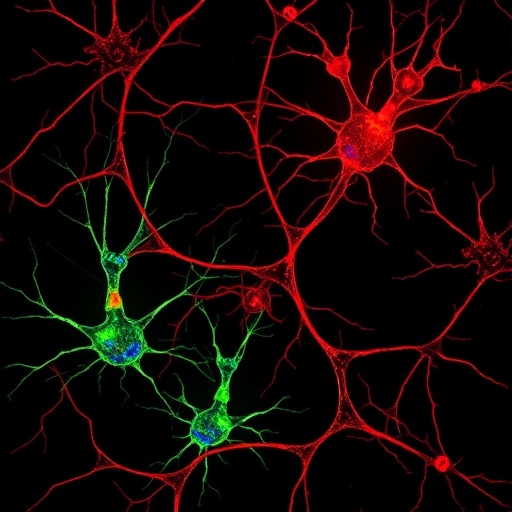
In a groundbreaking study set to reshape our understanding of Parkinson’s disease, researchers have unveiled the critical role of reactive astrocytes in mediating toxicity within induced pluripotent stem cell (iPSC) derived dopaminergic neurons. This development provides new insight into the cellular interactions accentuating neurodegeneration, potentially steering the trajectory of future therapeutic interventions. The study, led by Ibarra-Aizpurua, Olano-Bringas, Vallin, and colleagues, delves deep into the complex interplay between glial cells and neurons, capturing the scientific community’s attention due to its implications for understanding the pathophysiology of Parkinson’s disease.
Astrocytes, a type of glial cell traditionally viewed as mere supports for neurons, have increasingly been recognized for their dynamic role in maintaining neuronal health and homeostasis. However, this research highlights the dual nature of astrocytes in the context of neurodegenerative illnesses. Reactive astrocytes, characterized by their altered morphology and gene expression profiles following neuronal injury or disease, have been implicated as active contributors to neuronal demise. By focusing on iPSC-derived dopaminergic neurons—cells fundamentally implicated in Parkinson’s pathology—the study creates a compelling model to investigate disease mechanisms at a granular level.
The use of iPSC technology allows researchers to generate human dopaminergic neurons from patient-derived cells, representing a significant advancement over traditional animal models. This approach provides a human-specific platform to observe the pathogenesis of Parkinson’s disease in vitro, mimicking the intricate environment within the human brain. The research team utilized co-culture systems combining reactive astrocytes with iPSC-derived neurons to observe resultant cellular effects, notably the induction of dopaminergic neuronal toxicity, thereby underscoring the tangible influence of astrocyte-neuron interactions in Parkinson’s pathology.
Notably, the study identifies molecular pathways triggered in reactive astrocytes that lead to the secretion of neurotoxic factors. These factors initiate cellular stress responses and apoptotic pathways within dopaminergic neurons. By mapping these signaling cascades, the researchers provide mechanistic insight into how astrocyte reactivity contributes not merely as a consequence of neuronal death but as a driver of progressive neurodegeneration. Such findings offer a paradigm shift, suggesting that targeting astrocyte-mediated toxicity could ameliorate dopaminergic neuron loss in Parkinson’s patients.
One of the pivotal discoveries includes the upregulation of pro-inflammatory mediators and oxidative stress-related molecules within reactive astrocytes. The inflammatory milieu created by these secreted factors amplifies neuronal vulnerability, creating a feedback loop that accelerates disease progression. This inflammatory axis corroborates earlier hints from post-mortem studies of Parkinson’s brains but now gains experimental validation in a controlled setting. The implications extend beyond basic science, suggesting new avenues for anti-inflammatory and antioxidant therapies tailored to modify glial cell behavior.
The researchers employed sophisticated transcriptomic analyses to characterize gene expression changes in reactive astrocytes. This high-resolution data revealed significant modulation of genes involved in cytokine production, glutamate metabolism, and mitochondrial function. Such comprehensive molecular profiling establishes a signature of astrocyte reactivity that correlates with neuronal toxicity. Understanding this signature equips scientists with potential biomarkers, crucial for early diagnosis and tracking therapeutic efficacy in clinical trials targeting astrocyte activity.
Furthermore, the study explores the role of astrocyte-neuron metabolic coupling in sustaining neuronal health. Under normal physiological conditions, astrocytes regulate extracellular glutamate levels and supply metabolic substrates like lactate to neurons. However, reactive astrocytes disrupt this delicate balance, leading to excitotoxicity and energy deficits within dopaminergic neurons. This metabolic disarray contributes significantly to neuronal demise, highlighting the multifaceted ways astrocytes influence neurodegeneration beyond inflammation alone.
An intriguing aspect of this research is the demonstration that manipulation of reactive astrocytes can reverse or halt dopaminergic neuronal toxicity in vitro. By pharmacologically modulating key signaling pathways within astrocytes, such as the NF-κB inflammatory pathway and glutamate transporter expression, investigators successfully attenuated neurotoxicity. These results hint at therapeutic strategies that focus on restoring or preserving astrocyte function, opening a novel front in combatting Parkinson’s disease that complements traditional approaches aimed at neuron-centric targets.
Importantly, this work contextualizes reactive astrocytes within the broader cellular environment of the brain, acknowledging the interplay with microglia and the extracellular matrix. The complex crosstalk involving multiple cell types shapes the neurodegenerative landscape in Parkinson’s disease. While the study primarily targets astrocyte-neuron interactions, it paves the way for future exploration of how the triad of neurons, astrocytes, and microglia collectively orchestrate disease progression, potentially identifying combinatorial strategies to intercept neurodegeneration.
The study’s findings also carry significant implications for the evolving landscape of regenerative medicine. Understanding the hostile microenvironment created by reactive astrocytes is essential when considering stem cell-based transplantation therapies for Parkinson’s disease. Transplanted dopaminergic neurons might suffer similar toxic insults unless the surrounding glial pathology is addressed, underscoring the necessity of comprehensive modulation of the neural milieu to ensure cell survival and functional integration.
Moreover, this research adds to the mounting evidence that Parkinson’s disease is not merely a neuronal disorder but a glial-neuronal network disease. This insight challenges the traditional “neuron-centric” dogma and encourages a holistic perspective that considers non-neuronal cells as active participants in disease etiology and progression. Such a shift in understanding will likely accelerate the development of multifunctional therapeutics aimed at preserving the entire neuroglial ecosystem, which is indispensable for brain health.
The translational potential of these findings is substantial. By identifying specific molecular targets within reactive astrocytes, the study opens possibilities for the design of small molecules, antibodies, or gene therapies to mitigate astrocyte-induced neurotoxicity. Clinical strategies that intervene at this cellular level may prove crucial in slowing or halting the progression of Parkinson’s disease, offering hope to millions affected by this debilitating disorder.
This research also leverages the advantages of advanced 3D culture systems and organoid models to recreate more physiologically relevant conditions for studying Parkinson’s disease. These platforms better mimic the spatial organization and cell-type heterogeneity of the human brain, enabling more accurate assessment of astrocyte-mediated toxicity. Such technological advancements complement iPSC methodologies, enhancing the fidelity of disease modeling and the predictive value of preclinical studies.
Ethically, this approach circumvents many limitations associated with animal models, providing human-specific insights while adhering to evolving standards in biomedical research. The convergence of patient-derived iPSCs with detailed cellular and molecular analyses exemplifies the power of precision medicine approaches, tailoring research to reflect patient variability and enabling the identification of individualized treatment approaches based on cellular phenotypes.
In sum, the research spearheaded by Ibarra-Aizpurua and colleagues signifies a pivotal moment in Parkinson’s disease research. Through meticulous investigation into the role of reactive astrocytes in fostering dopaminergic neuron toxicity, the team illuminates previously underappreciated mechanisms contributing to neurodegeneration. Their findings not only unravel complex cellular dialogues implicated in disease but also chart new paths toward innovative, glia-centered therapies that may ultimately revolutionize Parkinson’s disease treatment and improve patient outcomes worldwide.
The scientific community eagerly anticipates further validation of these results in vivo and their translation into clinical settings. As the landscape of neurodegenerative research continues to evolve, this study firmly positions reactive astrocytes as central players in Parkinson’s disease, challenging researchers and clinicians alike to rethink therapeutic targets and strategies in the quest to conquer this formidable illness.
Subject of Research: Mechanisms by which reactive astrocytes mediate toxicity in iPSC-derived dopaminergic neurons relevant to Parkinson’s disease.
Article Title: Reactive astrocytes mediate toxicity in iPSC derived dopaminergic neurons.
Article References:
Ibarra-Aizpurua, N., Olano-Bringas, J., Vallin, B. et al. Reactive astrocytes mediate toxicity in iPSC derived dopaminergic neurons. npj Parkinsons Dis. (2026). https://doi.org/10.1038/s41531-026-01378-9
Image Credits: AI Generated
Tags: astrocyte-mediated neuronal injuryastrocyte-neuron interactions in Parkinson’scellular models for neurodegenerative disease researchdopaminergic neuron toxicity mechanismsglial cell contribution toinduced pluripotent stem cell models for Parkinson’siPSC-derived dopaminergic neuronsneurotoxic effects of reactive astrocytesParkinson’s disease cellular pathologyreactive astrocytes in neurodegenerationrole of glial cells in neurodegenerationtherapeutic targets in Parkinson’s disease