Cancer remains one of the most formidable challenges in medicine, with a staggering number of mutations fueling malignant growth and evading therapeutic intervention. Among these, mutations in tumor suppressor proteins, especially the p53 transcription factor, have long been recognized as central drivers in nearly half of all human cancers. Despite this well-established link, efforts to pharmacologically target such mutations have been largely unsuccessful. This failure stems from the nature of these mutant proteins—lacking defined druggable pockets and harboring lost or altered functions, which make conventional small-molecule therapies difficult or impossible to apply. However, a new study published in Nature in 2026 by Zeng, Cheng, Chen, and colleagues sheds light on an innovative strategy that may finally crack this recalcitrant problem: RNA-activated chromatin shredding, engineered through a novel CRISPR-Cas system.
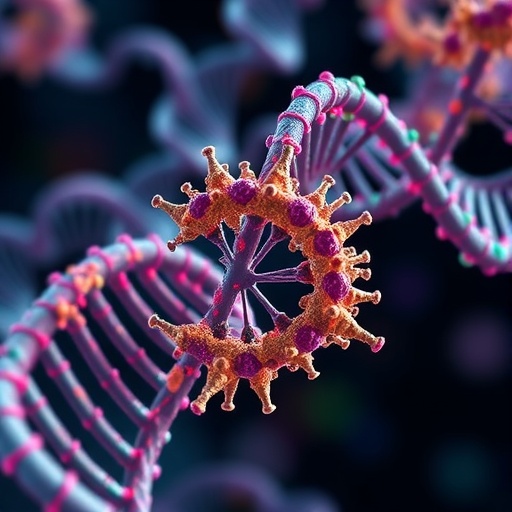
The researchers turned to the CRISPR-Cas12a2 enzyme, a newly characterized RNA-guided nuclease, which functions not only by cutting target nucleic acids but also through a potent trans-nucleolytic shredding activity. Unlike standard Cas proteins, Cas12a2 can be programmed to recognize cellular RNA molecules unique to cancer cells, enabling a level of specificity that has previously been elusive. By identifying and binding to mutant cancer-specific transcripts in the cellular milieu, Cas12a2 triggers widespread degradation of chromatin DNA, setting off a cascade of DNA damage responses that culminate in cell death. This represents a fundamentally different approach to targeting cancer mutations—not by trying to fix or inhibit mutated proteins, but by sensing their RNA footprints and unleashing genomic destruction from within.
Mutations in p53, a pivotal transcription factor and tumor suppressor that guards the genome against malignant transformation, serve as the prototypical example. Approximately 40-50% of human tumors harbor such alterations, often resulting in loss of function or gain of oncogenic activities. Despite the critical need, drugs aimed at mutant p53 have repeatedly stumbled, largely because the mutant proteins fail to provide accessible and stable binding sites for small molecules. The Cas12a2-based method bypasses the protein altogether by exploiting mutant mRNA molecules characteristic of cancer cells, thus evading the structural challenges posed by mutated p53 protein conformations.
The innovation lies in the system’s ability to initiate “trans shredding” of chromatin, meaning that once Cas12a2 is activated by recognition of the target RNA, its nuclease activity indiscriminately degrades nearby DNA. This obliteration of chromatin architecture triggers a profound DNA damage response, effectively instructing the cancer cell toward programmed death. Such a mechanistic pathway is both swift and irreversible, ensuring that malignant cells are rapidly eliminated once the RNA trigger is encountered. Importantly, normal cells lacking these mutant transcripts remain unaffected, highlighting the precision and safety potential of this approach.
Traditional gene-editing tools have relied on directly cutting DNA at mutant loci or restoring functional genes. However, these interventions have faced challenges due to incomplete editing efficiencies, off-target effects, and the inherent difficulty of repairing complex genetic landscapes in cancer cells. The RNA-triggered Cas12a2 system circumvent these bottlenecks by utilizing RNA as a biomarker and execution trigger, thereby harnessing the unique transcriptional signatures of tumor cells as a lethal handle for therapeutic exploitation.
Critically, the Cas12a2 system’s reliance on RNA rather than DNA target sites provides significant flexibility. Because RNA expression patterns vary not only between tumor and normal cells but also among tumor subtypes, the system can be custom configured to identify a diverse array of cancer-specific transcripts. This adaptability opens the door for personalized precision medicine approaches, wherein Cas12a2 is tailored to recognize the unique mutational transcriptome of an individual’s tumor, minimizing collateral damage to healthy tissues.
The study also delves into the biochemical underpinnings of Cas12a2’s trans nucleolytic effect. Upon RNA binding, the nuclease undergoes conformational changes that activate non-specific DNA degradation elsewhere on chromatin. This catalytic promiscuity, initially perceived as a drawback in some genome-editing contexts, is purposefully exploited to induce a lethal explosion of DNA damage inside cancer cells. This irreversible damage ensures that even cancer cells with robust DNA repair capabilities succumb rapidly, overcoming common resistance mechanisms in oncotherapy.
Moreover, the authors demonstrate proof-of-concept experiments in cultured cancer cell lines and tumor organoids, showing efficient and selective elimination of cells harboring mutant p53 transcripts with negligible effects on normal counterparts. These results illuminate the therapeutic window of Cas12a2’s RNA-guided chromatin shredding modality and highlight its promise as a novel class of anticancer agents with unparalleled specificity and potency.
Looking ahead, the challenges of translating this technique into clinical therapies revolve around safe and targeted delivery of the Cas12a2 machinery into cancerous tissues in vivo. Researchers are actively investigating viral vectors, lipid nanoparticles, and other delivery platforms to ferry Cas12a2 along with customized guide RNAs directly to tumors. Success in these areas would mark a milestone in cancer therapeutics, leveraging the power of RNA sensing for selective destruction of otherwise intractable malignancies.
Importantly, this RNA-mediated chromatin shredding approach may extend beyond p53 mutations, encompassing a broad spectrum of “undruggable” genetic alterations across various cancer types. By focusing on mutant transcripts that uniquely tag malignant cells, Cas12a2-based strategies could revolutionize how precision oncology approaches are conceptualized and executed, moving beyond protein targets to the very RNA signatures that define cancer biology.
Finally, this pioneering work not only advances cancer treatment but also broadens the horizon of CRISPR technologies. It exemplifies how understanding and harnessing the unique biochemical activities of CRISPR effectors can generate entirely new paradigms for disease intervention. With continual refinements in specificity, delivery, and safety, the RNA-triggered Cas12a2 chromatin shredding strategy stands poised to reshape the future of molecular medicine, offering hope for patients afflicted by cancers that have long defied existing therapies.
Subject of Research:
Not provided in the content.
Article Title:
Targeting Cancer-Specific Mutations with RNA-Triggered Chromatin Shredding
Article References:
Zeng, J., Cheng, Z., Chen, H. et al. Targeting Cancer-Specific Mutations with RNA-Triggered Chromatin Shredding. Nature (2026). https://doi.org/10.1038/s41586-026-10738-7
Image Credits: AI Generated
DOI:
https://doi.org/10.1038/s41586-026-10738-7
Keywords:
CRISPR-Cas12a2, cancer mutations, tumor suppressor, p53, RNA-guided nuclease, chromatin shredding, DNA damage response, precision oncology, undruggable targets, transcriptomics
Tags: chromatin degradation in cancer cellsCRISPR-Cas12a2 cancer therapyinnovative cancer gene therapy methodsmutant tumor suppressor protein targetingnovel CRISPR systems for oncologyovercoming drug resistance in cancerprogrammable RNA recognition in cancer cellsRNA-activated chromatin shreddingRNA-based cancer mutation detectionRNA-guided nuclease specificitytargeting p53 mutations in cancertrans-nucleolytic activity in gene editing