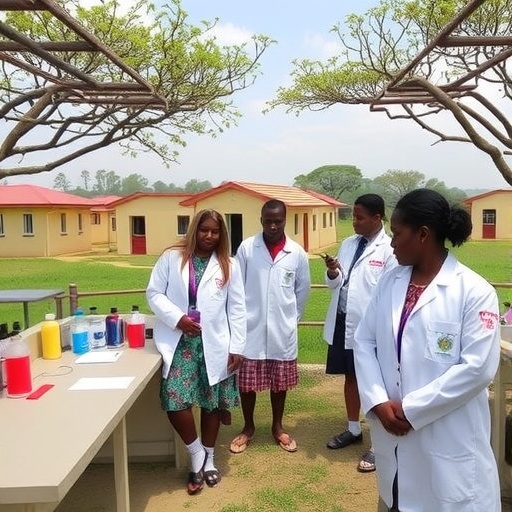
SAN DIEGO (June 8, 2026) – The establishment of the Laboratory in Northern Kenya (LiNK) heralds a transformative leap in wildlife health diagnostics and conservation efforts in one of the world’s most ecologically critical regions. Strategically situated at the Lewa Wildlife Conservancy, LiNK addresses a long-standing gap in accessible veterinary diagnostic infrastructure across the expansive northern Kenya landscape, home to unmatched biodiversity and numerous at-risk species. This new facility emerged from an unprecedented collaborative alliance uniting governmental bodies, conservation organizations, and scientific institutions, including the Kenya Wildlife Service, Wildlife Research and Training Institute, Northern Rangelands Trust, Lewa Wildlife Conservancy, and San Diego Zoo Wildlife Alliance-Kenya, among others. Together, these partners have forged a cutting-edge resource to support conservation-driven veterinary medicine in a region that has historically lacked immediate diagnostic support.
Northern Kenya’s savanna ecosystem hosts a spectacular array of wildlife, characterized by complex interactions between wild and domestic species. Rangers and veterinarians operating at the forefront of conservation confront daily challenges involving wildlife injuries, disease outbreaks, and livestock health threats. These emergent conditions require rapid, precise diagnosis via biological specimen analyses such as hematological, parasitological, and molecular pathogen identification assays. Before LiNK, the nearest diagnostic laboratories were located hundreds of kilometers away, exponentially delaying critical analysis and treatment implementation. This geographic isolation hampered timely intervention in health crises that could dramatically escalate mortality among threatened species and degrade ecosystem balance. The placement of LiNK directly adjacent to Lewa Wildlife Conservancy revolutionizes this paradigm by providing immediate access to diagnostic services, effectively shortening sample turnaround times from weeks to mere days.
LiNK extensively integrates advanced veterinary diagnostic technologies tailored to the unique challenges of wildlife health. The lab is equipped with high-throughput polymerase chain reaction (PCR) instruments, enabling sensitive detection of viral, bacterial, and parasitic pathogens from diverse biological matrices. Sophisticated hematology analyzers permit comprehensive blood analyses essential for assessing systemic health and inflammatory states in both wild and domestic animals. Additionally, the facility houses cryogenic storage systems for the secure preservation of samples and biological materials crucial for longitudinal disease surveillance and conservation genetics initiatives. LiNK’s infrastructure is calibrated to meet robust national veterinary diagnostic standards, ensuring data integrity and diagnostic accuracy that inform field interventions and policy formulation.
At a systems level, the operational model of LiNK empowers a proactive, field-responsive veterinary health system in northern Kenya. By catalyzing faster disease detection and confirmation, the laboratory enables veterinarians to initiate effective clinical management protocols for afflicted wildlife and livestock promptly. This capability is particularly critical in curtailing the spread of transboundary animal diseases that pose threats to food security and community livelihoods. Moreover, it reinforces ecosystem-wide resilience by enabling surveillance that detects emergent zoonoses, providing early warning signals relevant to One Health frameworks. The facility also functions as a knowledge hub where epidemiological data can be integrated with ecological monitoring, advancing holistic conservation strategies rooted in empirical science.
The inception of LiNK is also pivotal in solidifying a regional biobanking network optimized for conservation applications. Biological specimens and genetic materials collected at LiNK serve as primary repositories before eventual transfer to a central biobank facility at the Wildlife Research and Training Institute in Naivasha. This coordinated biobanking architecture enhances the capacity for ex situ genetic resource conservation, facilitating efforts to safeguard endangered species through genome preservation, assisted reproduction technologies, and research on genetic diversity. The network supports the synthesis of veterinary, ecological, and genomic data streams, laying foundational infrastructure for advanced wildlife health research and conservation genomics within East Africa.
Expert voices from the Kenya Wildlife Service underscore LiNK’s role in moving beyond reactive treatment models toward a more integrated conservation health paradigm. Dr. Isaac Lekolool, Head of Veterinary and Capture Services, articulates how LiNK overcomes historical challenges linked to remoteness and resource constraints by situating advanced diagnostics closer to frontline responders. This proximity dramatically improves the timeliness and accuracy of wildlife health assessments, facilitating rapid containment of outbreaks and minimizing animal suffering. Importantly, it also fosters stronger collaborations among wildlife managers, scientists, and local communities, underpinning shared stewardship over natural resources through science-guided interventions.
LiNK’s technology suite is complemented by a dedicated cadre of specialized veterinary laboratory professionals who manage sample receipt, processing, and analytical workflows with rigor and precision. The team ensures stringent adherence to internationally recognized protocols for biosafety, quality control, and data confidentiality, bolstering the credibility and reproducibility of diagnostic results. Their expertise extends to training rangers and field veterinarians in sample collection and handling, creating a decentralized yet coordinated surveillance network that enhances data flow and diagnostic impact. Over time, LiNK aims to become a regional center of excellence in wildlife disease diagnostics, workforce capacity development, and translational research linking veterinary science with ecosystem health conservation.
In embracing partnerships across sectors and geographies, LiNK exemplifies an innovative model for addressing multifaceted conservation challenges. Dr. Francis Gakuya, Senior Principal Research Scientist at the Wildlife Research and Training Institute, highlights that such interdisciplinary and multisectoral collaboration is vital to confronting emerging disease threats that transcend species boundaries and ecological niches. Through harmonizing expertise in molecular biology, epidemiology, wildlife ecology, and veterinary medicine, LiNK embodies the convergence of science and conservation practice necessary to safeguard biodiversity in the Anthropocene. This collective dedication to advancing wildlife health infrastructure signals a hopeful trajectory for northern Kenya’s vibrant natural heritage and its associated human communities.
The operationalization of LiNK occurs against a backdrop of escalating global concern about biodiversity loss, disease emergence, and ecosystem instability. Climate change, habitat fragmentation, and increasing human-wildlife interface intensify the risks of pathogen spillover events that can devastate animal populations and imperil livelihoods. By strengthening diagnostic and surveillance capacities at a critical frontier of biodiversity, LiNK enhances preparedness and response capabilities that are foundational to resilient conservation systems. The laboratory thus represents not only a scientific achievement but a strategic asset in regional and global efforts to promote sustainable coexistence among wildlife, livestock, and people.
LiNK’s establishment also accelerates the translation of diagnostic intelligence into actionable conservation policies. Real-time health data generated at the lab inform management decisions regarding translocation, habitat management, and community engagement programs vital for preventing disease spread and promoting ecosystem balance. Furthermore, the presence of LiNK elevates the scientific profile of northern Kenya within international conservation discourse, attracting research collaborations and funding opportunities that amplify regional conservation impact. As the lab continues to expand its analytical repertoire and outreach, it positions northern Kenya as a vanguard in integrating veterinary sciences with biodiversity conservation imperatives.
In sum, with LiNK now fully operational, Kenya strengthens its national wildlife health framework and unlocks new frontiers for science-driven conservation innovation. The laboratory’s proximity to the field, coupled with state-of-the-art diagnostics and a collaborative institutional network, fulfills a critical need for timely veterinary responses amidst one of the planet’s most ecologically invaluable landscapes. By fostering ecosystem resilience, improving wildlife health surveillance, and supporting biodiversity banking efforts, LiNK stands as a beacon of hope and practical progress in the global conservation arena. This initiative underscores an inspiring narrative where science, commitment, and partnership converge to protect Africa’s extraordinary wildlife heritage for generations to come.
Subject of Research: Wildlife Disease Diagnostics, Veterinary Medicine, Conservation Biology, Biobanking
Article Title: A New Era for Wildlife Health in Northern Kenya: Launch of the Laboratory in Northern Kenya (LiNK)
News Publication Date: June 8, 2026
Web References:
– Kenya Wildlife Service: https://www.kws.go.ke
– San Diego Zoo Wildlife Alliance: https://sdzwa.org
– Wildlife Research and Training Institute: https://www.wrti.go.ke
Keywords: Wildlife Health, Veterinary Diagnostics, Conservation Infrastructure, Northern Kenya, Biobanking, Disease Surveillance, Wildlife Medicine, Ecosystem Resilience, One Health, Veterinary Laboratory, Biodiversity Conservation, Wildlife Disease
Tags: at-risk species veterinary carecollaborative wildlife conservation effortsconservation-driven veterinary medicinehematological analyses wildlife healthKenya Wildlife Service partnershipsLewa Wildlife Conservancy initiativesmolecular pathogen identification wildlifeNorthern Kenya biodiversity preservationparasitological testing in conservationveterinary diagnostic infrastructure Africawildlife conservation technology Kenyawildlife health diagnostics in Kenya