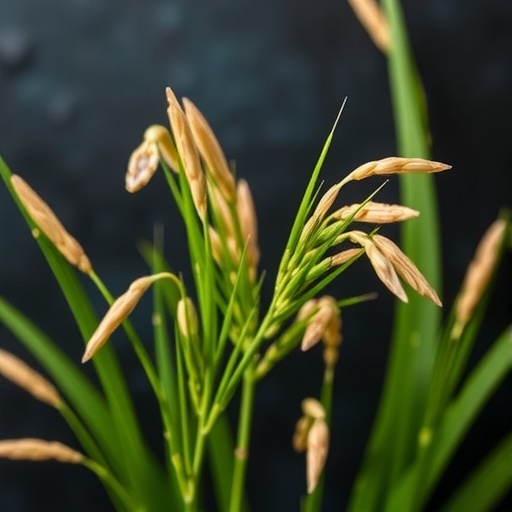
Rice stands as a fundamental food source for nearly half of humanity, providing not only calories and starch but also crucial micronutrients like magnesium. This mineral holds vital importance for human health, underpinning numerous physiological processes including enzyme function and energy metabolism. Equally essential in plants, magnesium plays a key role in photosynthesis, nutrient transport, and overall growth. Despite its significance, the molecular mechanisms governing magnesium allocation into rice grains, which directly influence grain quality and nutritional value, have eluded scientific understanding until now. A breakthrough study spearheaded by Professor Jian Feng Ma from Okayama University in Japan sheds light on this complex biological puzzle by identifying a key magnesium transporter integral to rice grain development and eating quality.
In a comprehensive investigation, the research team focused their efforts on a novel transporter protein named OsMGR2, a member of the Magnesium Release transporter family, whose function had previously remained uncharacterized. Employing state-of-the-art methodologies such as gene expression profiling, isotope labeling, live imaging of magnesium distribution, and functional transport assays, the scientists meticulously mapped this transporter’s role within the rice plant. They further utilized CRISPR/Cas9 gene editing to generate rice mutants deficient in OsMGR2, enabling an incisive analysis of physiological and developmental impacts caused by disruption of magnesium transport pathways.
Their findings revealed that OsMGR2 operates as a magnesium efflux transporter embedded in the plasma membrane, predominantly expressed in the vascular tissues responsible for systemic nutrient distribution. This efficient efflux mechanism facilitates the movement of magnesium ions from certain cellular compartments into the vascular stream, thus channeling essential magnesium towards shoots and developing grains. When OsMGR2 was knocked out, the mutant plants exhibited pronounced magnesium mislocalization characterized by abnormal magnesium sequestration within roots and husks. This aberrant partitioning curtailed magnesium availability to the grains, critical sites for mineral accumulation and starch biosynthesis.
This impaired magnesium delivery precipitated profound phenotypic consequences under conditions of limited magnesium supply. The mutant rice plants demonstrated stunted growth, chlorotic leaves indicative of nutrient deficiency, and substantially diminished biomass accumulation. Most strikingly, grain morphology was adversely affected; mutant grains were visibly smaller, shriveled, lighter in weight, and lacked the characteristic transparency seen in healthy grains. This aberration in grain structure suggested compromised starch synthesis and filling processes. These developmental detriments convey a direct link between magnesium transport efficiency and the agronomic performance of rice.
Moreover, sensory evaluation of cooked rice derived from OsMGR2 mutants underscored the transporter’s influence beyond plant physiology, extending to rice eating quality. Compared to wild-type plants, mutant grain exhibited alterations in texture profiles with reduced stickiness and less favorable mouthfeel, parameters highly valued by consumers in various culinary cultures. Such findings implicate magnesium transport not only in the nutritional fortification but also in preserving the palatability and culinary attributes of rice—an aspect of paramount importance for global food quality and acceptance.
Professor Ma articulated that the motivation for this research stemmed from the long-standing enigma surrounding how magnesium, despite its known importance, is accumulated in rice grains. By illuminating the critical role of OsMGR2 in directing magnesium flux, the study provides a fundamental understanding of mineral partitioning that bridges basic plant nutrient biology with applied agricultural science. The transporter ensures that actively growing tissues and filling grains receive adequate magnesium supply during key developmental windows, thus safeguarding starch biosynthesis and proper grain maturation.
This revelation holds substantial promise for addressing emerging agronomic challenges because magnesium deficiency is increasingly prevalent in many rice-growing regions due to soil depletion, intensive farming practices, and climate stressors. Such deficiencies compromise crop yields and grain nutritional value, threatening food security and nutritional health at a population scale. The molecular insights conveyed by this study pave the way for the design of rice varieties that maintain magnesium uptake and allocation efficacy even under suboptimal soil mineral conditions.
The research team envisions that OsMGR2 could become a novel target in breeding programs aimed at enhancing both grain nutrition and sensory quality. By harnessing genetic engineering and marker-assisted selection, rice cultivars optimized for efficient magnesium transport could be developed, combining resilience to nutrient-poor soils with superior dietary magnesium content and desirable eating characteristics. Such innovative approaches would address dual challenges of sustainable productivity and improved human nutrition in rice-dependent communities.
Beyond the confines of rice biology, these findings have broader implications for understanding mineral nutrition in other staple cereals and crops. The conserved nature of magnesium transport mechanisms across plant species suggests that similar transporter systems might govern micronutrient allocation in wheat, maize, barley, and others. Decoding these pathways affords an opportunity to enhance the nutritional profile and yield stability of diverse food crops, a critical need in the era of global population growth and climate variability.
This study strikingly exemplifies how a single transporter protein can orchestrate complex physiological processes ranging from cellular nutrient flux to whole-plant development and end-use food quality. It underscores the intricate linkages between plant mineral nutrition, developmental biology, and human dietary health. By unveiling the molecular underpinnings of magnesium transport in rice grains, this work not only advances fundamental plant science but also lays the foundation for translational agricultural innovations capable of tackling global nutritional and food security challenges.
In summary, the identification and functional characterization of OsMGR2 revolutionizes our comprehension of magnesium dynamics in rice, revealing an essential biological mechanism that integrates nutrient management with seed development and organoleptic properties. As magnesium-limited soils continue to impact productivity, this discovery equips scientists and breeders with critical knowledge to engineer resilient, nutritious, and delicious rice varieties, ultimately benefiting millions worldwide who depend on this staple crop for sustenance and health.
Subject of Research: Cells
Article Title: A magnesium efflux transporter required for seed development and eating quality in rice
News Publication Date: April 28, 2026
Web References:
https://doi.org/10.1073/pnas.2536813123
References:
Ma, J.F., Huang, S., & Hori, K. (2026). A magnesium efflux transporter required for seed development and eating quality in rice. Proceedings of the National Academy of Sciences, 123(17). https://doi.org/10.1073/pnas.2536813123
Image Credits:
Professor Jian Feng Ma, Okayama University, Japan
Keywords:
Magnesium transporter, OsMGR2, rice grain development, magnesium efflux, grain quality, CRISPR/Cas9 mutants, starch biosynthesis, nutrient allocation, agricultural innovation, mineral nutrition, crop improvement, sustainable agriculture.
Tags: CRISPR gene editing in ricegenetic regulation of mineral transportimproving rice eating qualityisotope labeling in plant researchmagnesium allocation mechanisms in ricemagnesium metabolism in plantsmagnesium role in photosynthesismagnesium transporter in ricemagnesium uptake in rice grainsmicronutrient transport in cropsOsMGR2 protein functionrice grain nutritional enhancement