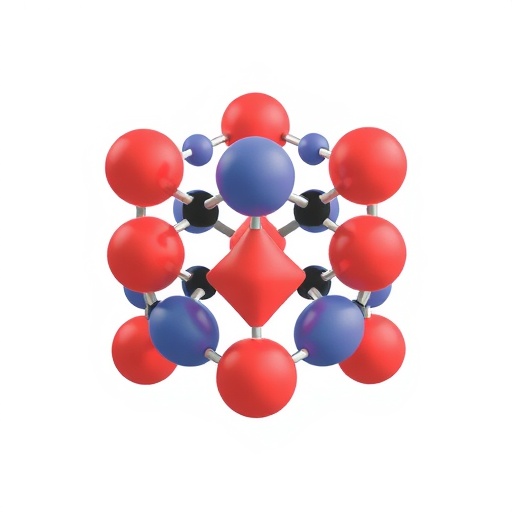
In a remarkable breakthrough for synthetic chemistry and material science, researchers at the Institute for Molecular Science and the Graduate University for Advanced Studies (SOKENDAI) have unveiled a novel method to assemble three-dimensional square-shaped macrocycles from planar π-conjugated molecules. This innovative approach, led by Associate Professor Yasutomo Segawa and Assistant Professor Takashi Harimoto, achieves precise construction of shape-persistent all-sp² square macrocycles by harnessing multiple imine bond formations. Their findings, published in the prestigious Journal of the American Chemical Society, chart a new frontier in macrocyclic chemistry with profound implications for molecular design, sustainability, and functional responsiveness.
Traditionally, synthesizing three-dimensional π-conjugated macrocycles with polygonal structures other than triangles has posed significant challenges. The inherent geometric limitation of planar molecules, which naturally adopt 120° bond angles due to sp² orbital hybridization, prevents facile formation of right angled (90°) connections necessary for square configurations. While triangular macrocycles, formed with approximately 60° angles between adjacent panels, have been relatively accessible, creating reliable square macrocycles demanded innovative molecular accommodation to overcome resulting strain and produce stable architectures.
Earlier synthetic attempts to engineer square-shaped π-conjugated macrocycles employed bent molecular linkers as intermediaries. However, these methods commonly suffered from low yields, unwanted side reactions, and deformation from the idealized square geometry. Moreover, these approaches rarely facilitated the recycling of starting materials due to irreversible carbon-carbon bond formations, limiting sustainability and practical scalability. Addressing these limitations required a molecular design capable of precise angle control, high synthetic efficiency, and reversibility.
The research team turned to the dibenzo[b,f][1,5]diazocine (DBDA) scaffold, a unique molecular framework featuring an eight-membered ring folded in a boat conformation that inherently generates a near 90° angle. By utilizing DBDA as a rigid right-angle linker that enforces the necessary geometry, they successfully devised a macrocyclic system where planar π-conjugated panels are connected orthogonally, producing a stable square assembly. Advanced quantum-chemical density-functional theory simulations confirmed that the tetramer bearing four DBDA units represents the most thermodynamically favorable structure among possible oligomers, validating their conceptual approach.
Experimentally, the researchers exploited the dynamic covalent chemistry of imine bonds, which are formed through reactions between amine (NH₂) and carbonyl (C=O) functional groups under mildly acidic conditions with concomitant water removal. This reversible bond formation enabled the assembly of macrocycles while simultaneously providing a mechanism for responsive behavior and recyclability. Using benzene as the π-conjugated panel, they achieved high synthetic efficiency, isolating square macrocycles in yields around 60% as diastereomer mixtures distinguished by the spatial orientation of the DBDA units.
The rigorous purification afforded individual diastereomers whose single-crystal X-ray diffraction analyses unequivocally demonstrated the anticipated square conformation with preserved planarity of the π-conjugated panels. This structural precision represents a landmark in macrocycle synthesis, significantly outperforming prior low-yielding, side-reaction-prone methods. Beyond benzene-based panels, the strategy proved versatile, accommodating π-conjugated panels of varying sizes and complexities—including oligomers with two or three benzene rings and even pyrene units—thereby enabling systematic tuning of the internal cavity dimensions.
One of the most striking characteristics of the synthesized macrocycles is their reversible acid responsiveness. Upon treatment with a mild acid such as trifluoroacetic acid, the imine bonds within the macrocycle undergo protonation leading to pronounced color changes from colorless to yellow-orange. Remarkably, this color transformation is completely reversible upon neutralization with base, signifying reversible electronic modulation rooted in the dynamic imine linkages. Such stimuli-responsive optical behavior positions these macrocycles as promising candidate materials for sensing, smart coatings, and molecular electronics.
Equally transformative is the capacity for sustainable recyclability inherent to this system. The dynamic nature of the imine bonds allows for controlled hydrolysis under acidic aqueous conditions, effectively cleaving the macrocycles back into their constituent monomers. Impressively, the researchers achieved recovery rates of 85–93% of the starting materials from reaction byproducts, a feat unattainable by conventional irreversible carbon-carbon bond-forming synthetic methodologies. This recyclability not only minimizes chemical waste but also opens avenues for circular chemical processes and resource-efficient manufacturing.
At the heart of the innovation is the multipurpose utilization of the imine bond which transcends its traditional role as merely a synthetic linker. In this research, the imine linkage simultaneously dictates molecular shape by enabling right-angle assembly, confers reversible acid sensitivity facilitating color changes, and primes the system for efficient regeneration through hydrolysis. This triadic functionality underscores a paradigm shift in molecular design where bond reversibility is harnessed for enhanced material properties and sustainability.
The developed synthetic strategy eschews reliance on metal catalysts or sp³ hybridized elements, relying solely on sp²-hybridized carbon and nitrogen atoms that constitute planar π-conjugated molecules. This attribute reinforces the purity and electronic integrity of the macrocycles, crucial for potential applications in organic electronics, photonics, and host-guest chemistry. Additionally, the approach demonstrates remarkable adaptability, laying the groundwork for broader exploration of diverse three-dimensional macrocyclic architectures beyond squares with potential to tailor functional cavities at the molecular level.
These new shape-persistent square macrocycles offer unprecedented opportunities for deepening insights into structure-property relationships of π-conjugated molecules. Their well-defined internal cavities and stimuli-responsive traits could spearhead advances in molecular recognition, catalysis, and the development of novel organic electronic devices that exploit tunable electronic and optical properties with environmental responsiveness. The modular and sustainable synthetic method exemplifies next-generation strategies that integrate fundamental molecular design with practical usability and ecological considerations.
The breakthrough achieved by Segawa, Harimoto, and colleagues marks a pivotal advancement in constructing complex molecular topologies with high fidelity, efficiency, and recyclability. This work not only expands the toolkit available to synthetic chemists for building sophisticated macrocyclic systems but also aligns with global imperatives to develop sustainable chemical processes. As such, the research is poised to have far-reaching impacts across chemistry, materials science, and related technologies, inspiring future innovations in functional molecular design.
In summary, the pioneering method for assembling all-sp² square macrocycles via multiple imine bond formations offers a robust, versatile, and eco-friendly platform for designing three-dimensional π-conjugated molecular architectures. By elegantly addressing longstanding challenges in achieving controlled right angles within macrocyclic assemblies, and coupling this with dynamic responsiveness and recyclability, this approach stands at the forefront of sustainable functional molecule engineering. The findings herald exciting possibilities for the next generation of advanced materials with tailored shapes, responsive behaviors, and environmentally conscious production routes.
Subject of Research: Not applicable
Article Title: Construction of Shape-Persistent All-sp² Square Macrocycles via the Formation of Multiple Imine Bonds
News Publication Date: 1-Jun-2026
Web References: https://doi.org/10.1021/jacs.6c02905
References: Takashi Harimoto, Yasutomo Segawa, Journal of the American Chemical Society, June 1, 2026
Image Credits: Takashi Harimoto, Yasutomo Segawa
Keywords
Three-dimensional macrocycles, π-conjugated molecules, imine bonds, molecular synthesis, acid responsiveness, sustainable chemistry, reversibility, density-functional theory, molecular design, organic electronics, shape persistence, recyclability
Tags: advanced material science synthesisfunctional responsive macrocyclic materialsimine bond formation in macrocyclesmolecular strain in polygonal structurespi-conjugated macrocyclespolygonal macrocycles beyond trianglesshape-persistent macrocyclessp2 hybridization challengessquare-shaped molecular designsustainable molecular construction methodssynthetic chemistry breakthroughsthree-dimensional macrocyclic synthesis