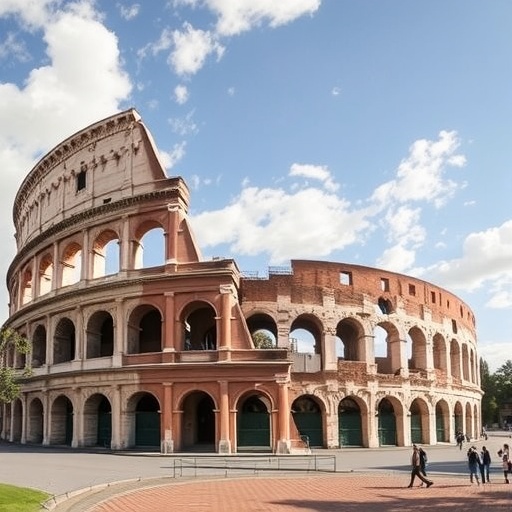
A groundbreaking conservation initiative is set to take place at São Paulo’s iconic Ipiranga Museum, employing cutting-edge three-dimensional laser scanning technology previously used to monitor the ancient Colosseum in Rome. Spearheaded by Professor Beatriz Kuhl from the University of São Paulo’s Faculty of Architecture and Urbanism (FAU-USP), this project aims to revolutionize the way historic buildings are preserved by integrating advanced digital tools with preventive conservation methodologies. Announced during FAPESP Week London, the initiative highlights the growing global trend towards leveraging high-precision technological solutions to safeguard cultural heritage.
This ambitious project entails a comprehensive and meticulous digital scan of the Ipiranga Museum’s entire structure, both inside and out. The objective extends beyond documentation; it seeks to analyze the building’s response to recent restoration efforts, establish an ongoing system to monitor its condition, and develop an innovative information management framework rooted in Historic Building Information Modeling (HBIM). HBIM represents a sophisticated 3D modeling process that integrates the building’s physical and functional attributes into a unified digital simulation, which also incorporates historical data, maintenance records, and architectural details.
Professor Kuhl explains that feeding an HBIM platform with authentic, high-precision data from the museum will transform the way conservation efforts are strategized and implemented. The fusion of geometric data with conservation insights will enable administrators to proactively manage the structure’s preservation, identifying potential issues before they escalate. This system embodies a paradigm shift in heritage maintenance, emphasizing long-term care and predictive intervention over reactive repairs.
The Ipiranga Museum, constructed between 1885 and 1890, has endured a decade-long closure and only reopened to the public in September 2022. This prolonged closure underscores the importance of instituting robust conservation measures to ensure the building’s sustainability. The forthcoming scanning operations will be executed by DIAPReM, a specialized laboratory at the University of Ferrara in Italy. This team is renowned for their recent successful application of the same laser scanning techniques on the Colosseum, ensuring the data’s precision and reliability meet the highest international standards.
The existing collaboration between FAU-USP, DIAPReM, and the Center for Cultural Preservation at USP (CPC-USP) has laid a strong foundation for this project. Having previously scanned the FAU-USP building — an architectural masterpiece by Vilanova Artigas — this partnership brings extensive experience and consistency, which are critical for generating comparable and accurate data sets over time. The scanning technology employed uses a compact, portable device no larger than a shoebox, capable of emitting laser beams that meticulously map every point on the museum’s surfaces with millimeter accuracy.
This laser scanning technology goes beyond simple geometric mapping; it also captures reflectance data. Reflectance measures the percentage of laser light reflected back to the sensor after hitting various surfaces. Variations in reflectance can indicate different material properties, moisture levels, or even the presence of biological growth like mold. Consequently, this dual data collection allows conservationists to detect subtle anomalies and potential pathological conditions within the structure’s fabric, offering an unprecedented diagnostic capacity.
One of the project’s most remarkable features is its commitment to non-intrusive monitoring. The scanning will be performed periodically, carefully timed and executed so as not to disrupt the museum’s day-to-day activities or require its closure. This approach ensures that real-time data can be gathered continually, enabling dynamic monitoring of the building’s health without compromise to public access or experience.
The emphasis on preventive conservation is a centerpiece of this research. Unlike traditional methods that often respond to visible deterioration or damage, preventive conservation aims to anticipate vulnerabilities and address them proactively. Professor Kuhl has long advocated for this forward-thinking approach, which reduces the need for expensive and invasive repairs by maintaining the building’s structural integrity from the outset.
Previous projects led by Kuhl, such as one funded by the Getty Foundation under the Keeping It Modern program, have informed practical maintenance interventions, including improvements to roof waterproofing and accessibility enhancements. Nevertheless, she acknowledges that the broader cultural shift needed for truly preventative heritage management remains a work in progress, particularly within public institutions facing resource constraints and a backlog of urgent maintenance needs.
International examples provide valuable inspiration and frameworks for this transition. The Casa de Rui Barbosa in Rio de Janeiro, for example, successfully implemented systematic preventive conservation policies during the first decades of the 21st century, demonstrating the substantial benefits of long-term strategic planning in heritage preservation. By leveraging established global best practices alongside state-of-the-art scanning and modeling technologies, the Ipiranga Museum project sets a benchmark for conservation initiatives in Brazil and beyond.
Beyond the technological innovation, Professor Kuhl’s research group is engaged in critical theoretical reflection on advanced diagnostic methods. This philosophical inquiry delves into the interplay between new scientific techniques and traditional conservation concepts. By navigating this tension, the team aims to refine preservation philosophies and develop comprehensive conservation plans grounded in both empirical data and conceptual rigor.
The implications of this endeavor extend far beyond a single building. As heritage sites around the world face increasing threats from environmental stressors, aging materials, and human impact, integrating technologies like 3D laser scanning and HBIM offers a transformative path forward. This project represents a tangible step toward smarter, more sustainable stewardship of cultural landmarks, ensuring their stories endure for future generations.
FAPESP Week London served as the platform for unveiling this innovative conservation strategy. The event, held from June 2 to 4 in the UK capital, showcased pioneering research funded by the São Paulo Research Foundation (FAPESP), highlighting how international collaboration and technological advancement synergistically promote scientific and cultural progress. With this project underway, the Ipiranga Museum is poised not only to preserve its historic grandeur but also to become a leader in the global heritage conservation community.
Subject of Research: Application of 3D laser scanning and HBIM for preventive conservation of historic buildings
Article Title: Innovative 3D Laser Scanning Technology Advances Conservation of São Paulo’s Ipiranga Museum
News Publication Date: Not specified
Web References:
https://bv.fapesp.br/en/pesquisador/4315/beatriz-mugayar-kuhl
https://fapesp.br/week/2026/london
https://agencia.fapesp.br/39578
Image Credits: Elton Alisson / Agência FAPESP
Keywords
3D laser scanning, HBIM, preventive conservation, Ipiranga Museum, FAU-USP, cultural heritage preservation, architectural restoration, DIAPReM, University of Ferrara, laser reflectance data, heritage monitoring, digital modeling
Tags: 3D laser scanning for heritage conservationadvanced restoration analysis techniquesarchitectural heritage digital documentationcultural heritage monitoring systemsdigital preservation of historic buildingsglobal trends in heritage preservation technologyhigh-precision digital scanning in architectureHistoric Building Information Modeling applicationsinnovative conservation strategies for museumsintegration of HBIM in museum conservationpreventive conservation technologytechnology-driven cultural heritage protection