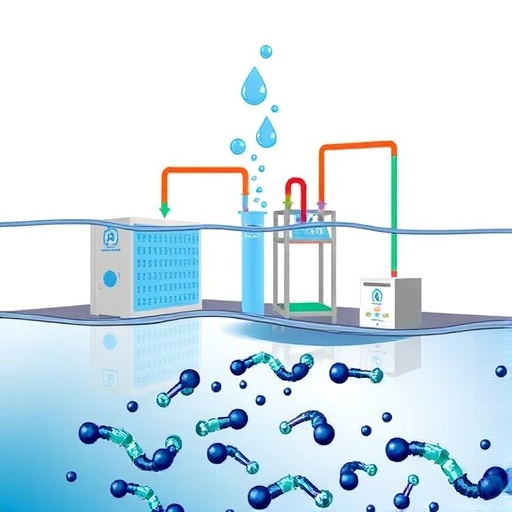
In the dynamic realm of carbon dioxide (CO₂) electrolysis, achieving long-term stability in low-temperature anion exchange membrane (AEM) zero-gap electrolysers stands as a formidable challenge. While these devices promise sustainable conversion of CO₂ into valuable chemicals and fuels, their practical implementation is hindered by operational limitations, especially when operating at industry-relevant current densities exceeding 200 mA cm⁻². Recent research highlights the critical barriers posed by salt precipitation and flooding within these systems, phenomena that ultimately restrict the efficient transport of CO₂ to catalyst layers, causing early failure.
Electrolyser cells designed for CO₂ reduction in zero-gap configurations employ anion exchange membranes to facilitate ion transport while aiming to minimize the interelectrode distance, reducing ohmic losses and optimizing performance. However, despite their evident advantages, these cells often struggle with maintaining optimal water and ion balance over extended periods, which imperils their durability. Operative failures typically emerge far short of the ambitious 1,000-hour mark sought by industry standards, stressing a pressing need for improved material and system-level understanding.
Salt precipitation inside zero-gap CO₂ electrolysers primarily results from the buildup of ionic species at membrane interfaces and catalyst layers, which can crystallize as salt deposits. This accumulation obstructs the pores and active sites essential for gas diffusion, thereby curtailing the effective delivery of CO₂ to catalytic surfaces. Meanwhile, flooding—excess accumulation of liquid water within the cell—competes with salt buildup in limiting gas access but arises from different transport phenomena, predominantly related to water management issues. The coexistence and interplay of these impediments underscore the complexity inherent in maintaining system stability.
One might assume that controlling water content alone would suffice to mitigate these challenges; yet, ion and water transport processes are intricately coupled, creating a highly interdependent environment within the electrochemical system. Water molecules serve as the medium by which ions are shuttled across the membrane, with hydration states critically influencing ion mobility. Imbalances in ion concentration gradients or membrane hydration significantly affect water fluxes, contributing to uneven distribution that fosters either flooding or drying zones, both detrimental to sustained operation.
The research frontier thus pivots to a comprehensive examination of ion and water transport mechanisms within anion exchange membrane zero-gap CO₂ electrolysers. By scrutinizing the pathways and dynamics of ionic species as well as water molecules under operational conditions, scientists can glean new insights into failure modes and devise targeted mitigation strategies. This holistic approach is essential because isolated optimization of either ion transport or water management cannot fully address the coupled nature of the challenges.
In anolyte-fed systems, where aqueous electrolyte is circulated at the anode side, the balance of ions and hydration levels differs markedly from water-fed configurations, which rely solely on humidified gas feeds. Each system variant presents unique transport phenomena and failure risks. Anolyte-fed cells often contend with more pronounced salt precipitation due to higher ionic strength, whereas water-fed designs may suffer from dehydration effects or uneven humidification. Understanding these distinctions is key to optimizing each setup for longevity.
Advanced diagnostic techniques and modeling efforts have allowed researchers to track ion fluxes and water migration pathways with greater precision. For instance, operando spectroscopy and microfluidic imaging elucidate regions prone to salt crystallization, while computational fluid dynamics reveal water accumulation patterns. Applying these insights enables iterative refinement of cell architectures, membrane materials, and operating protocols to counteract detrimental imbalances.
One promising avenue involves engineering membranes with tailored ion transport selectivity and water retention capabilities to harmonize the dual requirements of ion conductivity and hydration stability. Enhanced ionomer chemistries that resist salt deposition while facilitating balanced water transport are being actively explored. Additionally, interface engineering between catalyst layers and membranes aims to promote uniform distribution of reactants and ionic species.
Beyond materials innovation, system-level interventions such as optimized feed stream composition, pressure management, and temperature control play instrumental roles in reinforcing system durability. Strategically modulating electrolyte concentration or implementing periodic flushing regimes may help dissolve precipitated salts before they induce irreversible damage. Likewise, precise control of humidification and gas flow rates counters flooding risks, preserving the delicate balance of water within the porous electrodes.
The broader implication of this research underscores that zero-gap CO₂ electrolysers are inherently susceptible to ion and water imbalances under realistic operating conditions. Consequently, successful deployment hinges on simultaneous balancing of these parameters rather than sequential or isolated adjustments. This paradigm shift calls for integrated design strategies spanning electrochemical materials, cell architecture, and operational tactics.
As the field presses forward, the confluence of fundamental science and engineering innovation promises to unlock pathways toward industrially viable CO₂ electrolysis technologies. Achieving operational lifetimes beyond 1,000 hours at high current densities would represent a major milestone, bridging the gap between laboratory research and deployment at scale. The insights derived from studying interconnected water and ion transport chart a roadmap for future enhancements.
Ultimately, improved understanding of these intertwined transport processes will not only benefit CO₂ electrolysis but also extend to related electrochemical systems such as fuel cells, electrolyzers for hydrogen production, and redox flow batteries. The shared challenges of managing ionic and water transport highlight common principles applicable across a spectrum of energy conversion and storage technologies.
As the urgency for carbon-neutral technologies escalates amidst global climate commitments, optimizing CO₂ electrolysers to meet durability benchmarks is more critical than ever. This research represents a crucial step toward that goal, informing stakeholder efforts from academic labs to industrial developers aiming to decarbonize chemical manufacturing and fuel synthesis.
Through continued collaboration across disciplines and sectors, innovative salt- and water-management strategies will mature, enabling next-generation zero-gap anion exchange membrane CO₂ electrolysers to fulfill their promise as sustainable, scalable, and economically viable solutions to carbon mitigation challenges.
Subject of Research: Interconnected ion and water transport in anion exchange membrane zero-gap carbon dioxide electrolysers
Article Title: Understanding interconnected ion and water transport in anion exchange membrane zero-gap CO₂ electrolysers
Article References:
Biemolt, J., Pelzer, H.M., Filippi, M. et al. Understanding interconnected ion and water transport in anion exchange membrane zero-gap CO₂ electrolysers. Nat Energy (2026). https://doi.org/10.1038/s41560-026-02052-3
Image Credits: AI Generated
DOI: https://doi.org/10.1038/s41560-026-02052-3
Tags: catalyst layer ion transportCO2 electrolysis long-term stabilitydurability of CO2 electrolysis systemsflooding effects in CO2 electrolyzershigh current density CO2 reductioninterelectrode distance optimizationion transport in AEM electrolysislow-temperature anion exchange membrane electrolyzerssalt precipitation in CO2 electrolysissustainable CO2 conversion technologieswater management in CO2 electrolyzerszero-gap CO2 electrolyzer challenges