In an era marked by groundbreaking advancements in medical science, the evolution of organ transplantation offers a beacon of hope for thousands worldwide awaiting life-saving procedures. A comprehensive study recently published in the Journal of the American College of Surgeons reveals significant strides in survival rates both during the waiting period for an organ and following transplant surgery. Despite these advancements, a persistent and growing gap between demand and supply, especially in kidney transplantation, underscores an urgent call for enhanced organ donation initiatives.
The study, conducted by researchers from Baylor College of Medicine, Houston, meticulously analyzed an unprecedented span of nearly four decades, reviewing approximately 1.5 million adult listings in the United Network for Organ Sharing database. This extensive dataset allowed the researchers to probe deeply into the dynamics of unmet need, intent-to-treat survival, and post-transplant survival, offering invaluable insights into the complexities of the organ transplantation ecosystem.
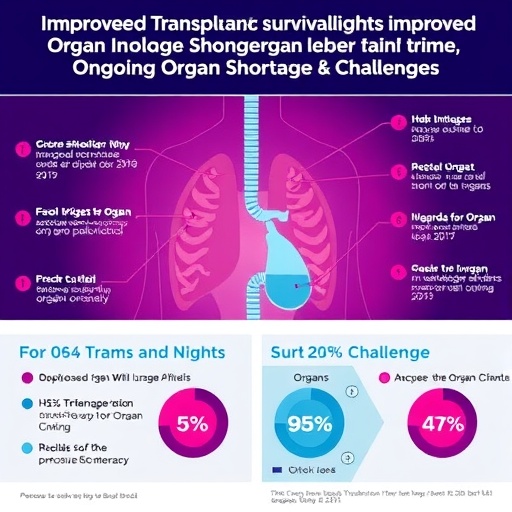
Intent-to-treat survival, defined as the proportion of patients alive one year after being listed for an organ regardless of receiving a transplant, unveiled impressive improvements. Lung transplant recipients showcased the most dramatic enhancement, with survival increasing from 38% to an extraordinary 84%. Similar upward trajectories were observed among heart, liver, kidney, and pancreas transplant candidates, reflecting the integrated impact of systemic medical advancements.
One-year post-transplant survival, a critical metric representing survival rates after surgery, also witnessed marked improvements across all organ types. Notably, kidney transplant patients who received organs from living donors consistently demonstrated superior survival compared to those receiving deceased donor transplants, emphasizing the profound impact of donor source on clinical outcomes and shaping future transplant strategies.
However, the study highlights a paradox: while survival rates improve, the unmet need—measured as the discrepancy between the number of waitlisted patients and transplants performed annually—remains significant. Encouragingly, a decline in this gap is evident in liver, heart, pancreas, and lung transplants, with unmet needs shrinking by as much as 80% in lung cases from the late 1990s to 2023, signaling progress in organ availability and allocation efficacy.
The kidney transplantation landscape presents a stark contrast. Demand for kidney transplants has surged by approximately 350 to 400% over the past thirty years. From roughly 4,000 patients with unmet need in 1988, numbers soared to nearly 18,500 by 2023. This persistent—and in fact growing—unmet need highlights the critical bottleneck in supply, reflecting the unique challenges in kidney donation and reinforcing the organ’s paramount demand.
Survival improvements are rooted in multifaceted advancements spanning anesthesia, perioperative care, infectious disease management, and critical care protocols. These medical progressions have radically reshaped patient trajectories, enabling longer survival on organ waiting lists and enhancing postoperative recovery. Enhanced organ preservation techniques and broader donor criteria have further extended the reach of transplantation, though their benefits have varied among different organ groups.
Emerging technologies, such as xenotransplantation, hold promise but remain in nascent stages, with limited clinical trials offering preliminary evidence rather than widespread clinical adoption. The potential of xenotransplantation to alleviate donor shortages is tantalizing, yet its current developmental status restricts its immediate impact on the transplantation supply-demand imbalance.
The psychological and clinical journey of transplant candidates commences well before the operating room door opens. Intent-to-treat analyses underscore survival trends from listing through transplantation, emphasizing that improvements in care must encompass pre-transplant stages, including medical optimization and waiting list management, to holistically improve outcomes.
Despite the encouraging survival figures, the study underscores the indispensability of increasing organ donation rates to sustain and accelerate progress. “Organ transplant patients are living longer both before and after surgery thanks to several clinical and technical innovations,” said Dr. Abbas Rana, senior author and professor of surgery at Baylor College of Medicine. Yet, the undeniable mismatch between organ availability and need limits the full realization of these medical achievements.
Limitations of the study arise from the inherent constraints of the UNOS database, which may not fully account for regional disparities, proximity to transplant centers, or nuanced socioeconomic variables known to influence transplant access and outcomes. Additionally, evolving transplant eligibility criteria and variable donor and recipient risk profiles over time were not accounted for, potentially impacting trend interpretations.
Policy and clinical innovations emphasizing better organ preservation and optimized utilization have successfully enhanced transplant numbers. In 2025, a record 49,064 transplants were performed in the United States, reflecting these shifts. However, the increase in transplant volume must be paralleled by donor pool expansion to prevent stalling progress.
This longitudinal research shines a revealing light on the complex interplay of medical advancements and systemic challenges within organ transplantation. It delineates a future where cutting-edge technologies, comprehensive patient care, and intensified donation campaigns converge to mitigate the burden of organ failure, ultimately striving toward a world where the waiting list is no longer a barrier to survival.
As medical science traverses new frontiers, the transplant community remains vigilant, acknowledging that the true measure of success lies not only in surgical and perioperative excellence but also in addressing the systemic gap in organ availability—which remains the defining challenge of modern transplantation medicine.
Subject of Research: People
Article Title: Trends in Survival and Unmet Need Across Solid-Organ Transplantation
News Publication Date: 2-Apr-2026
Web References: https://dx.doi.org/10.1097/XCS.0000000000001852
References: Burns C, Sangineni P, Myres S, et al. Trends in Survival and Unmet Need Across Solid-Organ Transplantation. Journal of the American College of Surgeons, 2026. DOI: 10.1097/XCS.0000000000001852
Keywords: Organ donation, Transplantation, Survival rates, Kidney transplantation, Solid-organ transplant, Medical advancements, Organ preservation, Xenotransplantation
Tags: Baylor College of Medicine transplant studyheart transplant advancementsintent-to-treat survivalkidney transplant shortageliver transplant outcomeslung transplant survival statisticsorgan donation initiativesorgan transplant demand and supply gaporgan transplantation survival ratespancreas transplant successpost-transplant survival improvementsUnited Network for Organ Sharing data analysis