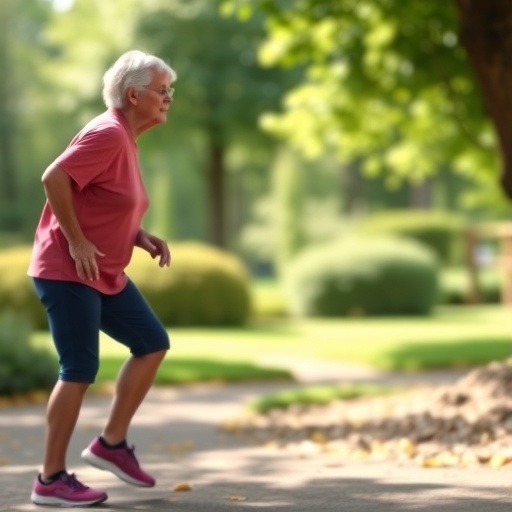
A groundbreaking study published in BMC Geriatrics in 2026 sheds new light on the intricate relationship between physical activity patterns spanning from mid- to late adulthood and the risk of developing sarcopenia, a debilitating condition characterized by the progressive loss of muscle mass and strength in older adults. This large-scale and longitudinal analysis, conducted under the auspices of the renowned HUNT study, bridges a critical knowledge gap and offers fresh insights into how lifestyle choices decades earlier can dramatically influence muscle health and functional independence in later life.
Sarcopenia, increasingly recognized as a central contributor to frailty, disability, and diminished quality of life among the elderly, poses a significant public health challenge as global populations age rapidly. Despite extensive research into its mechanisms and consequences, the impact of long-term physical activity trajectories on sarcopenia risk has remained poorly understood. The HUNT study’s innovative approach, which harnesses comprehensive data on physical activity over extended periods, provides an unprecedented opportunity to unravel these temporal associations and identify critical windows for intervention.
The researchers meticulously analyzed patterns of physical activity recorded regularly from midlife onward, capturing changes in intensity, frequency, and type of exercise over time. This dynamic perspective contrasts sharply with earlier studies that relied primarily on single-time-point activity assessments, which may not fully reflect an individual’s lifelong behavior or its influence on muscle health. By deploying advanced statistical modeling, the team was able to classify participants into distinct activity trajectory groups, revealing nuanced links between sustained exercise habits and muscle preservation.
Their findings decisively demonstrate that individuals maintaining moderate to high levels of physical activity from mid- to late adulthood exhibit significantly lower odds of sarcopenia onset in older age, compared to those with sedentary or declining activity patterns. This protective effect was independent of other common risk factors such as age, sex, body mass index, and chronic illnesses, underscoring the potent role of habitual physical activity itself as a modifiable determinant. Notably, even those who increased their activity levels later in life experienced measurable benefits, although earlier and sustained engagement yielded the most pronounced protective effects.
Delving deeper into muscle-specific outcomes, the study highlights how regular activity preserves not only muscle mass but also critical components of muscle quality and function, such as strength and power. It suggests that entrenched patterns of physical movement influence muscle fiber composition, mitochondrial efficiency, and anabolic signaling pathways essential for maintaining muscle integrity. These biological insights align with contemporary models of sarcopenia etiology, which emphasize the interplay between disuse atrophy and cellular aging processes.
This research carries profound implications for public health policy and clinical practice. It advocates for targeted strategies promoting sustained physical activity beginning well before old age, stressing the concept of “muscle health across the lifespan” rather than reactive interventions once sarcopenia has already emerged. By shifting the focus to earlier life-course preventive measures, healthcare systems might reduce the burden of sarcopenia-related disability, healthcare costs, and the looming impact on eldercare infrastructures worldwide.
Moreover, the study offers a clarion call for individualized exercise prescriptions recognizing that physical activity is not a one-size-fits-all remedy. Tailoring interventions to accommodate personal preferences, socioeconomic constraints, and comorbid conditions will maximize adherence and efficacy. The nuanced understanding of activity trajectories could guide clinicians in identifying high-risk subpopulations who may benefit from intensified support to initiate and maintain physical activity.
Technological advancements, such as wearable activity monitors and telehealth coaching, may play a transformative role in operationalizing these findings by enabling continuous tracking and personalized feedback. Coupling these tools with behavioral science insights can facilitate sustainable lifestyle modifications that align with evolving capabilities and motivations over decades. This paradigm shift toward proactive, technology-assisted health maintenance represents a promising frontier in combating sarcopenia.
Importantly, the HUNT study’s design, leveraging an expansive dataset with robust longitudinal follow-up and diverse population sampling, enhances the generalizability of its conclusions. It mitigates biases inherent in smaller or cross-sectional studies, adding scientific rigor and confidence in the observed associations. Additionally, the incorporation of objective sarcopenia assessments alongside self-reported activity measures strengthens the validity and clinical relevance of the findings.
The investigators acknowledge certain limitations, including potential residual confounding and the challenges in capturing all dimensions of physical activity, such as resistance training specifics or sedentary behavior nuances. Nonetheless, the comprehensive approach and sophisticated analyses provide compelling evidence that sustained physical activity constitutes a vital lineage defense against sarcopenia.
In the broader context of aging research, these results dovetail with emerging evidence linking lifestyle factors to healthspan extension and functional resilience. Maintaining muscle integrity is increasingly recognized as pivotal in preserving independence and preventing a cascade of age-associated morbidities. By quantifying the long-term benefits of physical activity on muscle preservation, this study empowers individuals and healthcare providers to prioritize active living as a cornerstone of healthy aging.
The implications also resonate with ongoing debates surrounding public health resource allocation, where investment in community-based exercise programs and infrastructure may yield disproportionate returns in eldercare cost reduction. Policymakers and stakeholders can harness these insights to design evidence-based initiatives fostering lifelong engagement in physical activity, including accessibility enhancements and culturally tailored campaigns.
Finally, this groundbreaking research opens new avenues for future investigations exploring the molecular underpinnings of activity-induced muscle preservation and how genetic and environmental factors modulate these effects. Integrating such knowledge with personalized medicine approaches holds the promise of revolutionizing sarcopenia prevention and treatment paradigms in the decades to come.
In sum, the HUNT study’s revelations underscore a powerful message: the choices we make about physical activity behaviors through midlife and beyond can profoundly shape our muscle health and functional trajectories in older age. This knowledge offers a beacon of hope and a clarion call to action for individuals, clinicians, and societies aiming to combat the pervasive challenges of sarcopenia and promote vibrant, independent aging.
Subject of Research: Physical activity trajectories from mid- to late adulthood and their impact on sarcopenia risk in older adults.
Article Title: Physical activity patterns from mid- to late adulthood and risk of sarcopenia in older adults: the HUNT study.
Article References:
Tømmerdal, K.H., Nauman, J., Madssen, E. et al. Physical activity patterns from mid- to late adulthood and risk of sarcopenia in older adults: the HUNT study. BMC Geriatr (2026). https://doi.org/10.1186/s12877-026-07747-6
Image Credits: AI Generated
Tags: aging and muscle strengthfrailty and disability in elderlyHUNT study sarcopenialifestyle choices and sarcopenialong-term exercise impact on aginglongitudinal muscle health studymid-to-late adulthood physical activitymuscle function in older adultsmuscle mass loss preventionphysical activity trajectories midlifepublic health aging interventionssarcopenia risk factors