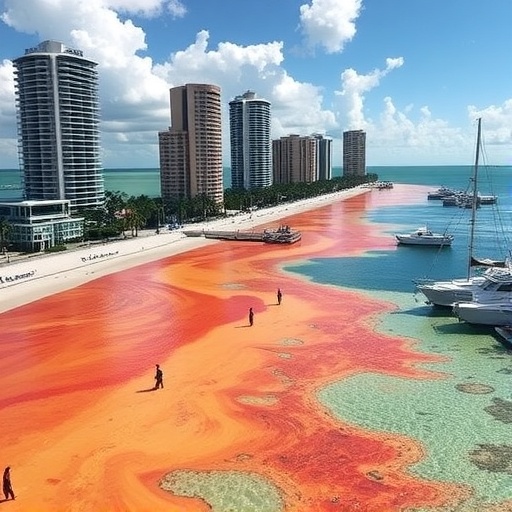
Two Decades of Monitoring Reveal Alarming Climate-Driven Transformations in Biscayne Bay
For over twenty years, scientists have meticulously monitored Biscayne Bay, Florida’s largest estuary along the Atlantic Coast, unveiling striking evidence that climate change is reshaping this critical marine environment. As data accrued from 2001 to 2021 reveal, the bay has undergone substantial shifts in its fundamental physical and chemical properties—including temperature, salinity, and acidity—profoundly altering the ecosystem dynamics and jeopardizing the natural heritage and economic resources upon which South Florida relies.
This longitudinal study, conducted by researchers at the University of Miami’s Rosenstiel School of Marine, Atmospheric, and Earth Science in collaboration with Miami-Dade County’s Department of Environmental Resources Management, confirms a worrying trajectory: Biscayne Bay’s waters are progressively warming, becoming saltier, and demonstrating increased acidification. Published in the esteemed journal Estuarine, Coastal and Shelf Science, these findings underscore the profound and multifaceted consequences of accelerating climate change and rising sea levels on coastal estuarine systems.
The intricate observations span 34 strategically located monitoring stations distributed throughout the bay, capturing monthly measurements of salinity, temperature, dissolved oxygen, and pH levels. By analyzing these parameters over two decades, the researchers discerned robust climate-driven trends transcending spatial and temporal scales, thus delivering a comprehensive understanding of the bay’s evolving environmental baseline. The integration of long-term datasets allowed for the detection of subtle yet persistent shifts indicative of systemic ecological change.
Among the most significant results was the marked increase in salinity observed in numerous regions, particularly proximal to canal mouths, where researchers detected pronounced saltwater intrusion penetrating the bay’s bottom waters. This phenomenon reflects the complex interplay between rising ocean levels and altered freshwater inflows, reshaping the estuarine salinity gradients essential for maintaining aquatic biodiversity. The resulting shift proposes a gradual displacement of historically brackish, estuarine conditions towards more marine-like environments.
Concurrently, sea surface temperatures across Biscayne Bay have risen consistently, with the northern sectors experiencing the greatest warming trends. Over the latter decade of study, median water temperatures escalated by approximately 0.5 degrees Celsius—a seemingly modest increase with substantial ecological implications. Elevated temperatures impose physiological stress on aquatic organisms, disrupt reproductive cycles, and can catalyze harmful algal blooms, thereby destabilizing the intricate food webs sustaining the bay ecosystem.
Accompanying these changes is a decline in pH levels across much of the bay, signaling an intensification of ocean acidification effects. Reduced alkalinity compromises the calcification capacity of shell-forming organisms such as mollusks and corals, undermining structural habitat complexity and biodiversity. This acidification dynamic, driven by increased atmospheric CO₂ absorption, poses a grave threat to the bay’s vital seagrass meadows, coral reefs, and associated fauna, further exacerbating the vulnerability of marine communities already pressured by rising temperatures and salinity.
The combined consequences of these environmental stressors—unprecedented warming, elevated salinity, and increasing acidity—signal a fundamental alteration of Biscayne Bay’s ecological identity. Transitioning from a historically fresher estuarine system to one increasingly akin to open ocean conditions has far-reaching repercussions for native species adapted to specific salinity and pH ranges. Such transformations could precipitate shifts in species distributions, disrupt fisheries, and impair vital ecosystem services that local human populations depend upon.
Biscayne Bay’s ecological significance cannot be overstated; spanning approximately 429 square miles, the bay supports a diverse array of habitats crucial for regional biodiversity, recreation, fisheries, and economic vitality. Notably, recent research highlights the bay’s indispensable role as a nursery habitat for the critically important juvenile great hammerhead sharks. The estuary’s extensive seagrass beds furnish essential shelter and nutrition for myriad fauna including invertebrates, fish, sea turtles, manatees, and marine mammals, forming a foundation for the broader trophic networks.
Moreover, the bay contributes substantially to coastal resilience in Miami-Dade County, serving as a buffer against storm surge and sea level rise impacts. However, the documented increases in salinity and temperature compound existing environmental pressures, potentially diminishing the bay’s capacity to provide these protective ecosystem services. As climate change intensifies, the urgency of understanding and mitigating these stressors becomes paramount to safeguarding both natural habitats and human communities.
The research team emphasizes the vital importance of sustained, systematic environmental monitoring to elucidate local climate impacts and inform adaptive management strategies. Comprehensive datasets enable resource managers and policymakers to anticipate future changes, optimize restoration initiatives, and implement coastal protection efforts with scientific rigor and foresight. Strategic interventions based on robust empirical evidence can enhance the bay’s resilience against ongoing and future climate challenges.
This seminal study, entitled “Climate Change Influence on Salinity, Temperature, Dissolved Oxygen and pH in Biscayne Bay (Florida): Two Decades of Observations (2001–2021),” represents a critical advance in estuarine science, integrating long-term observational data to decode complex climate-related dynamics in a vulnerable coastal system. The collaborative research effort, authored by Valentina Caccia, Elizabeth Marie Janz, Maria Estevanez, and M. Josefina Olascoaga, exemplifies interdisciplinary approaches essential for addressing pressing environmental issues at the nexus of climate science, marine ecology, and resource management.
As Biscayne Bay transforms amidst the inexorable forces of global change, the insights gleaned from this study underscore a broader imperative to confront climate impacts with urgency, innovation, and informed stewardship. The subtle yet persistent alterations documented herein are harbingers of ecological shifts echoing throughout the world’s coastal estuaries, highlighting the need for intensified research, adaptive governance, and robust conservation to ensure the vitality of these indispensable ecosystems for generations to come.
Subject of Research: Not applicable
Article Title: Climate change influence on salinity, temperature, dissolved oxygen and pH in Biscayne Bay (Florida): Two decades of observations (2001–2021)
News Publication Date: 9-Apr-2026
Web References:
– https://www.sciencedirect.com/science/article/pii/S0272771426001563
– http://dx.doi.org/10.1016/j.ecss.2026.109861
– https://ocean-sciences.earth.miami.edu/index.html
– https://news.miami.edu/rosenstiel/stories/2025/06/juvenile-great-hammerhead-sharks-rely-on-south-floridas-biscayne-bay.html
References:
Caccia, V., Janz, E. M., Estevanez, M., & Olascoaga, M. J. (2026). Climate change influence on salinity, temperature, dissolved oxygen and pH in Biscayne Bay (Florida): Two decades of observations (2001–2021). Estuarine, Coastal and Shelf Science. https://doi.org/10.1016/j.ecss.2026.109861
Keywords:
Climate change effects, Estuarine transformation, Biscayne Bay, Ocean acidification, Salinity increase, Temperature rise, Coastal ecosystems, Marine ecology, Long-term environmental monitoring, Seagrass habitats, Juvenile shark nursery, Coastal resilience
Tags: acidification effects on marine ecosystemsBiscayne Bay temperature riseclimate change impact on Biscayne Bayclimate-driven ecosystem transformationsestuarine water quality trends 2001-2021impacts of ocean acidification on estuarieslong-term estuarine monitoring FloridaMiami-Dade environmental management studysalinity changes in coastal estuariessea level rise consequences Biscayne BaySouth Florida marine ecosystem shiftsUniversity of Miami climate research